"This is difficult, but I believe in you"! Jensen Huang hosted a dinner for SK Hynix engineers last week, personally toasting and urging for "on-time delivery of HBM4 without delays."

Nvidia CEO Jensen Huang rarely "personally intervened" to host more than 30 engineers at a Korean restaurant in Silicon Valley, urging SK Hynix to deliver the sixth generation HBM4 on time. As Samsung takes the lead in shipments, this supply chain battle, which is crucial for the success of the next-generation AI chip Vera Rubin, has entered a heated phase. Whether SK Hynix can maintain its 55% market share will be critical in the coming months
Nvidia CEO Jensen Huang personally hosted a dinner for the engineering team of its partner last week, a rare move that highlights the strategic importance of the next-generation high-bandwidth memory HBM4 for this AI chip giant. With Samsung Electronics being the first to ship HBM4 in the competition, whether SK Hynix can deliver high-performance products on time will directly impact the market performance of Nvidia's new generation AI accelerator Vera Rubin, set to launch in the second half of this year.
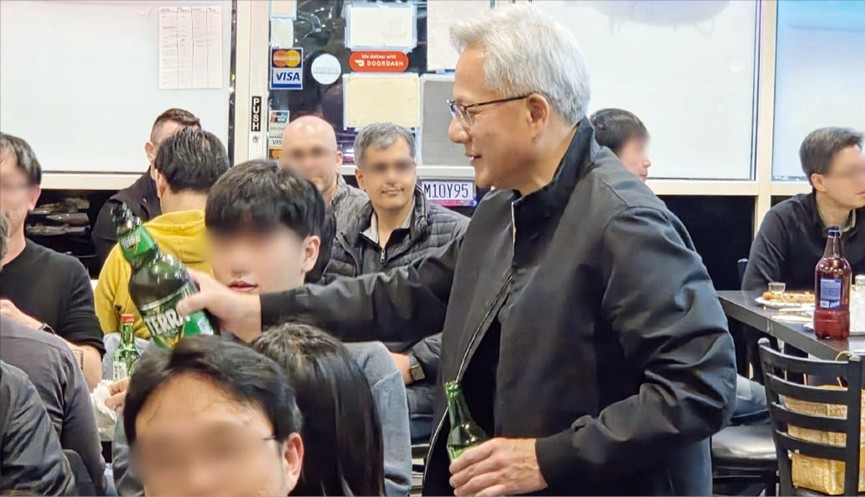
On the evening of February 14, Huang appeared at a Korean fried chicken restaurant near Nvidia's headquarters, spending about two hours mixing drinks and toasting with over 30 engineers from SK Hynix and Nvidia at each table. He repeatedly emphasized "We are a team" and "I am proud of you," urging the engineers to "deliver extraordinary results through relentless challenges and efforts," particularly mentioning the sixth-generation HBM4 products that SK Hynix has committed to supply.

This impromptu gathering sent a clear signal: HBM4 is seen by Nvidia as a key differentiating component for the Vera Rubin accelerator. Nvidia has set specifications for HBM4 suppliers of "operating speeds above 11 Gbps" and "bandwidth above 3.0 TB/s," which are over 30% higher than similar requirements from competitor AMD. Industry analysts believe that Huang's personal appearance increases the likelihood of SK Hynix maintaining its position as the largest supplier of HBM4.
According to industry insiders, Nvidia allocated its HBM supply shares for this year in early December, with SK Hynix receiving over 55%, Samsung Electronics accounting for just over 20% to nearly 30%, and Micron Technology around 20%. Although Samsung's advancements in the technology race have raised the possibility of share shifts, the industry generally believes that SK Hynix is likely to secure the largest quota after completing quality optimization in the first quarter.
Rare "Engineer Diplomacy"
The semiconductor industry views Huang's personal hosting of a dinner for partner engineers as a highly unusual move. This gathering was quickly arranged after Huang's directive to Nvidia employees last week to "organize a dinner to encourage SK Hynix HBM engineers," highlighting the critical role of SK Hynix's HBM4 for Nvidia's future business.
Huang arrived at the 99 Chicken restaurant in Santa Clara around 5:20 PM. During the final toasting session near the end of the dinner, he stated, "AI accelerators and HBM4 represent extraordinary and the most challenging technologies in the world. I am proud of all of you who work day and night, and I believe you will deliver excellent results." He added:
" I know the development timeline for HBM4 and Vera Rubin is tight, but I believe in you. Now is the time for SK Hynix and Nvidia to jointly showcase greatness to the world."
SK Hynix officially entered Nvidia's supply chain with HBM2E (third generation) products in July 2020, subsequently becoming the de facto exclusive supplier of HBM3 (fourth generation) and HBM3E (fifth generation), forming a close relationship with TSMC known as the "AI Semiconductor Triad Alliance."
Technical Barriers and Time Pressure
HBM4 is seen as a key component determining the performance of NVIDIA's next-generation AI accelerator, Vera Rubin. Vera Rubin is scheduled to launch in the second half of this year, with HBM4 serving as a high-performance memory module made by stacking 12 layers of advanced DRAM chips, responsible for providing massive data to the GPU processing calculations in a timely manner.
NVIDIA's specifications for HBM4 far exceed those of its competitors. The required operating speed and bandwidth metrics are more than 30% higher than AMD's requirements for HBM4, effectively positioning HBM4 as a key differentiating factor for Vera Rubin.
Unlike the HBM3E market, which is predominantly controlled by SK Hynix, the HBM4 market, which will fully open in the second half of the year, presents a different competitive landscape. Samsung Electronics shipped the first official HBM4 products to NVIDIA on February 12, becoming the first in the industry, with its products achieving an operating speed of 11.7 Gbps (up to 13 Gbps) and a bandwidth of 3.3 TB/s.
SK Hynix has currently ensured that HBM4 performance reaches 11.7 Gbps or higher and is supplying paid samples to NVIDIA in bulk while optimizing performance. The industry expects SK Hynix to receive formal "bulk supply" approval from NVIDIA in the near future.
At the banquet, Jensen Huang urged SK Hynix engineers to "deliver top-performing HBM4 without delay." This statement was interpreted as a clear demand for the supply timeline.
HBM Market Share Battle Intensifies
With Samsung making progress in the HBM4 technology race, this year's supply share distribution may see changes. However, the industry generally believes that SK Hynix still has a significant opportunity to secure the largest quota after completing quality optimization in the first quarter.
A semiconductor industry insider explained to the media:
"The final HBM4 optimization work of the three memory manufacturers will not be completed until around March. Recently, there has been a trend to prioritize increasing general DRAM production to enhance profitability rather than competing for HBM market share."
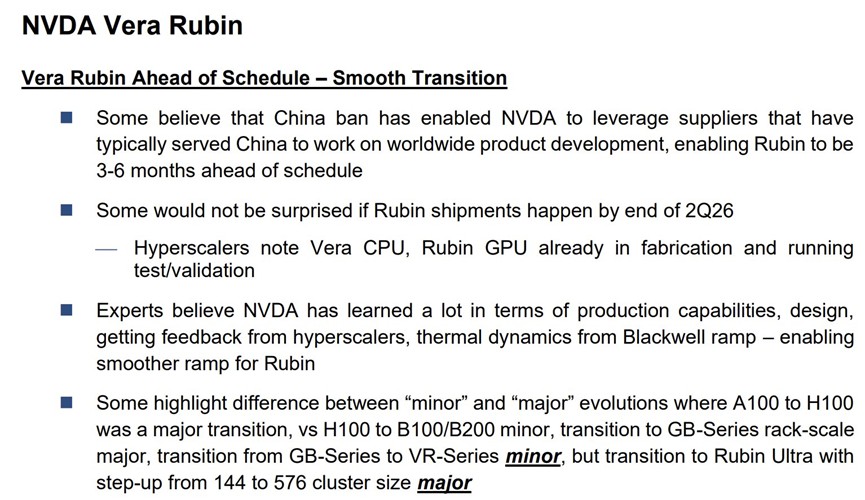
According to a previous article by Wall Street Watch, Evercore's research also pointed out the differences in product generational evolution, with some industry insiders emphasizing the distinction between "minor" (slight evolution) and "major" (significant evolution). The transition from H100 to B100/B200 is seen as a minor transition, while moving to GB-Series rack-level systems is a major evolution. The transition from GB-Series to VR-Series is minor, but the transition to Rubin Ultra, accompanied by an increase in cluster size from 144 to 576, is a major upgrade.
This dinner, personally hosted by Jensen Huang, is both an acknowledgment of long-term partners and a reminder of key supply chain links. For SK Hynix, the ability to maintain a leading position in fierce competition will depend on execution in the coming months, which will be a decisive factor