


AI panic trading cools down, Asian chip stocks hit all-time highs, gold and silver retreat, London copper rises 2%, Bitcoin plunges
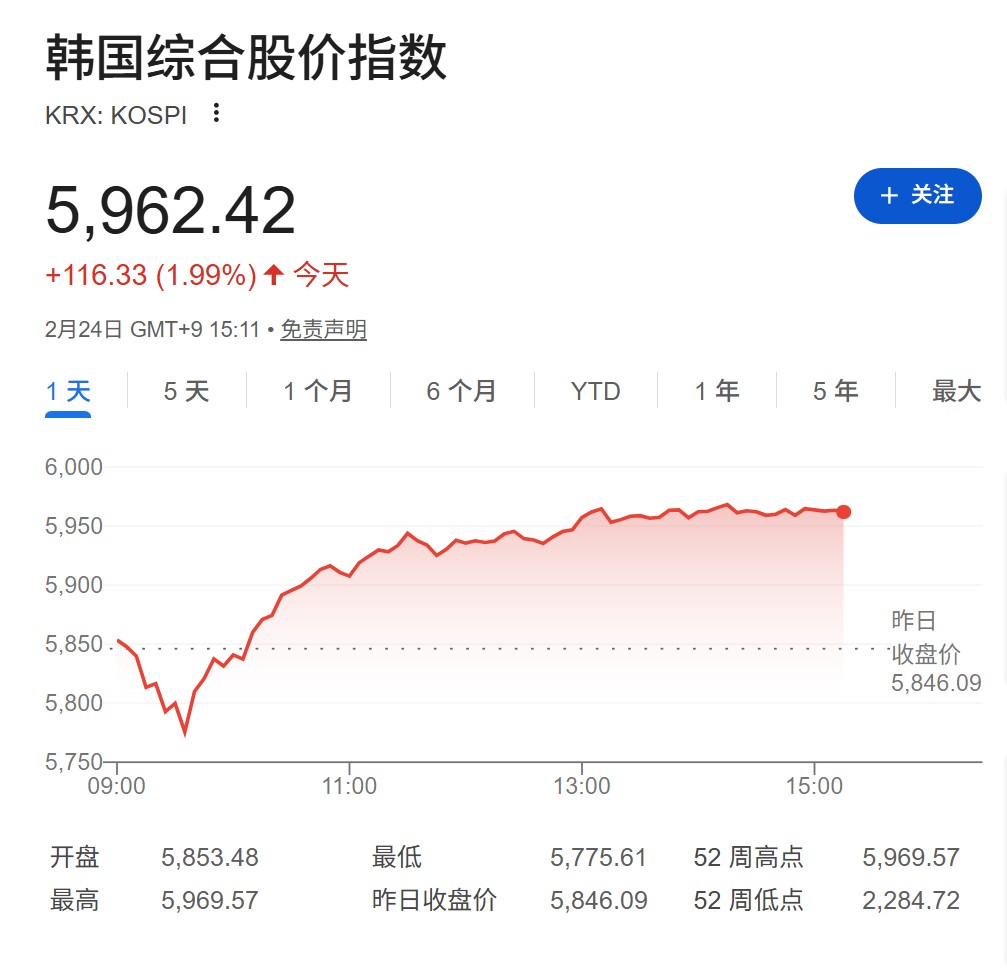
Asian stock markets rose slightly, reversing the weak trend in the U.S. market. The South Korean stock market rose by 2%, helping the MSCI Asia-Pacific Index erase earlier losses. Gold and silver retreated after four consecutive days of gains. U.S. Treasury yields gave back gains made during the U.S. session, while Bitcoin recorded its worst monthly performance since the cryptocurrency crash in June 2022, falling to around $63,000. The U.S. Dollar Spot Index rose by 0.1%
Signs of easing in "panic trading" related to artificial intelligence have emerged, with Asian stock markets and U.S. stock futures rising on Tuesday, indicating an improvement in investor risk appetite. Shares of Asian chip manufacturers such as Samsung Electronics, SK Hynix, and TSMC surged to record highs, as traders view these companies as "minting tools" in the AI supply chain, while U.S. stocks in software, insurance, and professional services continue to face pressure.
Asian stock markets rose slightly, reversing the weak trend in the U.S. market, with S&P 500 futures up 0.3%. The South Korean stock market rose 2%, helping the MSCI Asia-Pacific index erase early losses and close up 0.1%. European stock markets are also set to open higher.
As risk sentiment improves, gold and silver retreated after four consecutive days of gains. U.S. Treasury yields gave back gains made during the U.S. session, while Bitcoin recorded its worst monthly performance since the cryptocurrency crash in June 2022, falling to around $63,000. The U.S. dollar spot index rose 0.1%.
This market divergence highlights the different fates of Asian and U.S. tech stocks. The MSCI Asia region index has risen 12% so far in 2026, while the S&P 500 index is nearly flat, marking the strongest relative performance of the Asian index against the U.S. benchmark since the beginning of the year. Investors are betting that Asian chip manufacturers will benefit from AI infrastructure development, while U.S. enterprise services, software, and financial intermediary businesses face the risk of AI disruption.
- The South Korean stock market rose 2%, and the Nikkei 225 index's intraday gain expanded to 1%.
- S&P 500 futures rose 0.3%.
- The U.S. dollar spot index rose 0.1%.
- The yen fell 0.4% to 155.27 USD.
- The yield on the U.S. 10-year Treasury rose by 1 basis point to 4.04%.
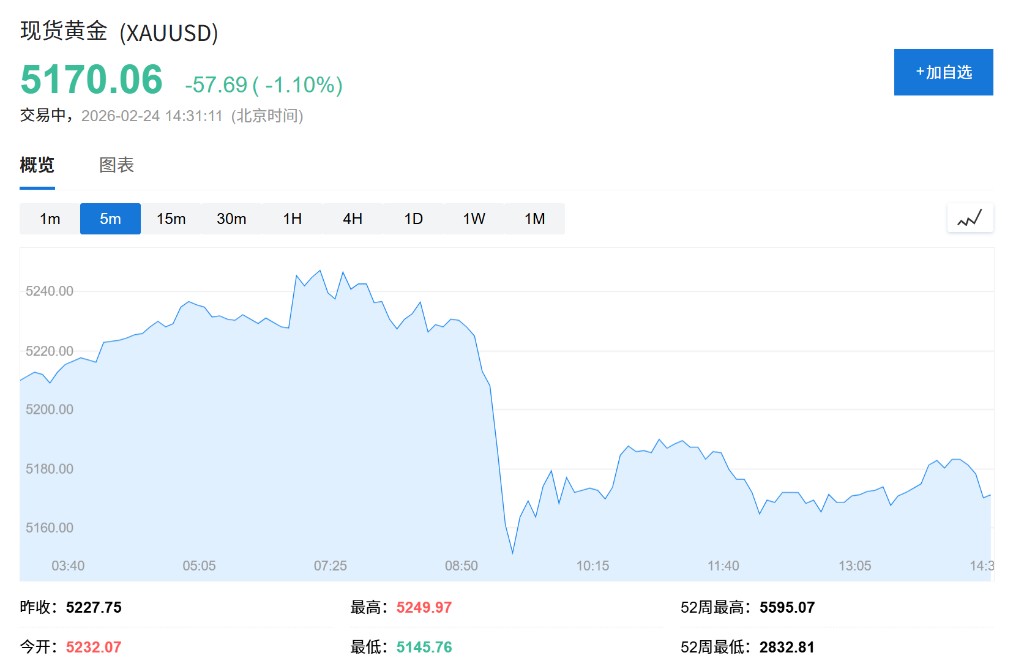
- Spot gold fell 0.8% to $5,189.99 per ounce, ending a four-day winning streak, after rising 2.5% the previous day.
- Copper prices rose 2.3% to around $13,200 per ton, and aluminum prices also increased.
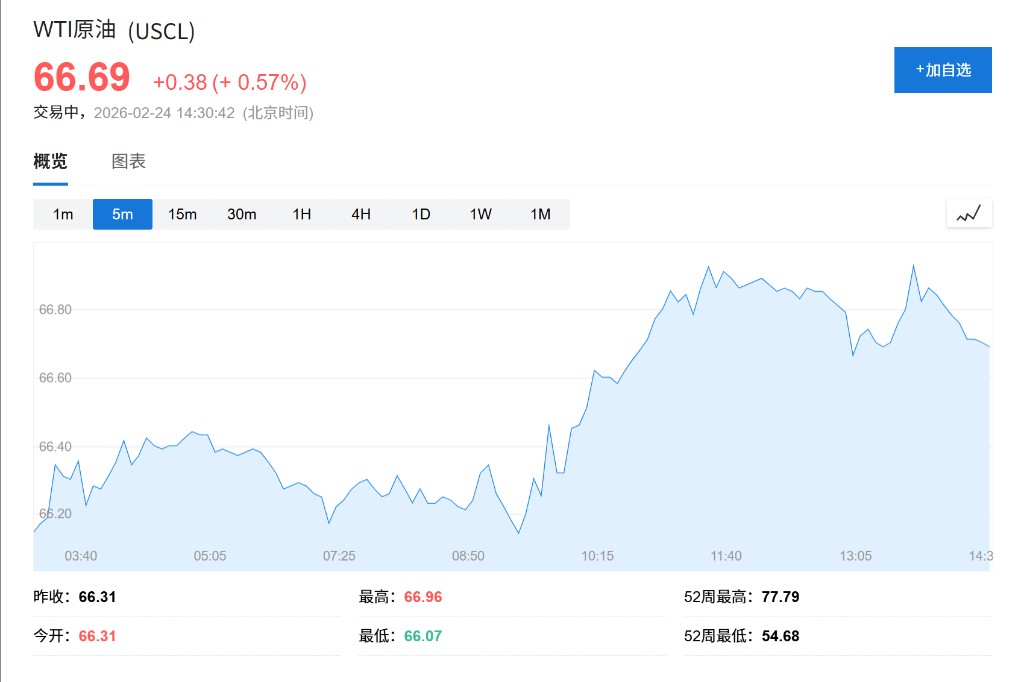
- Oil prices approached a seven-month high. Brent crude futures rose 0.8% to $72.08 per barrel, while U.S. crude futures rose 0.9% to $66.88 per barrel.
- Bitcoin briefly fell 2.64% to $62,858. The cumulative decline in February has exceeded 19%, expected to mark the worst monthly performance since June 2022.
Trends of Decoupling Between Asian Markets and the U.S.
Christopher Forbes, head of CMC Markets' Asian business, stated, "The AI panic trading sweeping the U.S. market is a replacement story, as generative AI is repricing the revenue models of enterprise software, professional services, and wealth management platforms. Asian stock indices have little exposure to this. Decoupling has already begun."
Carmen Lee, head of stock research at Oversea-Chinese Banking Corporation, indicated that this trend may continue for some time. Mohit Mirpuri, senior partner at SGMC Capital, noted, "In the first two months of this year, we have seen a more targeted allocation towards Asia and emerging markets. This does not necessarily mean structural decoupling, but it does indicate that global portfolios are broadening their exposure beyond the narrow focus on U.S. tech concentrated trading." The strong performance of the Asian market stands in stark contrast to the United States. On Monday, U.S. technology, courier, and payment stocks fell after Citrini Research released a report outlining the potential risks of AI across various industries. The ongoing uncertainty surrounding President Trump's tariff policies has exacerbated market weakness.
Bloomberg strategist Mark Cranfield pointed out that Asian investors continue to believe that companies providing "minting tools" for the AI race will be rewarded, with the Bloomberg Semiconductor Index significantly leading. The momentum of leading companies in the region is so strong that even a very poor earnings report from Nvidia this week is unlikely to weaken this upward trend.
Chip manufacturers are seen as the core beneficiaries of AI infrastructure development. Investors believe that regardless of how AI reshapes business models, the demand for advanced chips will continue to grow, providing solid profit prospects for companies like TSMC, Samsung, and SK Hynix.
AI Disruption Concerns Impact U.S. Intermediary Businesses
Alap Shah, co-author of the Citrini Research report, stated in an interview with Bloomberg Television that chip manufacturers, data centers, and foundational model labs are the key beneficiaries of AI trading. Intermediary businesses such as insurance companies and banks are at risk. Shah mentioned that his firm has shorted some companies mentioned in the report while holding a "large" amount of semiconductor stocks expected to benefit.
"We typically short a group of companies we believe will be disrupted by AI," he said during the Asian session on Tuesday, "On the other hand, we hold a large amount of semiconductor stocks that we believe will benefit."
This so-called AI panic trading has become the dominant market theme, with sell-offs spreading from software to U.S. insurance brokers, private credit firms, cybersecurity companies, and even real estate service stocks. International Business Machines Corporation plummeted on Monday, marking its largest drop in 25 years. Software stock ETFs are heading toward their worst monthly performance since 2008.
Divergence in Commodity and Currency Markets
The commodity market is showing a divergent pattern. Spot gold fell 0.8% to $5,170.99 per ounce, ending a four-day rally, after rising 2.5% the previous day. Ilya Spivak, global macro head at Tastylive, stated that the strengthening dollar and profit-taking by investors are the reasons for the decline in gold. Copper prices rose 2.3% in London to around $13,200 per ton, and aluminum prices also increased.
 Oil prices are nearing a seven-month high. Brent crude futures rose 0.8% to $72.08 per barrel, while U.S. crude futures increased 0.9% to $66.88 per barrel. Phillip Nova senior market analyst Priyanka Sachdeva stated, "Currently, geopolitical factors are clearly the main driver of rising oil prices, with the current strength primarily driven by expectations rather than actual supply losses."
Federal Reserve Governor Christopher Waller indicated that if the upcoming February employment data shows the labor market "turning to a more solid foundation" after a weak 2025, he would be willing to keep interest rates unchanged at the March meeting
