Nvidia "hands in the paper" to ease AI concerns, Japanese and South Korean tech stocks strengthen, South Korean stock index hits a new high, US dollar weakens
Nvidia's strong earnings report boosted Asian tech stocks across the board, with the MSCI Asia-Pacific Index rising 1% to a record high. South Korea's SK Hynix rose over 2%, Samsung Electronics rose more than 5%, and Japan's SoftBank rose 4%. Analysts are generally optimistic about the AI supply chain outlook, but some are cautious about concerns over excessive investment and the competitive landscape, believing that market confidence recovery is limited. The US dollar weakened, gold rose slightly, and Bitcoin fell below $68,000
NVIDIA's strong earnings report boosts market confidence, with Asian tech stocks rising across the board in early trading on Thursday, led by gains in chip-related stocks in South Korea and Japan.
In the Asia-Pacific session on Thursday, the MSCI Asia-Pacific Index rose 1%, reaching a record high; the South Korean Composite Index increased by 1.77%, continuing to set new historical highs.
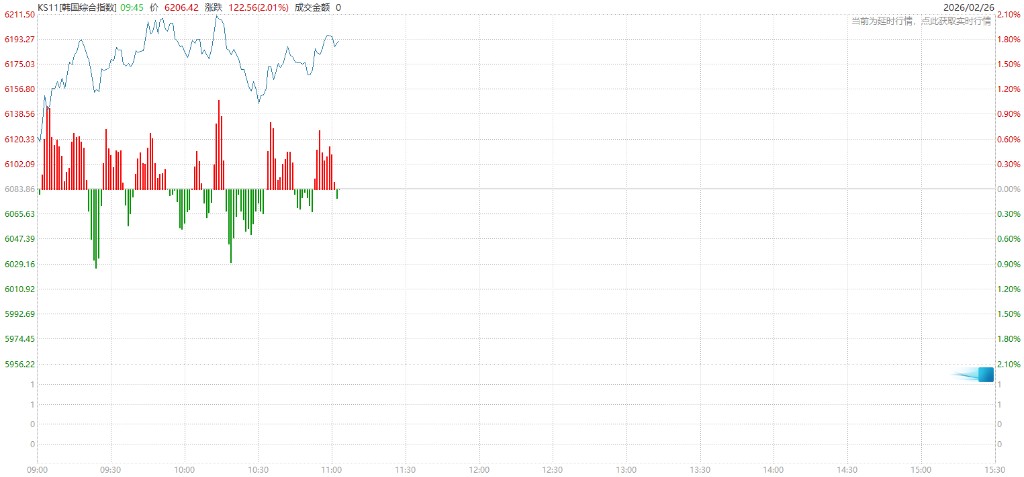 (South Korean Composite Index rises over 1.7%)
NVIDIA's earnings report has the most direct positive impact on the Asian AI supply chain. SK Hynix, a key supplier of high-bandwidth memory for NVIDIA, rose over 2% in early trading; Samsung Electronics increased by more than 5%. South Korean component manufacturer LG Innotek surged nearly 14%, while Seoul Semiconductor soared 13%.
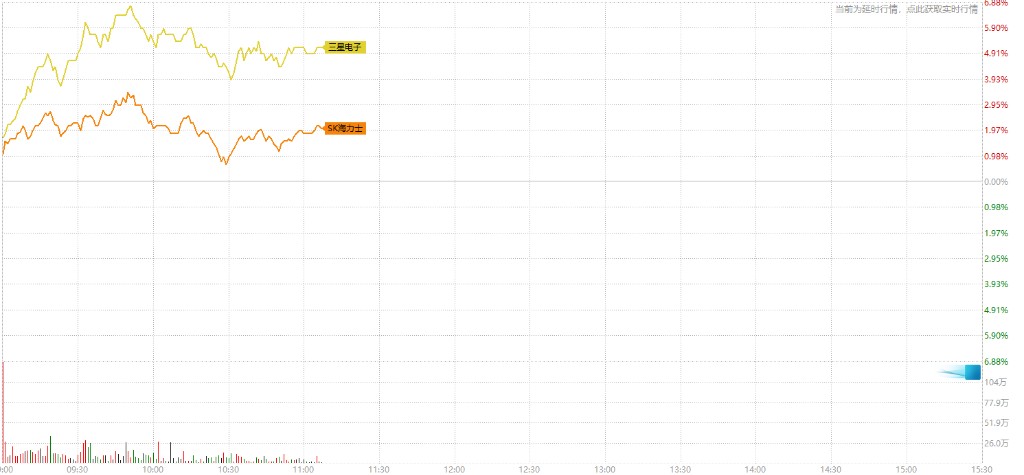 (South Korean memory chip giants Samsung Electronics and SK Hynix continue to rise during the day)
Dan Ives, a senior equity research analyst at Wedbush Securities, stated:
Given the explosive growth in data center demand, this is a positive signal for many Asian supply chain companies, including SK Hynix and Samsung.
Dan Niles, a portfolio manager at Niles Investment Management, pointed out that the current market landscape still favors semiconductor infrastructure stocks rather than software stocks, and stated that NVIDIA remains "the true king of all this infrastructure."
The Japanese market also recorded significant gains. The Nikkei 225 Index peaked and then retreated, with the increase narrowing to 0.55%. The Tokyo Stock Exchange Information and Communication Index rose over 2%, continuing the previous trading day's 0.58% increase. SoftBank Group rose 4%, and Sony Group increased by about 3%.
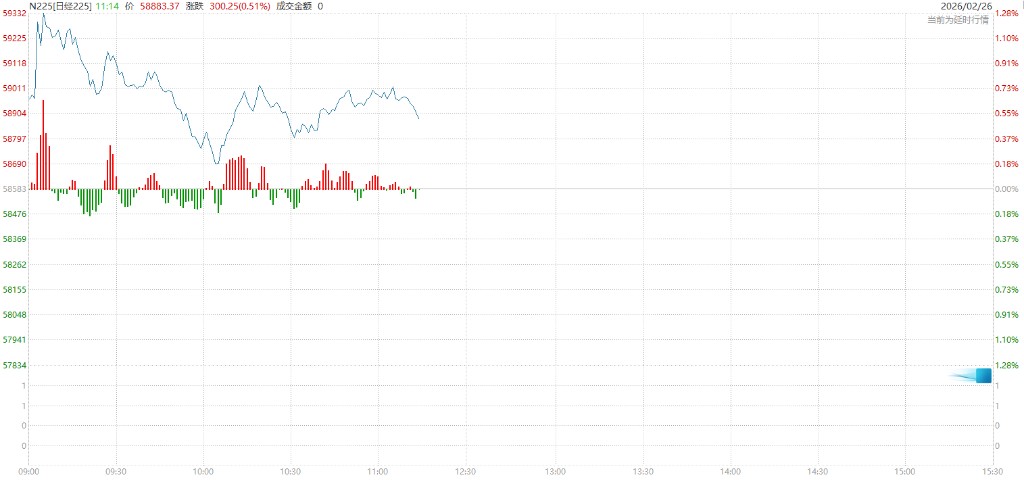 (Nikkei 225 Index rises 0.55%)
Andrew Jackson, head of Japanese equity strategy at ORTUS Advisors, stated that funds will continue to flow into AI-related targets, and he is optimistic about Japanese companies in the gallium nitride and silicon carbide sectors, such as Fuji Electric, believing that investors are positioning themselves for a sustained data center construction cycle.
However, Bloomberg strategist Tatiana Darie pointed out that while NVIDIA's performance is overall solid, some on Wall Street are disappointed that the company did not provide more details on its outlook and driving factors. In her view, although this earnings report may alleviate some AI-related anxieties to a certain extent, concerns about the competitive landscape and the sustainability of infrastructure investments will persist.
Yugo Tsuboi, chief strategist at Daiwa Securities, also holds a cautious attitude:
The difficulty of capital flowing back into this sector is gradually increasing, and it is no longer as smooth as it was last year. Ultimately, concerns about over-investment and the sustainability of investments have not dissipated due to Nvidia's performance.
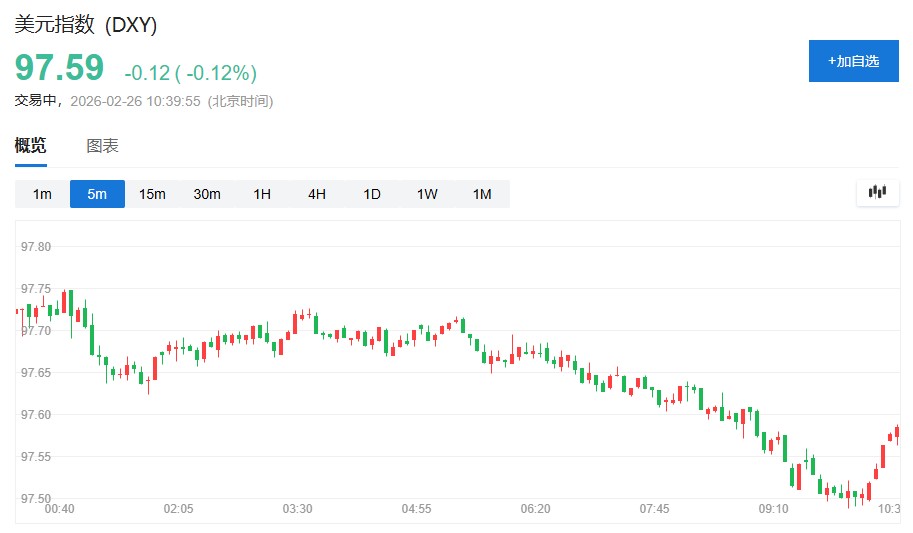
At a broader market level, the US dollar continued to weaken during the Asia-Pacific session on Thursday, with the Bloomberg Dollar Spot Index falling by 0.2%. The ICE Dollar Index decreased by 0.12%.
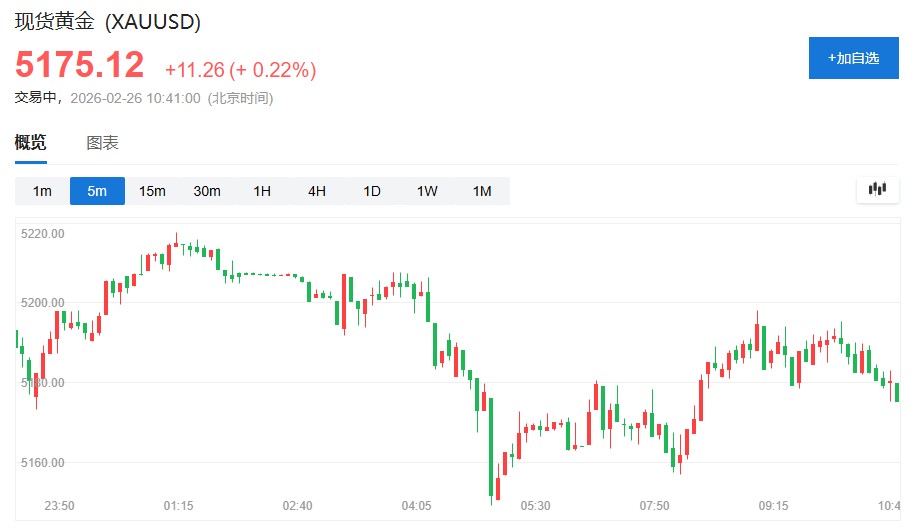
Gold rose by 0.2% to $5,176 per ounce, as traders assessed the geopolitical tensions in the Middle East and the impact of US tariffs on global trade. The momentum of Bitcoin's rebound has slowed, dropping about 1% to below $68,000.