Unexpected warming! The U.S. January core PPI recorded the fastest growth in a year, complicating the Federal Reserve's monetary policy

Wallstreetcn
2026.02.27 15:18
portai
I'm PortAI, I can summarize articles.

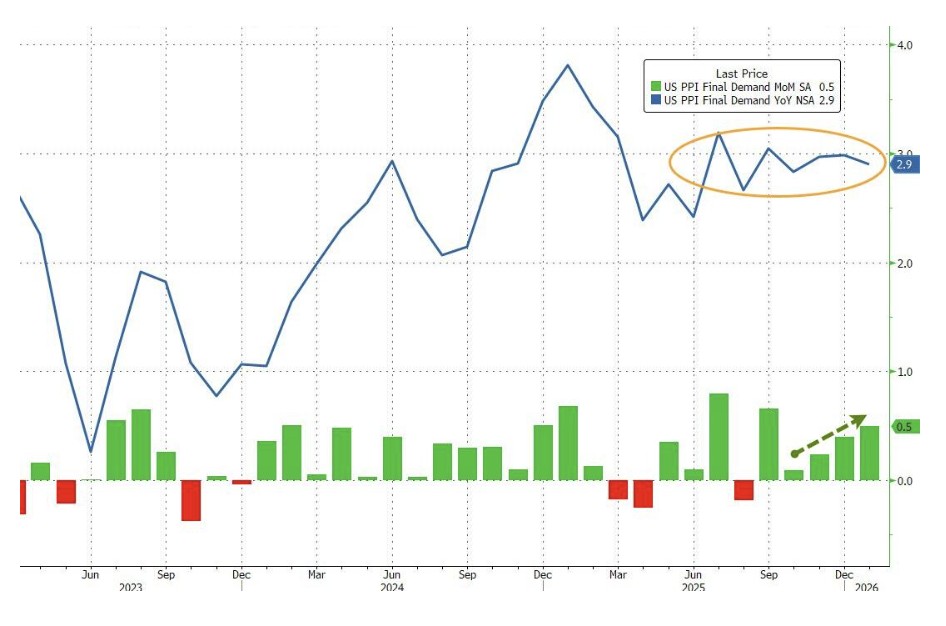
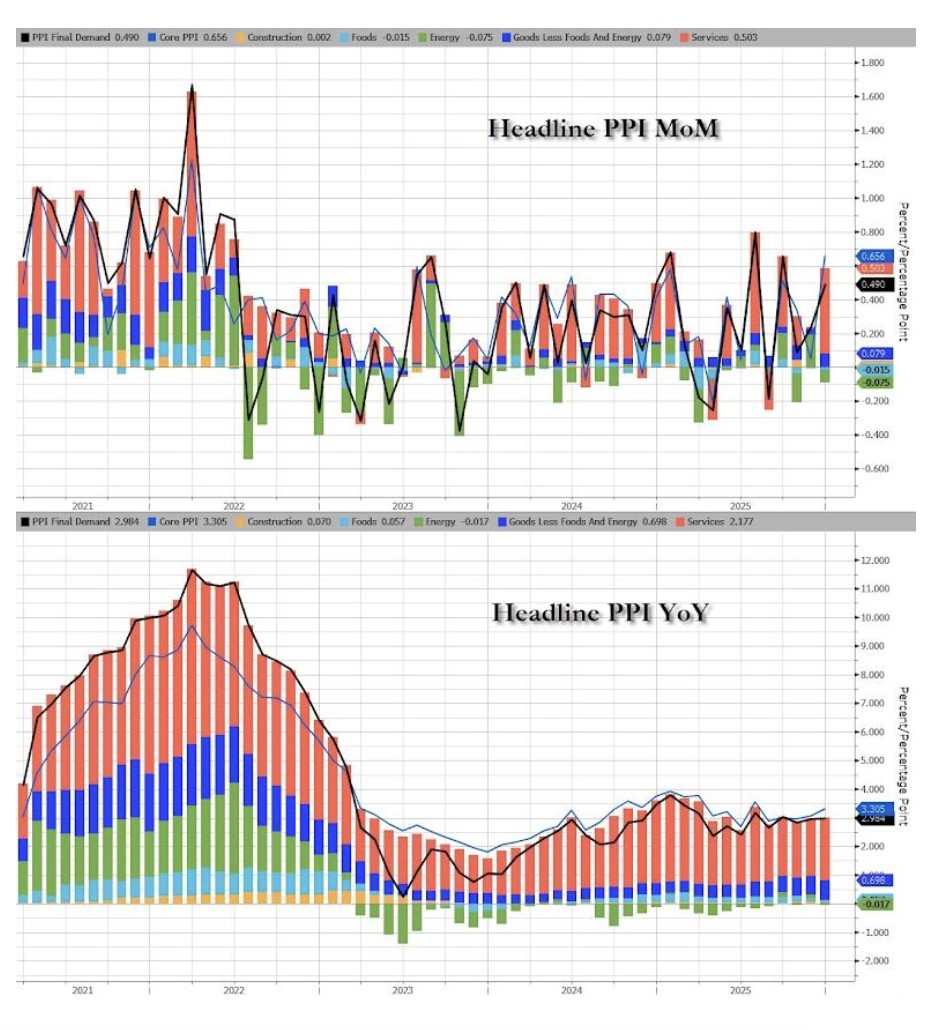
In January, the U.S. PPI increased by 0.5% month-on-month and 2.9% year-on-year, while the core PPI rose by 0.8% month-on-month and 3.6% year-on-year, both significantly exceeding market expectations. The year-on-year growth rate of the core PPI reached its fastest pace since March 2025. The surge in service costs was the main driver, with profit margins in wholesale and retail trade services jumping by 2.5%. Commodity prices fell due to energy drag, but core commodities rose by 0.7% month-on-month. The PPI exceeding expectations may push up core PCE, further dampening expectations for Federal Reserve interest rate cuts

The U.S. Producer Price Index (PPI) for January rose across the board, exceeding expectations and highlighting persistent inflationary pressures. This unexpected uptick was primarily driven by soaring service costs. Both the month-on-month and year-on-year increases in core PPI, excluding food and energy, significantly surpassed market expectations, marking the fastest growth rate in nearly a year.

On the 27th, the U.S. Bureau of Labor Statistics released data showing:

U.S. January core PPI year-on-year at 3.6%, expected 3%, previous value 3.3%.

U.S. January PPI month-on-month at 0.5%, expected 0.3%, previous value 0.5%.

U.S. January core PPI month-on-month at 0.8%, expected 0.3%, previous value 0.7%.

U.S. January PPI year-on-year at 2.9%, expected 2.6%, previous value 3%.

The strong rise in producer prices has prompted a reassessment of the inflation trajectory in the market. Analysts believe that the unexpected performance of the PPI may lead to upward pressure on the core Personal Consumption Expenditures (PCE) price index, which the Federal Reserve closely monitors.

Persistently high inflation data may further complicate the Federal Reserve's future monetary policy choices, causing investors to remain cautious about recent market trends.

Service Costs Drive PPI Increase

The U.S. January Producer Price Index (PPI) rose unexpectedly, but the core driver came from imported services, with no direct correlation to tariff transmission pressures. The final demand services component rose 0.8% month-on-month, marking the largest single-month increase in recent times. Among these, the wholesale and retail trade service profit margin indicator surged 2.5%, and transportation and freight service prices increased by 1.0%.

In contrast, the goods component showed a different trend. The final demand goods prices fell 0.3% month-on-month in January, primarily dragged down by energy prices—energy components decreased by 2.7%, and food prices fell by 1.5%. However, core goods prices, excluding food and energy, rose 0.7% month-on-month, one of the largest single-month increases since early 2022.

Core Indicators Reach Nearly One-Year High

After excluding the volatile costs of food and energy, the increase in core PPI is even more pronounced, indicating strong momentum for potential inflation. The U.S. January core PPI surged 0.8% month-on-month, far exceeding the expected 0.3%, with the previous value at 0.7%.

Year-on-year, the January core PPI climbed to 3.6%, not only surpassing the market expectation of 3.0% but also higher than the previous value of 3.3%. According to Bloomberg, this is the fastest pace of price increases since March 2025.

Core PCE Faces Upward Pressure

PPI data is often viewed as a leading indicator of consumer inflation, with its various component data directly used to calculate the PCE price index. The comprehensive warming of producer prices in January indicates that inflationary pressures still exist at the supply chain level Market analysis indicates that the bottom line is that the strong performance of the January PPI may directly lead to the core PCE price index being higher than expected. As the Federal Reserve's preferred inflation indicator, the potential upward movement of the core PCE will become a key focus for policymakers in their future decision-making