


Also talk about "HALO trading"

The market is beginning to focus on the changes in industrial organization forms in the AI era, with industries that may be replaced by AI, industries with weakened barriers, and the long-term expectations for technology leaders being re-anchored. The impact on Chinese assets is relatively smaller compared to U.S. stocks, and the complexity of the market's projections regarding the ultimate outcome of AI may lead to mispricing. Strategic resources remain important assets in the AI era, and market expectations for three types of industries are being adjusted, with the valuation center likely to shift downward
1. Discussing "HALO Trading": The market is beginning to focus on the potential changes in industrial organization forms in the AI era. Industries that may be replaced by AI + industries where excess profits may be compressed due to weakened barriers in the AI era + technology leaders that may not continue to succeed in the AI era, long-term expectations are being re-anchored, and there is downward pressure on valuation centers. The overall impact on Chinese assets is relatively smaller than that on U.S. stocks, as China has fewer industrial segments enjoying monopoly barriers and excess profits compared to the U.S.
At this stage, thoughts on the endgame of AI are difficult to cover all key factors. The market easily extrapolates the trends of the technology industry to the endgame (the ultimate capabilities of AI), but it is challenging to fully consider the inevitable gradual changes in other key factors (including productivity, production relations, and political systems) during the process of AI advancement. Therefore, the market's concentrated pricing of the potential impacts of AI's endgame may inevitably lead to mispricing.
Strategic resources that are not easily replaceable are the assets of the era: Strategic resource security and controllability + inflation will still exist in the AI era.
The world seems to be interpreting "HALO Trading," and the market is beginning to focus on the potential changes in organizational forms across various industries in the AI era. The market's long-term expectations for three types of industries are being re-anchored: 1. Industries that may be replaced by AI. In the short term, when AI model companies break through certain functionalities, stock prices in related industries face significant adjustments. 2. Industries where barriers are weakened and excess profits may be compressed in the AI era. AI may significantly reduce supply costs in certain industries and lower entry barriers. Existing leading enterprises, even if they can survive in the AI era, need to leverage AI to provide higher quality products amid a trend of declining product prices and face more intense competition. 3. For technology leaders with AI layouts, there is also the distinction of whether they can continue to succeed in the AI era. Among these, the leaders in the second and third types of industries originally had their valuation centers anchored in monopoly profits and platform value, but in the AI era, they may downgrade to companies that participate in market competition to obtain reasonable profits, with long-term expectations being re-anchored, corresponding to a downward shift in valuation centers.
The market has a complex array of extrapolations regarding the endgame of AI, and we will not discuss the specifics of these extrapolations here. However, what we can extrapolate is that at this stage, thoughts on the endgame of AI are difficult to cover all key factors. The market easily extrapolates the trends of the technology industry (the ultimate capabilities of AI) to the endgame, overlaying existing economic, social, and industrial organizational forms for analysis. In reality, the advancement of AI will inevitably be gradual, and the accumulation of "localized disruptions" will eventually lead to "comprehensive disruption." During this process, productivity, production relations, political systems, industrial organizational forms, and social organizational forms will all undergo changes. When AI weakens the demand for human labor, it also signifies profound changes in individual capability circles and the boundaries of human society. As AI capabilities approach their endgame, the boundaries of human society will ultimately expand significantly. Analyzing the endgame of AI under the current social organizational forms may be biased. On a micro level, the industries and enterprises impacted will inevitably respond, adjust, and transform The market's concerns about 2028, even if conceptually correct (which we are skeptical about), are not so urgent in terms of timing and can be adjusted in response. The emergence of such concerns may itself be an opportunity for this part of the risk to be excluded.
Regarding strategic assets that are not easily replaceable, we believe that the logic of era assets is further reinforced: in the context of great power competition, the autonomy and control of strategic resources is already a core investment clue. The "inflation" logic of strategic resources and energy in the AI era may be further strengthened.
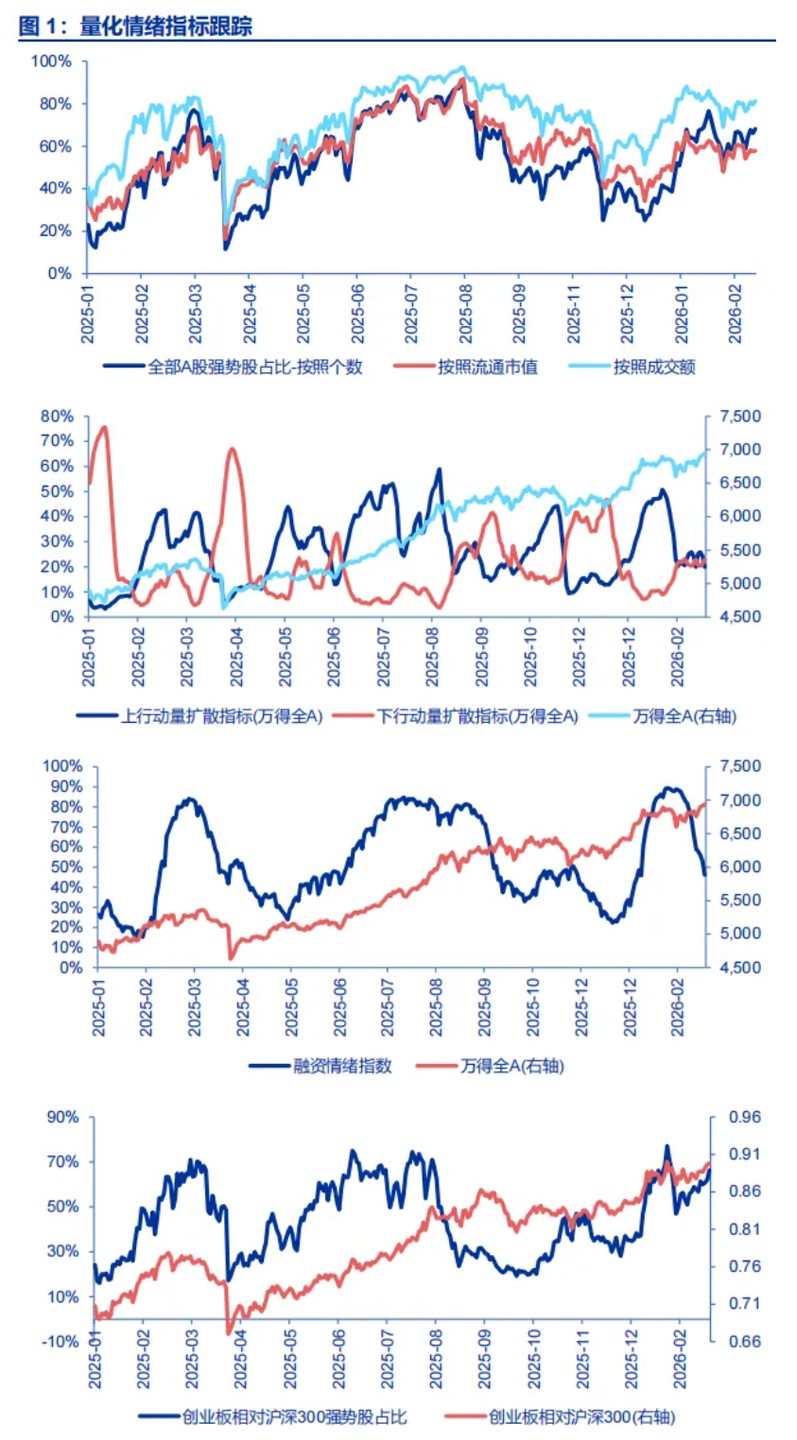
II. Observation of Short-term Market Characteristics: After the Spring Festival, the A-shares' reflection of long-term technology narratives is relatively weak, while the response to the currently visible "new and old economy inflation" is very positive. This is related to the mapping of "HALO trading" in A-shares and the relative fullness of the A-shares technology narrative due to disturbances in the Federal Reserve's easing expectations.
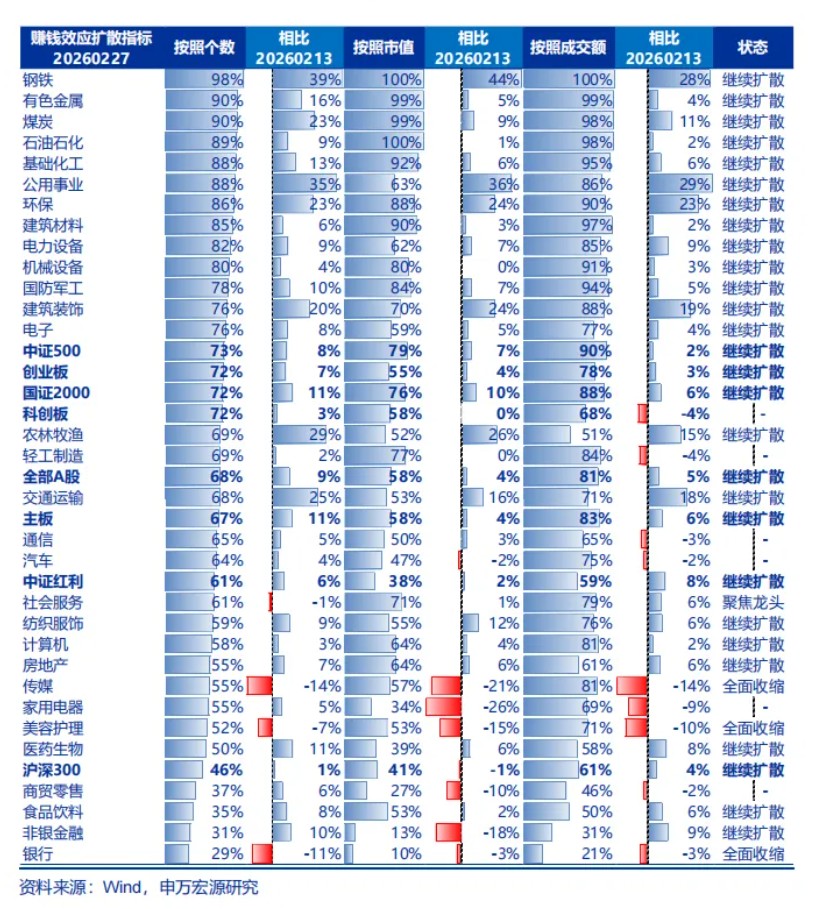
After the Spring Festival, the changes in short-term market characteristics of A-shares: the reflection of long-term technology narratives is relatively weak, while the response to the currently visible "new and old economy inflation" is very positive. The relative dominance of value style is a common feature globally. This is related to the mapping of "HALO trading" in A-shares. Additionally, the warming of inflation expectations and disturbances in the Federal Reserve's easing expectations have also limited the reflection of optimistic long-term expectations for technology. At the same time, the A-shares technology narrative has been relatively fully played out, and with the economic prosperity and performance realization not yet sufficient, valuations have already reached historical highs, placing the A-shares technology market in a more "realistic" phase. The advantages in China's robotics manufacturing and motion control sectors have already been priced in, and the ongoing progress in AI applications has also been reflected. These two sectors have shown weakness after the spring's realization catalysts. This market experiment reflects that the market needs to see "cross-stage development" in the industry to initiate a new round of upward trends, which aligns with our mid-term projection of a "two-phase upward market."
Maintaining the mid-term projection of a "two-phase upward market": The spring market of 2026 is an expansion and extension of the structural market of 2025, and we are currently still in the high area of the first phase upward market. At this stage, the overall PE valuation of all A-shares is at a historical high range, and there is an inherent demand for a corrective adjustment in the medium-term market. This corrective wave is primarily waiting for the reinforcement of industrial trends + more widespread verification of fundamental turning points (performance digestion of valuations) + easing of cost-performance issues + more sufficient conditions for residents' asset allocation to shift towards equities.
In the mid-term, there is also a "second phase upward," with cyclical improvement in fundamentals + technological industry trends entering a new phase + more sufficient conditions for residents' asset allocation to shift towards equities + resonance with expectations of increased Chinese influence. The window for the "second phase upward" to potentially start is around mid-2026. We continue to emphasize that in the two-phase upward market, the leading sectors and styles are consistent. The "inflation assets" of this era are technology + strategic resources.
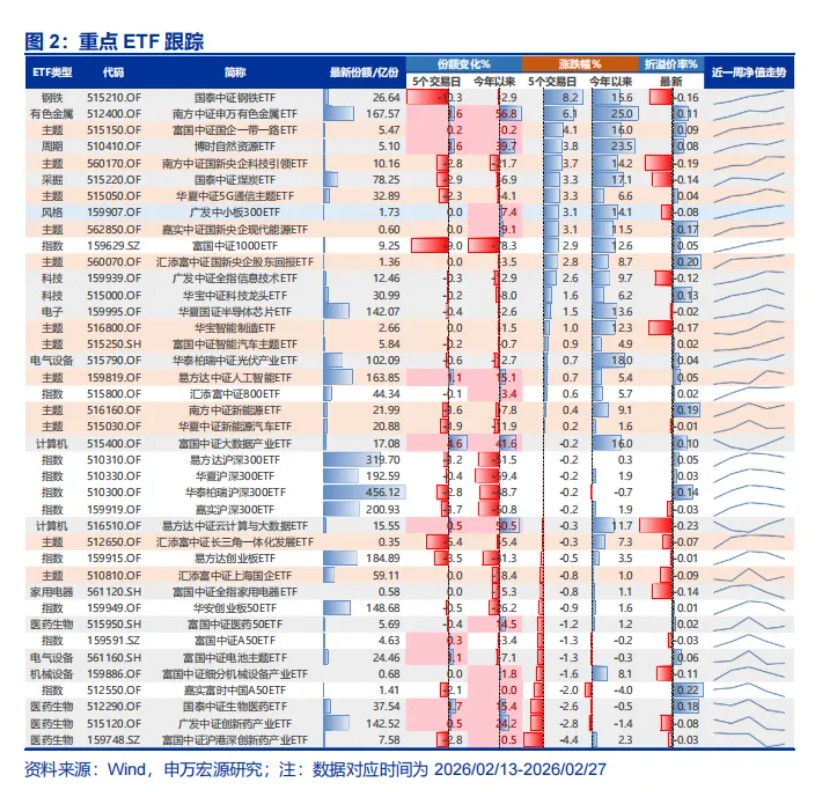
III. The short-term visible inflation direction is the main source of the dominant structure: cyclical goods (steel, coal) catalyzed by limited production are experiencing concentrated short-term increases, but the sustainability of price increases is in doubt during the demand verification period in March-April. We still recommend focusing on strategic asset inflation (non-ferrous metals, basic chemicals, oil, and oil transportation) for pro-cyclical allocation. The mapping of new economy inflation to the traditional economy remains the strongest direction in the short term, focusing on investment opportunities in internal combustion engines, fiberglass, optical fibers, and storage.**
The mid-term structural recommendation remains unchanged: cyclical technology + cyclical Alpha. Focus on cyclical technology: overseas computing power chains, AI applications (real opportunities in Hong Kong internet), semiconductors, robotics, commercial aerospace, energy storage, etc. Focus on cyclical Alpha: non-ferrous metals and basic chemicals. The extension of mid-term cyclical Alpha investment may be in export/overseas chains. Additionally, there is optimism about the revaluation opportunities in non-bank financials in the mid-term.
Risk Warning: Overseas economic recession exceeds expectations, domestic economic recovery is less than expected.
Source: Shenwan Hongyuan Strategy
Risk Warning and Disclaimer
The market has risks, and investment should be cautious. This article does not constitute personal investment advice and does not take into account the specific investment goals, financial conditions, or needs of individual users. Users should consider whether any opinions, views, or conclusions in this article align with their specific circumstances. Investing based on this is at one's own risk
