


After a year and a half, Trump plans to strengthen his offensive, and Brent crude oil rises above $85 in response
The Middle East conflict has caused a halt in navigation through the Strait of Hormuz, with Brent crude oil breaking $85 for the first time since July 2024. The U.S. has made strong statements, and the threat of an Iranian blockade has intensified expectations of supply tightening. The International Energy Agency (IEA) is urgently preparing to use 1 billion barrels of emergency stock to stabilize the market. Despite the global energy alarm being sounded, the White House currently has no plans to use strategic reserves
On March 3, Brent crude oil prices surpassed $85 per barrel for the first time since July 2024, with the rapid spread of conflict in the Middle East and the complete disruption of oil and gas transportation through the Strait of Hormuz being the core factors driving this surge, causing severe fluctuations in the global energy market.
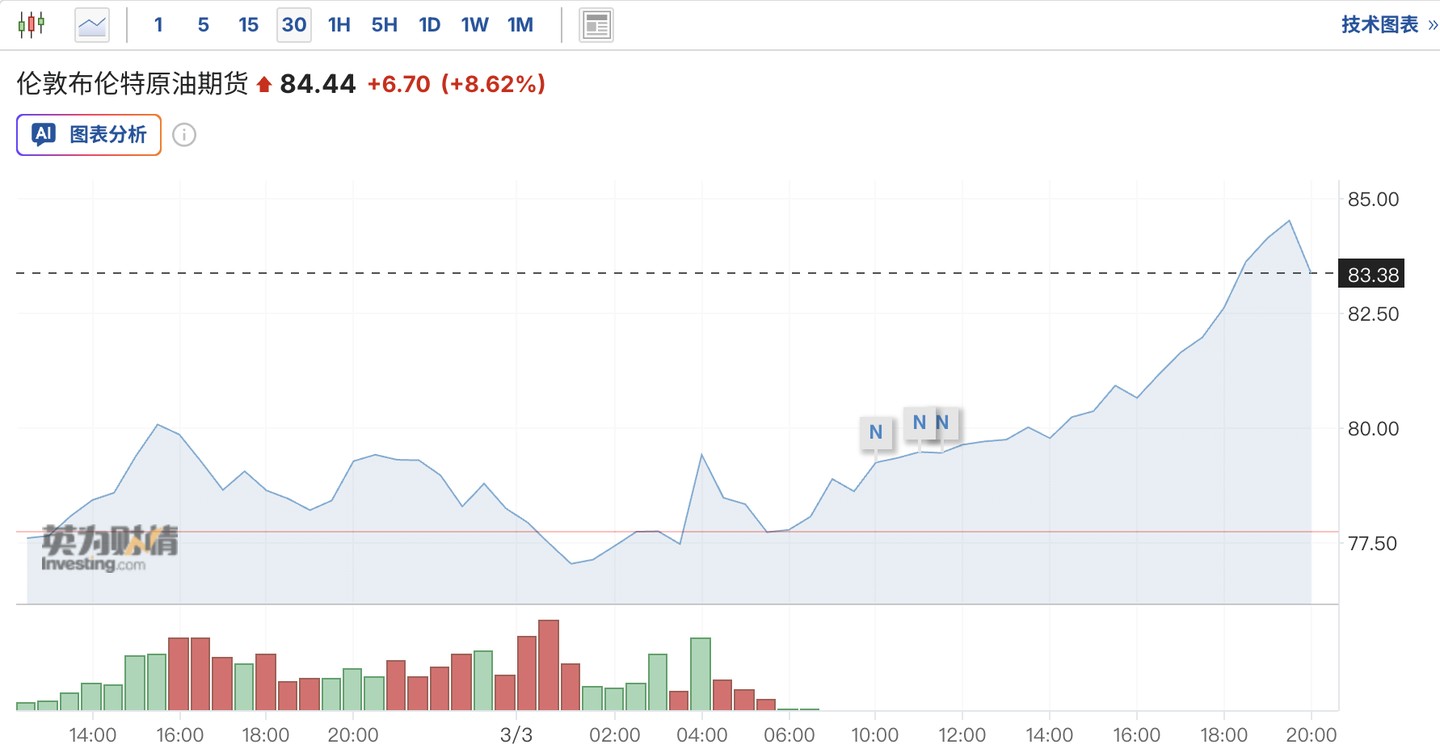
According to CCTV News, Trump stated that the U.S. will achieve its goals "at all costs"; Secretary of State Marco Rubio also made it clear that current military actions will be further strengthened. These two strong statements have stirred a strong market reaction, directly pushing oil prices to break through key levels.
The core of this energy market turmoil lies in the disruption of transportation through the Strait of Hormuz. According to Bloomberg analysis, if the blockage of this key waterway persists for a long time, it may force oil-producing countries in the region to cut production, leading to further upward risks for oil prices. The International Energy Agency (IEA) is on high alert and plans to use 1 billion barrels of emergency reserves to stabilize the market. Despite the global energy alarm being raised, the White House currently has no plans to use strategic reserves.
Limited Buffer Space for Crude Oil Supply, Market Awaits the Course of the Conflict
An advisor from the Iranian Islamic Revolutionary Guard Corps stated in an interview with Iranian state television that relevant forces "will ignite any vessels attempting to cross the Strait of Hormuz," causing market concerns about transportation safety to surge.
Although excess supply from other regions temporarily provides some buffer for oil prices, Bloomberg analysis indicates that current oil market indicators show that supply is under significant tension. If the blockage of the Strait of Hormuz cannot be reversed in the short term, oil-producing countries in the region may be forced to cut production, further tightening crude oil supply.
Documents Show IEA Prepared to Assist in Stabilizing the Market
A document prepared by the International Energy Agency (IEA) that Bloomberg News has seen indicates that the agency is ready to assist in stabilizing the global oil market following the conflict in Iran, noting that member countries have over 1 billion barrels of emergency reserves.
In this document dated March 2, the IEA stated that although oil production in the region has not been significantly affected overall, transportation through the Strait of Hormuz and liquefied natural gas production have been "significantly impacted." Reports cite informed sources stating that the IEA is scheduled to hold a meeting at 2 PM Paris time to discuss the situation in the Middle East. The agency coordinates the release of global oil inventories when market disruptions occur.
Despite a significant rise in oil prices since the outbreak of the conflict, media reports quote an informed source saying that the Trump administration currently has no immediate plans to tap into the U.S. Strategic Petroleum Reserve
