


Aluminum prices soar to a new high since 2022, Bahrain Aluminum suspends partial deliveries citing force majeure

The conflict between the U.S. and Iran has impacted shipping in the Strait of Hormuz, triggering a global aluminum supply chain crisis. Aluminium Bahrain (Alba) has invoked force majeure clauses for some customers, suspending metal deliveries primarily due to transportation disruptions rather than operational issues. Boosted by this news, London aluminum prices surged 4% in a single day, marking the largest increase since November 2024, with prices reaching a new high since 2022. Traders warn that if the situation persists, broader force majeure declarations may follow, putting manufacturers in Europe, Asia, and America at risk of spot shortages
The conflict between the U.S. and Iran is impacting the global aluminum market, with shipping through the Strait of Hormuz being obstructed, leading to a supply chain crisis. Traders warn that if the situation does not quickly ease, large-scale force majeure declarations may follow.
According to Bloomberg, Aluminium Bahrain BSC (Alba) has invoked the force majeure clause in supply contracts for some customers, suspending metal deliveries. The company officially confirmed this action on Wednesday. Driven by this news, London aluminum prices saw a maximum daily increase of 4%, marking the largest single-day rise since November 2024, with prices climbing to their highest level since 2022.
Alba stated that the force majeure declaration stems from transit issues in the Strait of Hormuz and is unrelated to operational disruptions or damage at its smelter facilities. Traders and investors are striving to assess the short-term and long-term impacts of this crisis on the market. Reports citing informed sources indicate that logistical bottlenecks could soon trigger a broader wave of force majeure declarations, putting manufacturers in Europe, Asia, and the U.S. at risk of spot supply shortages.
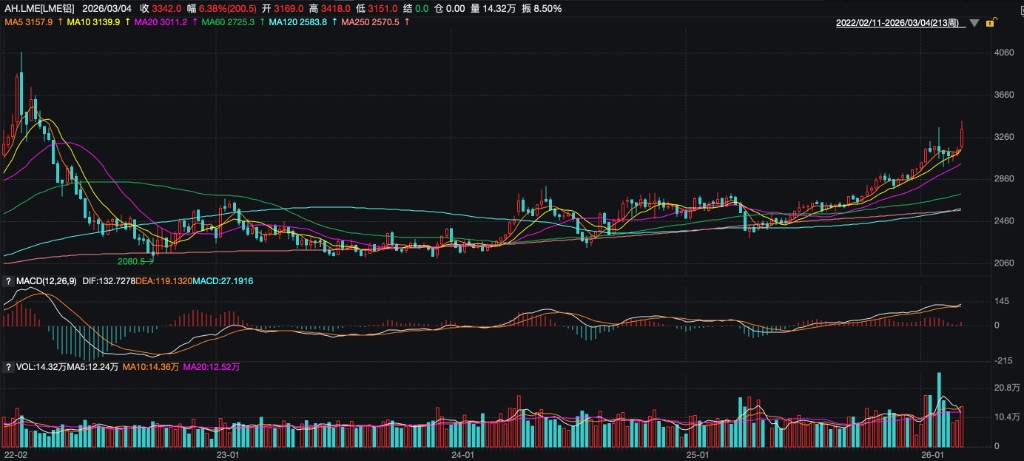
Alba Declares Force Majeure, Aluminum Prices Hit Four-Year High
Aluminium Bahrain is a major supplier of aluminum in the Middle East, with an annual production capacity exceeding 1.6 million tons, making it one of the largest single-site aluminum producers globally, consistently supplying primary aluminum to Europe, Asia, and other regions. The actual stagnation of shipping through the Strait of Hormuz has directly impacted the company's ability to ship externally.
Aluminum is the second most widely used industrial metal after steel, extensively utilized in automotive parts, household appliances, beverage cans, and window frames. Manufacturers favor aluminum due to its abundant reserves and relatively lower costs compared to competing materials like copper.
However, the aluminum market has faced cyclical supply shocks in recent years, exposing the vulnerability of the complex supply network from bauxite mining, alumina refining to aluminum smelting— many of which have highly specialized product forms that are difficult to replace quickly.
Strait of Hormuz Obstruction, Supply Chain Crisis Spreads
The effective stagnation of traffic through the Strait of Hormuz has thrown global aluminum traders into chaos. As a critical shipping route, each day's delay triggers a chain reaction in the market. Given that manufacturers generally adopt just-in-time procurement models, even a brief supply interruption can severely impact factory production.
Despite Trump's promise on Tuesday that the U.S. Navy would provide escort for tankers and other commercial vessels through the Strait of Hormuz, traders are skeptical about whether normal traffic can be quickly restored. According to Bloomberg, state-owned aluminum producers in Qatar have been forced to cut production, while the largest aluminum supplier in the UAE is urgently seeking to allocate inventory from outside the region to avoid supply disruption risks to customers.
Multiple Supply Pressures Combine, Market Bets on Further Aluminum Price Increases
In this round of geopolitical shocks, combined with the multiple supply pressures that already existed, the confidence of bulls in the aluminum market has significantly strengthened. According to Bloomberg, Western markets are facing issues with smelter shutdowns, which have previously supported aluminum prices. Disruptions in shipping through the Strait of Hormuz have further exacerbated uncertainties on the supply side.
Against this backdrop, many traders and investors are betting that this industrial metal will see a greater price increase, believing that the aluminum market is gradually shaking off the historical shadow of long-term supply surplus.
At the same time, other metals are also strengthening. Nickel prices rose by 2.2%, as the withdrawal requests for nickel inventories in LME warehouses reached the highest level since November last year, indicating that demand in the physical market is warming up
