


Crazy 24 Hours! Oil Prices Stage a "Historic Reversal"

"I think this war is already very thorough, it's almost over." This statement and expectation from Trump forcefully smashed the runaway oil prices, which were originally heading towards $120, back down to $85. Behind this 24-hour scare in oil prices lies the White House's deep anxiety over the impact of high oil prices on inflation and electoral prospects, as well as the complex energy game intertwined with the blockage of the Strait of Hormuz, production cuts in the Middle East, and disruptions in the global supply chain
"I believe this war is already very thorough, it's almost over."
This statement and expectation from Trump forcefully smashed the runaway oil prices, which were originally heading towards $120, back down to $85.
This is undoubtedly the craziest 24 hours in the oil market.
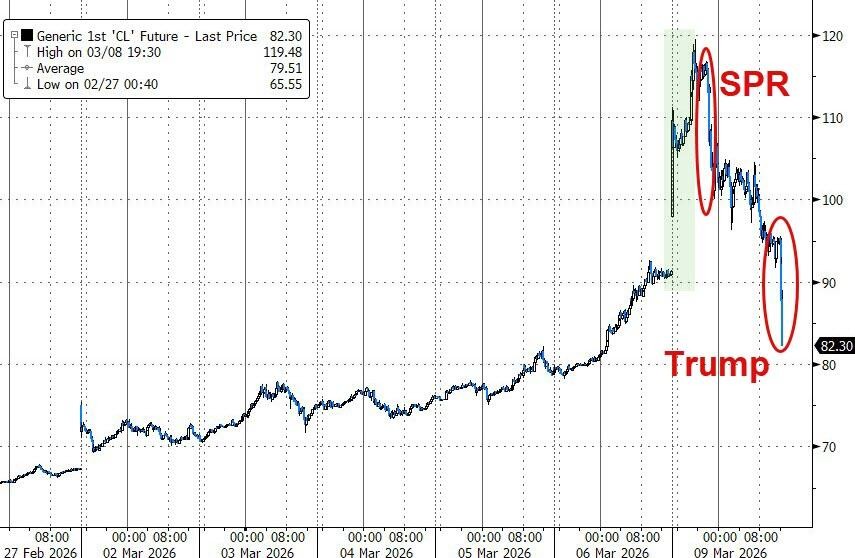
90! 100! 110! Almost 120... On March 9th, the oil market was soaring amidst headlines of escalating US-Israel-Iran conflicts, stagnation in the Strait of Hormuz, and a wave of production halts in the Middle East. WTI crude oil futures surged nearly 31%, with prices approaching $120 per barrel. The skyrocketing oil prices led to a "bloodbath" in global stocks and bonds. The stock market plummeted, and US Treasury yields soared.
But this script was completely torn apart within just 24 hours.
By the close of US stocks on Monday, US crude oil futures were only up 4.3%, at $94.77 per barrel.
Subsequently, in after-hours trading, oil prices further dropped to about $85 per barrel.
This means—oil prices retracted more than $35 of their gains within 24 hours.
"I have never seen such a market in my 30-year career," said an energy fund manager candidly.
Three major news triggered the market's reversal.
Three Signals Triggering the Reversal
First, undoubtedly, is Trump's TACO.
According to Xinhua News Agency, US President Trump hinted in an interview on the afternoon of the 9th that the US military actions against Iran might soon come to an end.
He believes that the military actions against Iran have been "very thorough," stating that Iran now "has no navy, no communication facilities, no air force, and very few missiles left, with their drones destroyed, including their drone manufacturing facilities," adding, "From a military perspective, they have nothing left."
Trump emphasized that the progress of the military actions "far exceeded" the initial estimate of 4 to 5 weeks, and dropped a bombshell: the US is temporarily lifting some oil-related sanctions "until the Strait of Hormuz returns to normal."
Regarding Iran's new Supreme Leader, Mojtaba Khamenei, Trump stated, "I have nothing to say to him," and claimed he already has a "suitable candidate" to lead Iran in mind.
Secondly, the news from the G7 (Group of Seven) yesterday about considering releasing strategic oil reserves reversed market expectations.
G7 leaders held an emergency meeting on Monday and announced: "We are prepared to take all necessary measures, including releasing strategic petroleum reserves (SPR) to stabilize the market."
Another signal came from the Strait of Hormuz. There seem to be signs of a resumption of transport in this critical waterway.
Market rumors suggest that some oil tankers have already passed through the Strait of Hormuz, slightly alleviating concerns about a complete disruption of crude oil supply According to Xinhua News Agency, Trump also stated in an interview that there are currently ships passing through the Strait of Hormuz, but he is still considering "controlling" this important waterway.
These signals directly extinguished the enthusiasm of crude oil bulls. Funds turned around wildly, with the Nasdaq index violently rebounding from a deep decline to close up 1.4%, and the Dow Jones Industrial Average staged a stunning reversal of over 1,000 points. U.S. small-cap stocks also reversed from a drop of over 4% to a gain of over 1%.
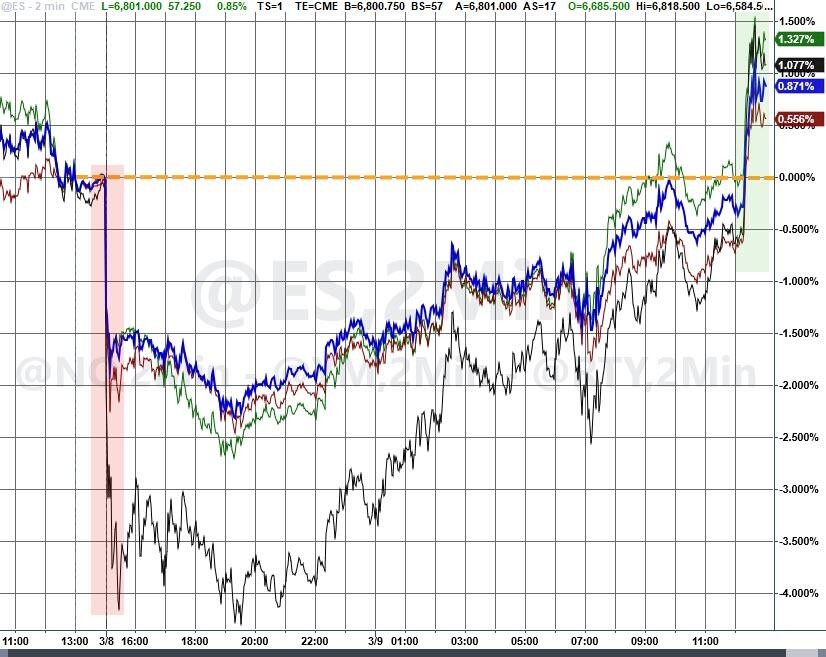
Almost all assets in the market staged a reversal.
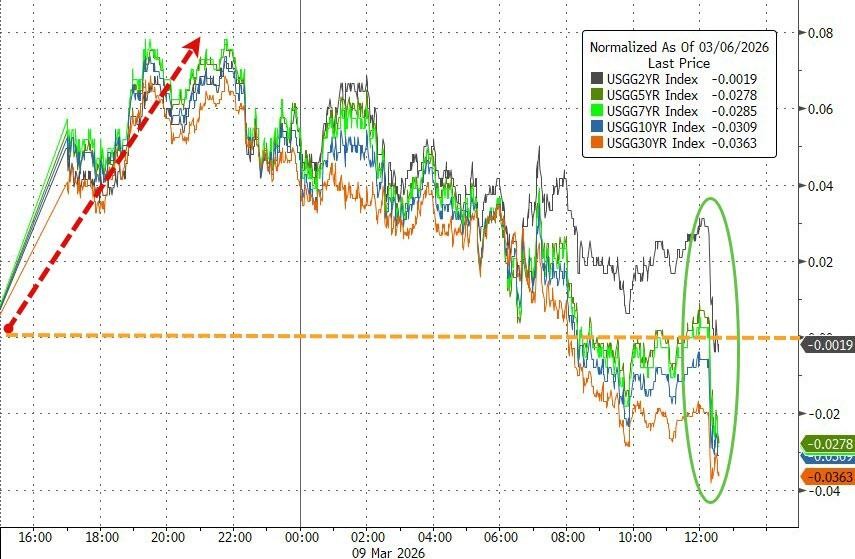
U.S. Treasury yields briefly rose by 8 basis points overnight, then fell sharply, ultimately closing up across the board.
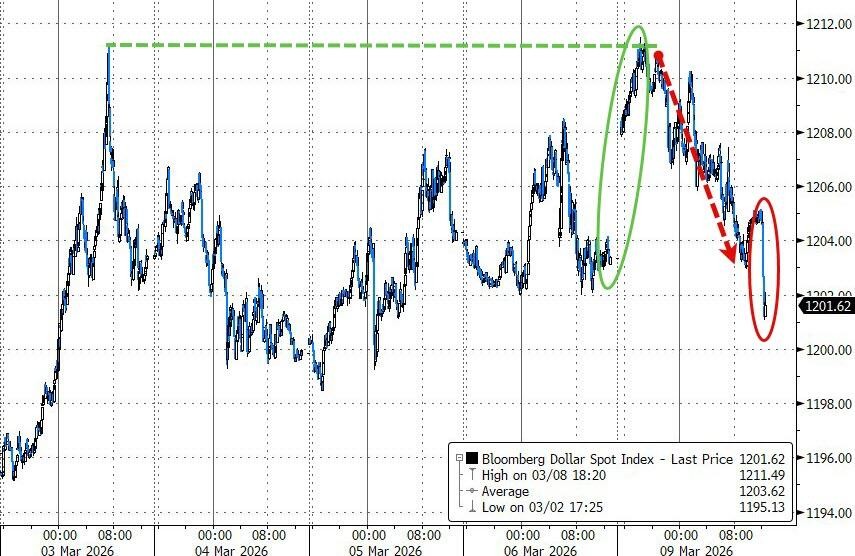
Trump's remarks reversed the overnight surge, and the dollar turned down.
Gold and Bitcoin began to rebound...
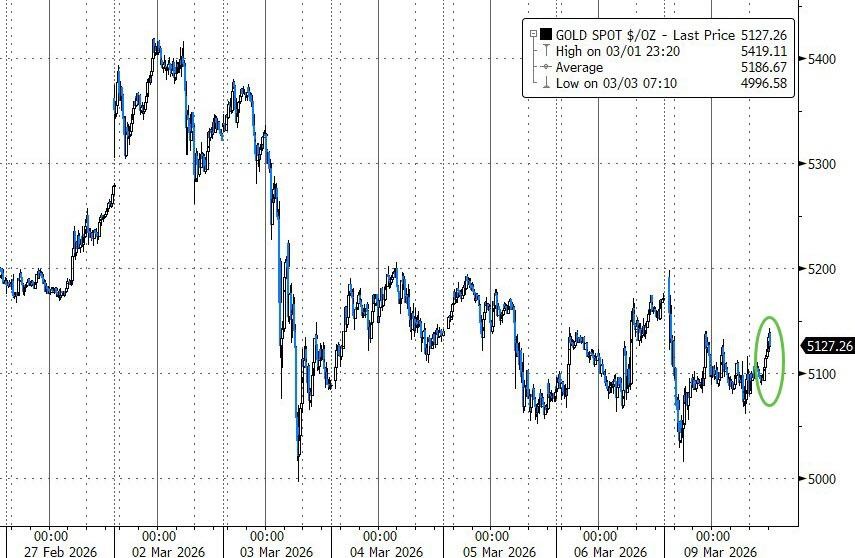
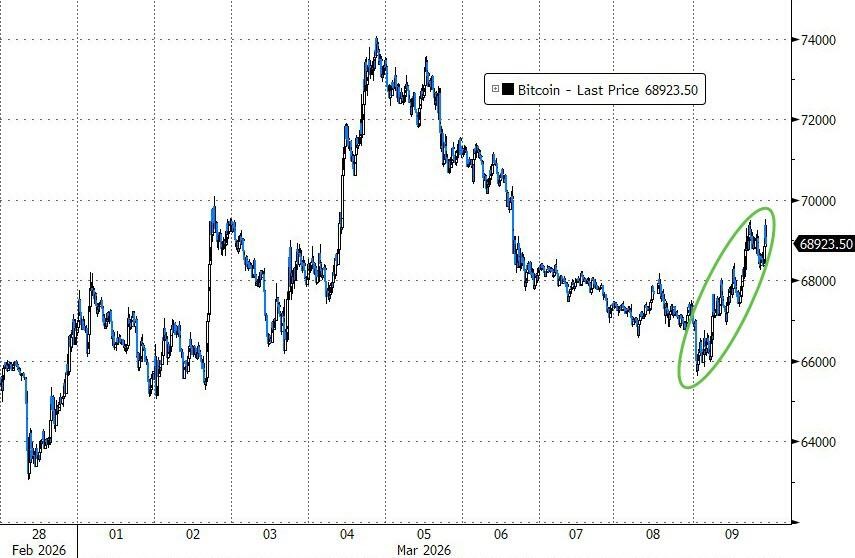
Anxiety, Anxiety, Anxiety
Why is the U.S. suddenly eager to "cool down" the war? America's anxiety is laid bare.
First is the anxiety over oil prices.
Due to oil prices, a clear divergence has emerged between the U.S. and Israel for the first time since the conflict began. According to a report by CCTV News yesterday, the Israeli Air Force recently attacked about 30 fuel storage facilities in Iran. The U.S. government is extremely dissatisfied with this, with high-ranking officials stating that it "is not a good idea."
The logic of the U.S. is clear: destroying civilian energy facilities will not only promote social unity in Iran but will also directly drive up global oil prices, which in turn will negatively impact U.S. inflation data. The risk of stagflation brought about by high oil prices is something the White House absolutely cannot tolerate at this time.
Trump's statement is like a bucket of cold water poured on the fervent crude oil bulls.
Secondly, there is the imminent countdown of the political clock.
Michael Hartnett, Chief Investment Strategist at Bank of America, pointed out in a recent report on March 9 that the reality of the midterm elections will force Trump to cool down the conflict in March.
The data is cold. Hartnett noted that since the outbreak of the conflict, U.S. oil prices have surged by 45%, and gasoline prices have risen by 15%. Inflationary pressures are being transmitted to ordinary voters in the most direct way, directly pushing Trump's economic approval rating down to 40% and his inflation approval rating down to a low of 36% "The prolonged conflict is politically unsustainable," Hartnett believes that Trump must turn the situation around before the midterm elections. Based on this "cooling" logic, he provided clear trading guidance: "Sell crude oil at a price level of $90/barrel, sell the dollar when the Dollar Index (DXY) is above 100, and buy 30-year U.S. Treasuries at a 5% yield level."
Again, there are physical limitations on missile stockpiles.
The interceptors needed to defend against Iranian retaliation typically require "two or three missiles per target," and insiders say that the interceptor stockpiles of countries like the U.S. and Israel may face "the risk of depletion within days." The U.S. military and its allies are "burning through THAAD, Patriot, and SM-3 missile systems at a faster rate than they can be replenished."
On March 4, an anxious Trump even planned to summon defense contractors to the White House to discuss accelerating weapon production.
The market has sharply picked up on the extreme fear in the U.S. regarding the backlash from rising oil prices. Coupled with Trump's latest statement, it essentially serves as a strong warning to market bulls— the White House is forcibly pulling runaway oil prices back to a safe line through expectation management.
Trapped Retail Investors: Treating Crude Oil as a Meme?
The sudden turn of events quickly ignited a "chain reaction" within the financial markets.
Oil prices can fluctuate by $35 in a single day, which is due to an extremely fragile market microstructure.
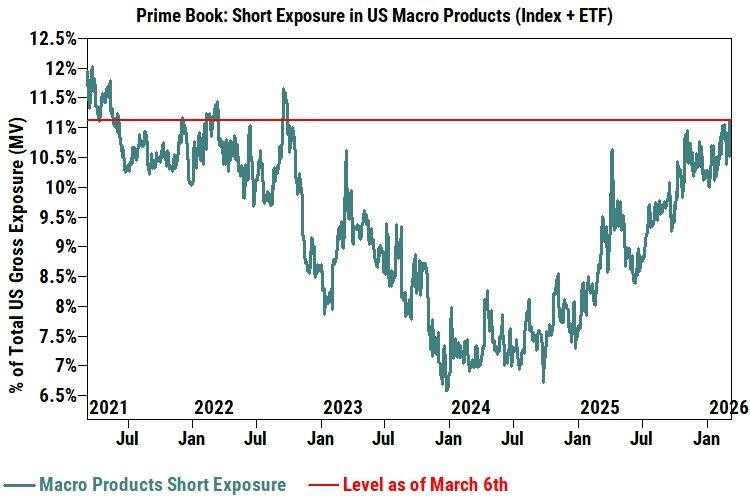
First, there is extreme short positioning. According to Goldman Sachs, hedge funds' short exposure in U.S. macro products (indices and ETFs) has surged to the highest level since September 2022, sitting at the 93rd percentile of the past five years.
When Trump signaled that "the war is about to end," a massive number of shorts were forced to buy back to cover their positions, resulting in a brutal "short squeeze" that pushed stock indices higher.
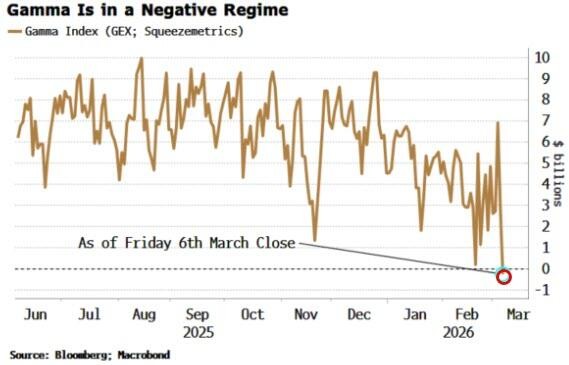
Second, there is the "amplifier" effect in the options market. Bloomberg macro strategist Simon White pointed out that options market makers are currently trapped in a "negative gamma" situation.
Under the "negative gamma" mechanism, when prices fall, market makers are forced to sell to hedge risks; when prices suddenly surge, they are forced to buy back. This passive "buy high, sell low" behavior has led to extreme volatility in both directions in the market.
In this battle of professional institutions, the frantically pouring in retail investors have been trapped. Bloomberg ETF expert Eric Balchunas noted that the U.S. Oil ETF (USO) broke its historical single-day trading volume record, with retail investors and high-frequency traders engaging in a frenzied game.
Faced with the massive buying by retail investors in the oil ETF, a trader in the Manhattan trading floor couldn't help but complain: "Do these idiots think it's all over? ... Are they treating crude oil as a meme stock?"
The Cold Reality: The Crisis is Not Over
The financial markets are celebrating the "end of the war" and the G7's storage release frenzy, but this has not resolved the physical deadlock that supported the previous surge in oil prices.
The real-world crude oil supply chain remains in a substantial "shock" state.
Goldman's research report reveals the cold reality:
We estimate that the transportation volume through the Strait of Hormuz has decreased by 90% compared to normal levels, resulting in a daily reduction of 18 million barrels in global markets (about 18% of global oil supply);
Theoretically, only 25% of the oil that could be transported via pipelines in the Middle East is currently being realized—partly due to actual transportation disruptions;
There are currently no quick shipping solutions, and most shipping companies remain in a "wait-and-see" mode;
Compared to historical experiences and simple models that only focus on Gulf exports, oil prices may need to reach demand destruction levels more quickly.
The shipping disruption has directly triggered a deadly chain reaction—"storage congestion."
Because tankers cannot come in or go out, the oil storage tanks along the Persian Gulf are quickly filling up. Oil-producing countries in the Middle East have been forced to begin reducing production.
Kuwait has directly announced force majeure, with production cuts expected to expand from 100,000 barrels per day to nearly 300,000 barrels. Since the country's exports rely solely on the Strait of Hormuz, its storage capacity will be exhausted within days. Abu Dhabi National Oil Company (Adnoc) has also announced adjustments to offshore production levels to meet storage demands.
Although Saudi Arabia is attempting to reroute exports to Yanbu Port in the Red Sea, setting a historical record for loading supertankers in the Red Sea, Goldman estimates that the net rerouting volume over the past four days has only been 900,000 barrels per day, far from filling the daily gap of 18 million barrels.
As for the G7's verbal commitment to release the Strategic Petroleum Reserve (SPR), it cannot solve the logistical problem of Middle Eastern crude oil not being able to be loaded onto ships or transported out.
Rob Thummel, portfolio manager at energy investment firm Tortoise Capital, pointed out the market's blind spot: "There is actually plenty of oil in the world. We just need to get it flowing."
Magda Chambriard, CEO of Petrobras, bluntly stated:
"Production can stop quickly, but recovery is not so fast."
In this crazy 24 hours, the financial markets are trading on the "expectation management" of the White House and the G7, but the industry is still trapped by the real "physical supply disruption."
Perhaps as long as the Strait of Hormuz remains blocked, the alarms for oil storage in the Middle East will not be lifted
