Trump TACO'd, can the market rest assured? UBS: The key is the navigation of the Hormuz Strait

UBS characterized Trump's statement as "the potential first signal of a downgrade," but there are still several significant variables: when the U.S. will stop its strikes, whether Iran will simultaneously cease its regional offensives, and whether the threat to shipping in the Strait of Hormuz can be lifted. If the situation effectively de-escalates within a few days, Brent crude oil is expected to fall back to the $70 range in the second quarter of 2026
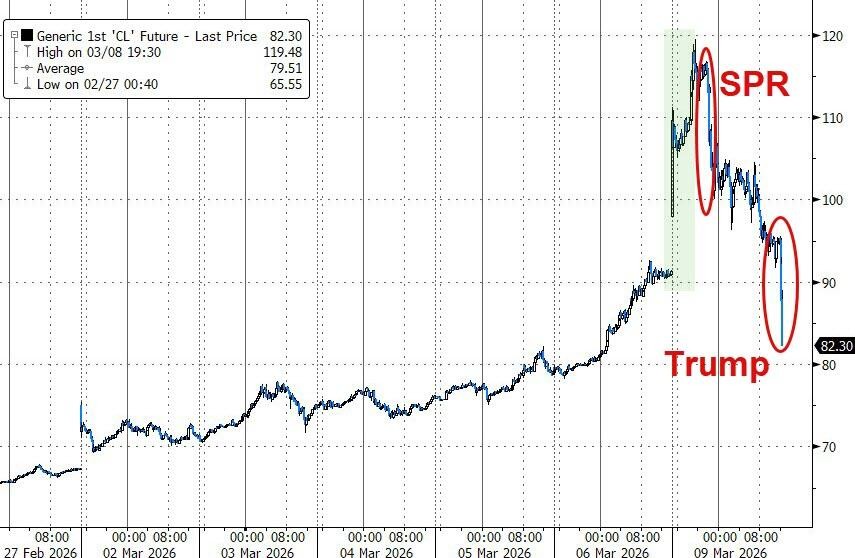
Brent crude oil hit $120 per barrel within the same day and then fell back to $90—marking the largest single-day volatility in history, triggered merely by a statement from Trump. However, UBS issued a warning that even if there are signs of political de-escalation, the actual flow of oil through the Strait of Hormuz will be the true watershed for the oil market moving forward.
According to CCTV News, on March 9th, Eastern Time, Trump publicly stated that the war in Iran is "almost over" and "progress is ahead of schedule," which the market interpreted as a potential ceasefire signal. Oil prices subsequently plummeted, with West Texas Intermediate (WTI) dropping over 31% from its daily high and down 7% from last Friday's close, while Brent crude fell by 4.67%.
UBS characterized Trump's statement as "a possible first sign of potential de-escalation," using cautious language. The research report also listed significant uncertainties that still exist:
When the U.S. and Israel will actually stop their strikes against Iran;
Whether Iran will also cease its regional strikes and stop threatening shipping through the Strait of Hormuz.
In other words, Trump's "TACO" signal does not equate to the crisis being resolved. Only when the above two conditions are met in the coming days will the situation truly approach the baseline scenario set in UBS's previous oil price update report.
In the baseline scenario, UBS predicts that Brent crude oil will fall back to the $70 per barrel range by the second quarter of 2026. However, a key variable is currently operating outside the model's assumptions.
Argus data shows that on March 9th, the actual production cut scale was between 6.2 million and 6.9 million barrels per day, while UBS's baseline assumption was an average daily cut of about 3 million barrels in March—almost double the actual figure.
UBS clearly pointed out in the report that the actual production cut may be slightly larger than the baseline scenario, which could keep oil prices at a slightly elevated level for a longer period. In other words, even if the situation trends towards de-escalation, the speed and magnitude of the oil price decline may not be as smooth as previously expected.
However, UBS cautioned that several significant variables still exist: when the U.S. and Israel will stop their strikes, whether Iran will simultaneously cease its regional offensives, and whether the threat to shipping through the Strait of Hormuz can be lifted. If the situation effectively de-escalates within a few days, it will approach UBS's baseline scenario from last week—Brent is expected to fall back to the $70 range by the second quarter of 2026.
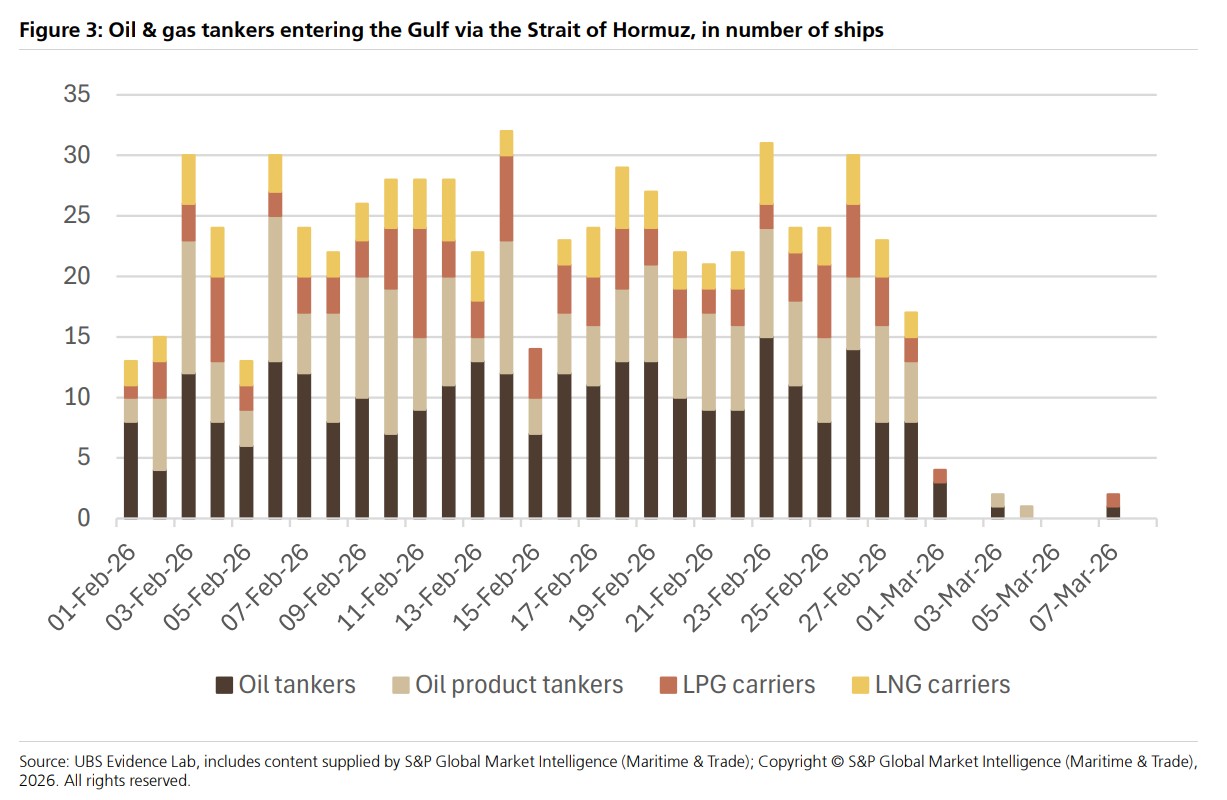
According to UBS's "Strait of Hormuz Shipping Tracker," about 50 oil and gas vessels passed through the Strait of Hormuz daily in February, which has now plummeted to 1 to 2 vessels.
"Regardless of how the conflict evolves, we believe that the oil and gas flow through the Strait of Hormuz will be the core data to watch in the near term. The duration of disruptions and the pace of flow recovery are crucial for market direction."