Inflation is too stubborn! The U.S. core PCE price index rose 3.1% year-on-year in January, reaching a two-year high, while remaining unchanged at 0.4% month-on-month

Wallstreetcn
2026.03.13 13:16
portai
I'm PortAI, I can summarize articles.

Against the backdrop of significantly waning expectations for interest rate cuts, this data further compresses the Federal Reserve's space to shift towards easing. The Federal Reserve is expected to maintain interest rates at next week's monetary policy meeting, and if inflationary pressures continue to heat up, it may further delay the window for resuming interest rate cuts

The latest inflation data from the United States shows that price pressures remain resilient, while consumer demand has softened, complicating the outlook for interest rate cuts by the Federal Reserve.

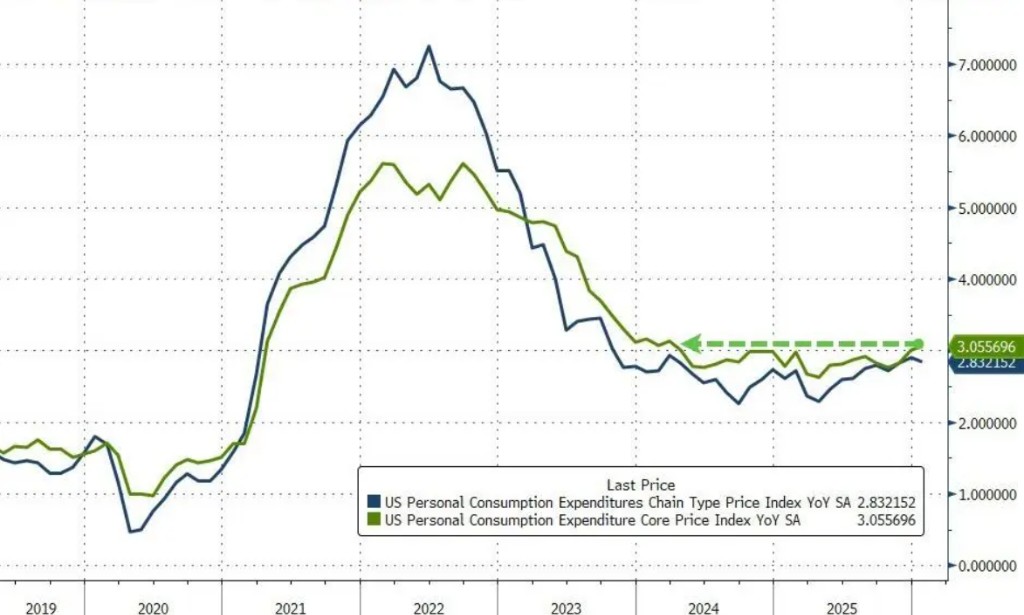
The U.S. Bureau of Economic Analysis released data on Friday indicating that the core Personal Consumption Expenditures (PCE) price index rose 3.1% year-on-year in January, which is basically in line with expectations, the highest level since March 2024, and increased by 0.4% month-on-month, matching expectations and the previous value.

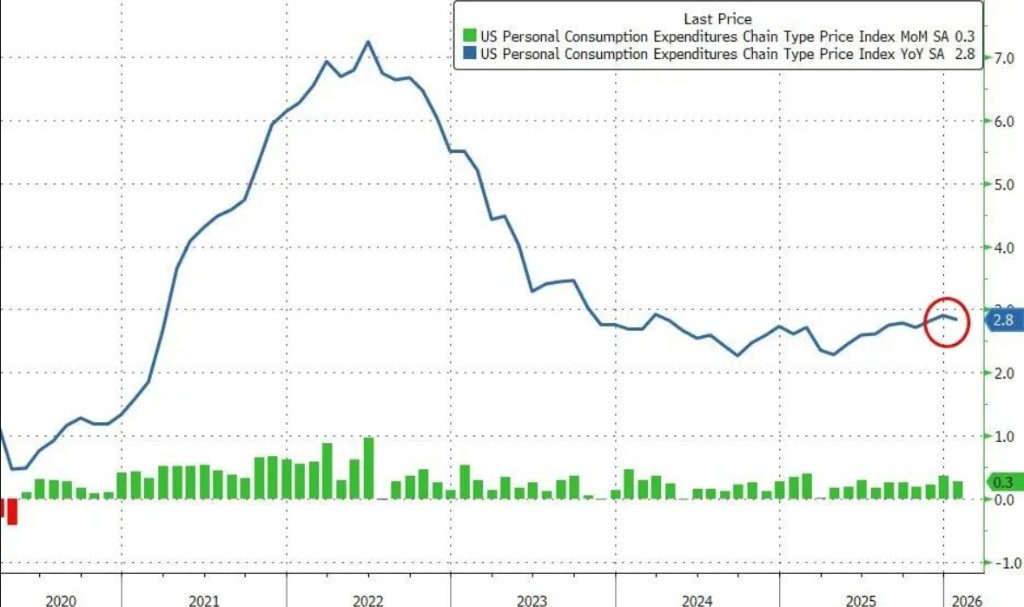
The overall PCE price index rose 2.8% year-on-year, below expectations and the previous value of 2.9%, and increased by 0.3% month-on-month, in line with expectations, slightly easing from the previous month's 0.4%.

Against the backdrop of significantly reduced expectations for interest rate cuts, this data further compresses the Federal Reserve's space to shift towards easing. The Federal Reserve is expected to maintain interest rates at next week's monetary policy meeting, and if inflation pressures continue to rise, it may further delay the window for resuming interest rate cuts—despite Trump continuously publicly pressuring for rate cuts.

Service Sector Inflation Dominates Gains, Commodity Prices Slightly Decline

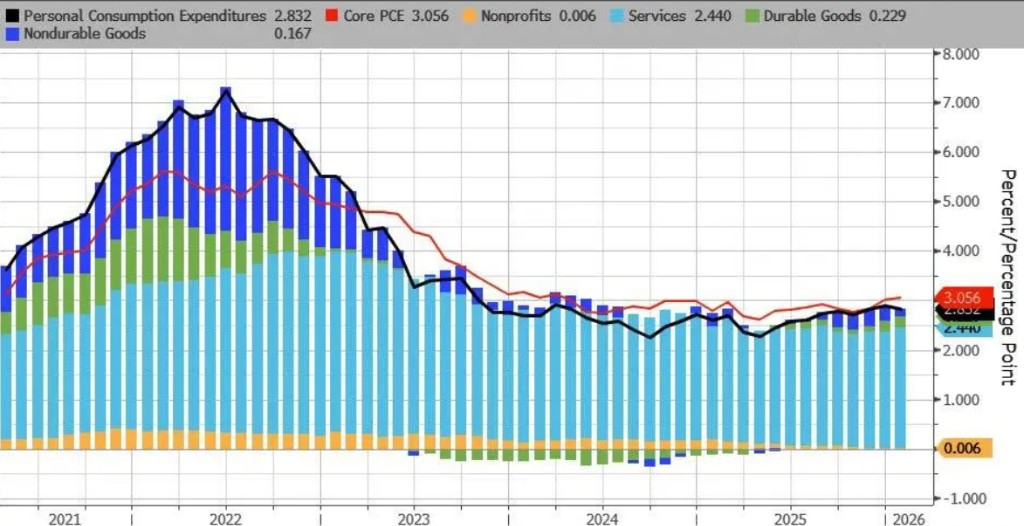
From a structural perspective, service prices remain the core driving force behind this round of inflation, while commodity prices only experienced a slight decline in January, failing to provide a significant offset to overall inflation.

This sub-item pattern continues the recent trend, reflecting that the price stickiness in labor-intensive services remains strong and is unlikely to cool quickly in the short term.

Consumption Structure Divergence, Commodity Demand Declines

Meanwhile, real consumer spending adjusted for inflation grew only 0.1% month-on-month in January, slightly better than analysts' forecast of zero growth, but still indicating a significant weakening of consumer momentum after the holiday season.

The data shows a clear structural divergence.

As the year-end shopping season concludes, consumers have cut back on spending for goods, while spending on essential services such as healthcare remains resilient.

Income and Expenditure Rise Together, Savings Rate Reaches Six-Month High

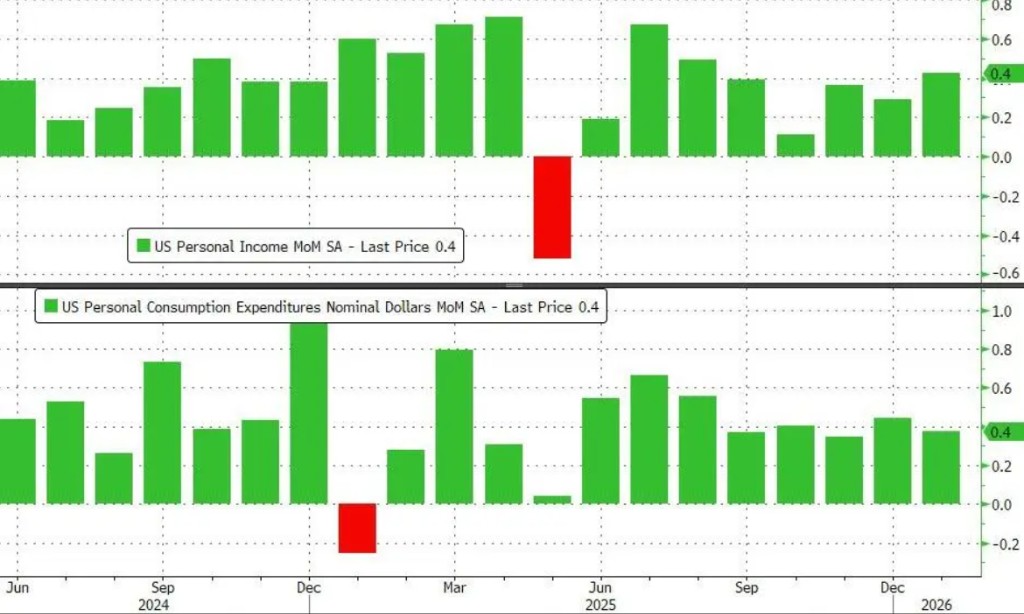
On the income side, wage growth has accelerated. Private sector employee wages increased by 5.0% year-on-year, up from 4.8% in December; government employee wages rose by 2.3% year-on-year, also accelerating from 2.1% in December.

On the expenditure side, real consumer spending (adjusted for inflation) grew only 0.1% month-on-month, slightly better than the median forecast of zero growth from Bloomberg economists.

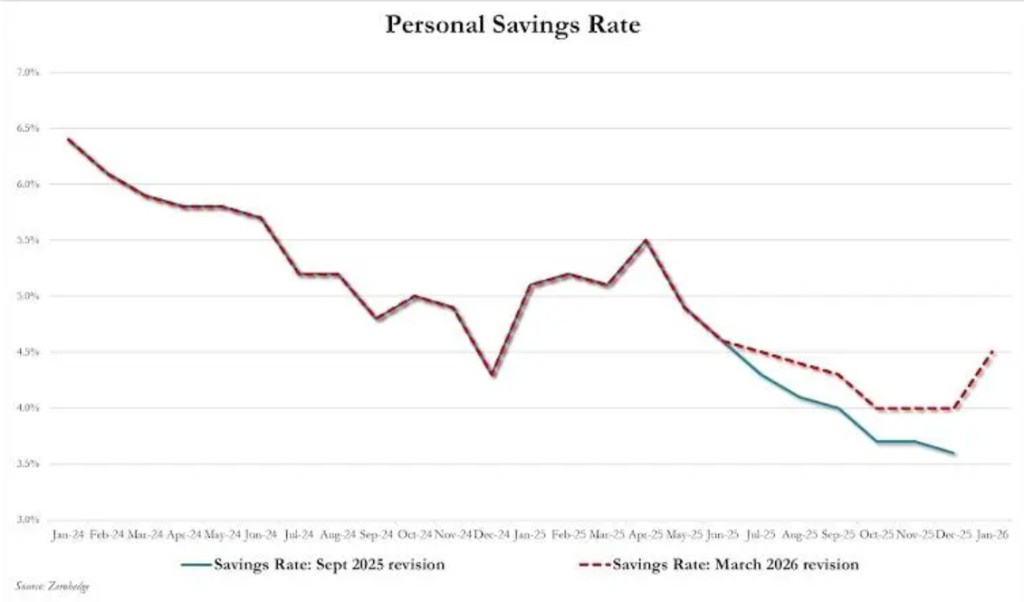
Despite the expenditure growth rate continuing to slightly exceed the income growth rate, the savings rate in January has slightly rebounded after multiple data revisions, reaching its highest level since July 2025. This indicates that some consumers are becoming more cautious under ongoing inflationary pressures, leading to a contraction in goods consumption—this phenomenon is particularly evident after the end of the post-holiday consumption season. While consumers maintain spending on essential services such as healthcare, their purchases of discretionary goods are noticeably more restrained.

Interest Rate Cut Path Blocked, Fed's Situation Delicate

Tax refunds and robust wage growth will provide some support for consumers' financial situations in the short term. However, the new round of imported inflation risks triggered by the Middle East situation, along with potential vulnerabilities in the job market, cast a shadow over the consumption outlook.

It is noteworthy that this data reflects the price situation prior to the escalation of the Iranian situation, and there are widespread concerns that the true extent of current inflationary pressures may be underestimated by existing data.

Against this backdrop, market expectations for interest rate cuts continue to shrink.

If inflation continues to exceed expectations, the timeline for the Fed to restart its interest rate cut cycle may be further delayed, which will also highlight the tension between Trump's pressure on the Fed for rate cuts and the latter's policy goal of maintaining price stability.