


Oil prices plummet, what happened?

Overnight, a series of news headlines about "U.S.-Iran contacts" and "navigation in the Strait of Hormuz" bombarded the market, directly pushing WTI crude oil down from above $102 to below $94. The market is looking for signs of de-escalation from signals such as shipping recovery, Trump's negotiation statements, and the U.S. war "exit options." However, Iran still denies contact with the U.S. and emphasizes that it has not requested a ceasefire
Overnight, a series of news headlines about "U.S.-Iran contacts" and "navigation in the Strait of Hormuz" bombarded the market, directly pushing WTI crude oil down from above $102 to below $94.
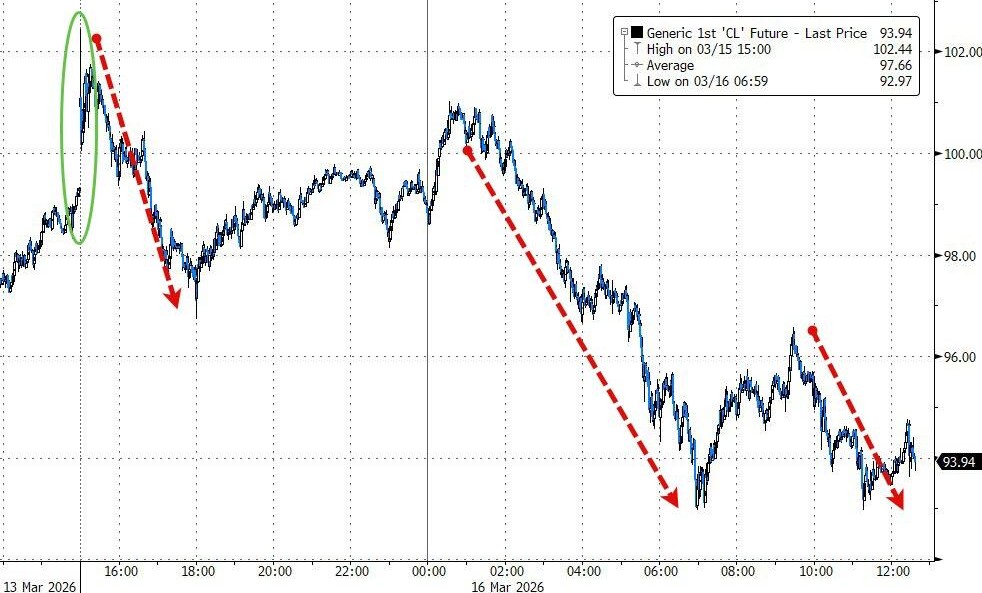
How did this happen? According to media analysis:
-
On Monday daytime Beijing time (corresponding to the overnight U.S. stock market period): Oil prices opened high due to the chaos caused by the attack on Iran's key energy hub—Kharg Island. However, as expectations of "potential easing of shipping in the Strait of Hormuz" emerged, the upward momentum quickly faded and even turned into a decline at one point.
-
From Monday afternoon to evening (corresponding to the European trading period): Reports indicated that the Iranian Foreign Minister commented that the U.S. has "learned a lesson," raising hopes for a possible "off-ramp" strategy, leading to an expansion of the decline in oil prices.
-
On Monday night (corresponding to the pre-market period for U.S. stocks): U.S. Treasury Secretary Janet Yellen assured that efforts were being made to strengthen support for transit through the Strait of Hormuz, adding that some vessels had passed through the strait with U.S. consent, causing oil prices to drop further.
-
At 00:30 today (12:30 PM Eastern Time): Trump publicly stated that "there are people in Iran who want to negotiate," causing oil prices to give back the day's gains.
-
At 01:10 today: Trump reiterated that "he believes the Strait of Hormuz will soon resume navigation," accelerating the decline in oil prices.
-
At 02:20 today: Market rumors suggested that Israel estimated Iran was seeking to reach an agreement quickly, and it was rumored that the Iranian Foreign Minister had been in text contact with a U.S. envoy recently. Oil prices plummeted to the day's low.
-
At 03:30 today: U.S. media reported that "there has been direct contact between the U.S. and Iran recently," leading to a sharp drop in oil prices.
-
At 03:50 today: U.S. media followed up with reports that "Trump receives options daily to end the war with Iran," causing oil prices to completely fall below the $94 mark.
The market seems to be starting to believe in signs of easing "U.S.-Iran conflict," with oil prices reacting to the news overnight, while U.S. stocks rose due to the decline in oil prices.
The White House's "Off-Ramp"
The market's pricing of the "off-ramp strategy" is not unfounded. The continuously rising U.S. domestic gasoline prices have just set a record for the largest increase in history, and the momentum shows no signs of slowing down. This direct inflation and pressure on people's livelihoods may be forcing the Trump administration to seek a way to end the conflict.
According to [CCTV News](https://content-static.cctvnews.cctv.com/snow-book/index.html?item_id=10839535545525655641&channelId=1119&toc_style_id=feeds_default&module=ccnews%3A%2F%2Fappclient%2Fpage%2Ffeeds%2Fdetail%3Furl%3Dhttps%253A%252F%252Fcontent-static.cctvnews.cctv.com%252Fsnow-book%252Findex.html%253Fitem_id%2 On March 17, multiple informed sources revealed that the U.S. military has developed various "exit options" for President Trump while formulating operational plans for the conflict with Iran, allowing him to end the conflict when necessary. The sources indicated that these "exit routes" have been incorporated into the daily war planning.
White House Press Secretary Levitt stated that the U.S. government initially assessed that it would take approximately 4 to 6 weeks to achieve military objectives. She mentioned that the U.S. military is executing its mission, and the operation will conclude when the President believes the objectives have been met and the threat posed by Iran has been eliminated.
CCTV News pointed out that some government advisors advocate for the development of an exit strategy, fearing that the war could trigger global economic instability; others believe it should be an opportunity to weaken Iran's influence in the region.
U.S. media NBC confirmed this internal division. David Sacks, Trump's White House advisor and head of AI and cryptocurrency affairs, publicly called for: "I agree that we should strive to find an exit strategy. Now is a good time to declare victory and withdraw, which is clearly what the market wants to see." At the same time, reports indicated that Trump expressed a desire to remain in Washington due to the war and has requested to postpone related diplomatic meetings "for about a month."
Iran: The U.S. and Israel have already "learned a lesson," but do not seek a ceasefire
In response to Trump's statements, Iran indicated that "the end of the war depends on ensuring that 'aggression' does not occur again," while reiterating that it has not issued any ceasefire requests.
According to Xinhua News Agency, Iranian Foreign Minister Zarif stated on March 16 that "the war waged by the U.S. and Israel against Iran must end in a way that guarantees 'aggression' does not happen again," and noted that the U.S. and Israel have "learned a lesson," realizing that they are facing a country that will defend itself without hesitation and is prepared to continue the war.
Zarif made these remarks at a weekly press conference held at the Iranian Foreign Ministry. He said, "When we say we do not wish for a ceasefire, it is not because we want to continue the war, but because this time, the war must end in a way that makes the enemy never dare to launch attacks and aggression again." Zarif stated that the U.S. and Israel have mobilized all their forces in an attempt to force Iran to "surrender unconditionally," but Iran is engaged in a "glorious" resistance and will steadfastly continue to resist.
He reiterated that Iran has not issued any ceasefire requests. After more than two weeks of conflict, the U.S. and Israel have begun seeking assistance from other countries to help ensure the safety of shipping in the Strait of Hormuz. Iran's stance is that the Strait of Hormuz is only closed to "enemies and their allies, as well as unjust aggressors against our country."
Iran Quickly Denies Recent Contact with the United States
In response to the rumors of U.S.-Iran contact that have been widely circulated, Iranian Foreign Minister Abbas Araghchi quickly refuted them on social media. According to media reports, Araghchi stated on social media: "My last contact with Mr. Whitaker was before his boss decided to launch illegal military strikes against Iran again, stifling diplomatic efforts."
Araghchi pointed out the motive behind the false news: "Any contrary statements seem to be aimed at misleading oil traders and the public."
Previously, the semi-official Tasnim News Agency quoted an informed Iranian source as saying that Iran denied reports of recent contact with the United States, stating that the reports were purely false and baseless.
"Protection Alliance" Cools Down
The current market's one-sided optimism is also cooling down in the "Protection Alliance."
The United States' attempts to resolve the oil supply disruption with multilateral forces have hit a deadlock. Xinhua News Agency reported that Trump publicly complained that some countries were "unenthusiastic" about assisting the U.S. in ensuring the safety of navigation in the Strait of Hormuz.
Trump specifically named some of these countries as long-term recipients of U.S. aid and protection, complaining: "While we will protect them, when we find ourselves in trouble and need help, they will never step up to support us."
The statement from EU High Representative for Foreign Affairs and Security Policy Josep Borrell confirmed this isolated situation, as he bluntly stated: "This is not Europe's war." He also indicated that EU member states have no intention of extending the existing "shield" maritime escort operation to the Strait of Hormuz.
On the same day, German Chancellor Merz stated that Germany would not participate in military operations to protect tankers in the Strait of Hormuz, asserting that the Iranian conflict is not a NATO issue.
"Chaos and Confusion" in Asset Pricing, Ceasefire Probability Stays at 50%
Goldman Sachs trader Bobby Molavi provided a highly summarizing comment on the current market: "In the past few weeks, the market has been a strange mix—intertwined with calm, panic, pain, hope, fear, more panic, more pain, and some confusion."
Funds are losing their anchor. "Fundamentals are competing fiercely with themes and narratives," Molavi pointed out, noting that the asset management industry is rarely required to deal with regime changes, geopolitical turmoil, and technological disruption under such drastic changes in cross-asset correlations and volatility.
"The impact of geopolitical and macro factors on economic and micro levels is more significant than ever. Fundamentals are competing with various themes and narratives."
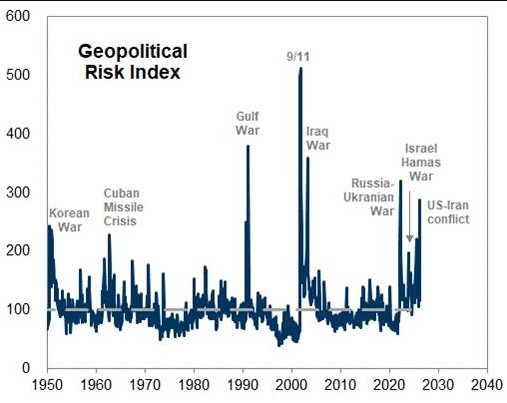
The mechanical inverse correlation logic of "falling oil prices = rising U.S. stocks" became the only main line overnight. As oil prices fell, inflation anxiety eased, and U.S. Treasury yields declined. The three major U.S. stock indices ultimately closed up about 1% But this is not based on fundamental optimism. Goldman Sachs trading desk data shows that market activity was extremely low that day. The rise in U.S. stocks was mainly driven by short covering and the selling of zero-day-to-expiration (0-DTE) put options, rather than substantial capital inflow.
Safe-haven assets also showed a split trend. The dollar weakened, and gold fell back to around $5,000; meanwhile, Bitcoin saw aggressive buying, breaking through $74,000 and reaching a new high since early February.
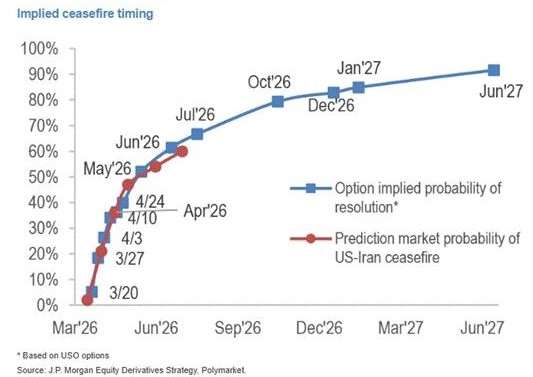
Current options and prediction markets suggest that the probability of reaching a ceasefire within two months is only about 50%.
Signals of Navigation in the Strait?
Currently, there are reports indicating that navigation in the Strait of Hormuz has begun to resume.
Institutional data shows that since March 11, no attacks on tankers have been reported in the Hormuz region.
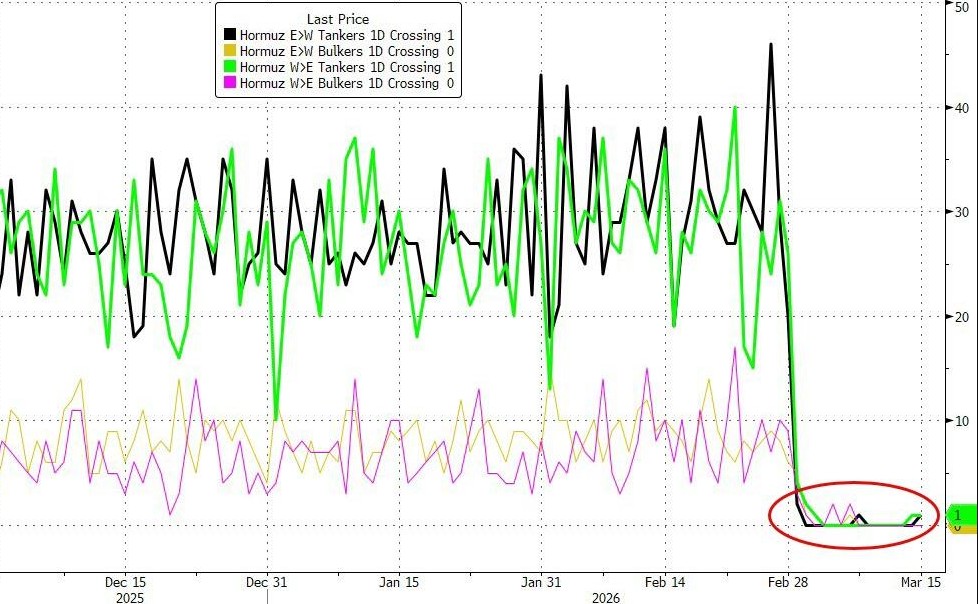
Meanwhile, the consulting director of EOS Risk Group stated that in the past 24 hours, at least four vessels have departed from the Strait of Hormuz after briefly rerouting through the Larak-Geshm Strait.
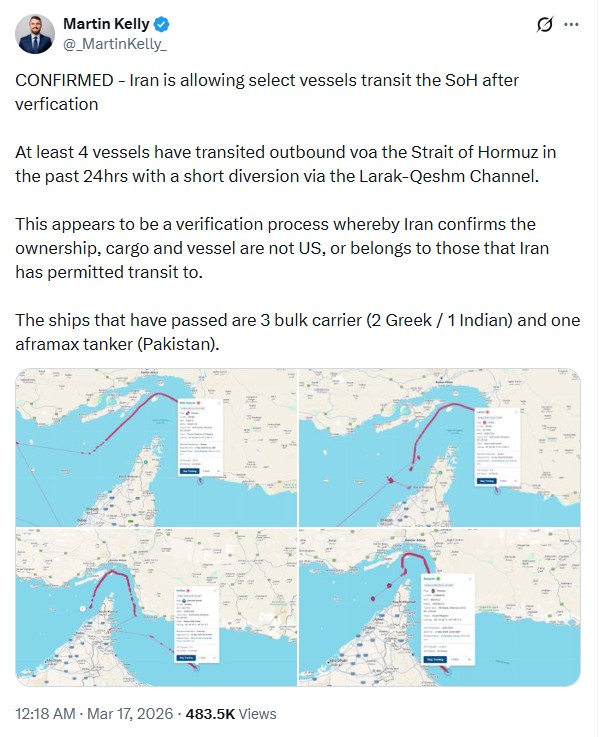
However, on a physical level, the Strait of Hormuz, which carries 20% of the world's oil supply, remains fraught with crisis.
According to NBC, after more than a dozen merchant ships were attacked by drones, the strait has effectively closed to tanker traffic. The conflict has even spilled over to the entire Middle East's energy infrastructure: the U.S. and Israel bombed Iran's oil export hub on Khark Island; Saudi Arabia, Dubai, and Kuwait reported multiple drone attacks; a key oil export terminal in Oman was evacuated after a tanker was attacked; Iraq suspended operations at its oil terminal; and the Fujairah oil port in the UAE has faced consecutive drone strikes.
In response to requests for escorting merchant ships, U.S. Joint Chiefs of Staff Chairman General Dan Caine stated that the situation for escorting tankers through the waterway "remains too complex." More firmly, Iran's new Supreme Leader Mojtaba Khamenei clearly stated in his first public speech that the strait should remain closed.
JP Morgan warned that the closure of the strait and subsequent production and refining shutdowns mean that the substantial pain of commodity shortages and soaring inflation has not yet fully manifested. Funds are blindly rushing in low trading volumes based on news headlines, and could be hit at any moment by the backlash of geopolitical realities
