


Why did gold and silver plummet?
On Thursday, spot gold fell 3.5%, reaching a six-week low, with a cumulative decline of nearly 8% this week, likely to create the largest single-week drop since March 2020. Silver also experienced an intraday plunge of 12%. The core driver of this round of decline is the reversal of interest rate expectations, as central banks in multiple countries in Europe and the U.S. have issued hawkish signals one after another. Meanwhile, retail investors have continuously net sold gold ETFs, and CTA hedge funds have actively reduced long positions, exacerbating liquidity pressure and selling
The sharp decline in gold and silver is driven by the reversal of interest rate expectations and liquidity pressures.
On Thursday, March 19, spot gold fell by 3.5%, briefly dropping to the $4,500 mark, hitting a six-week low. Silver also plummeted 12% during the session, with the decline significantly narrowing later, closing down 3.3% in New York.
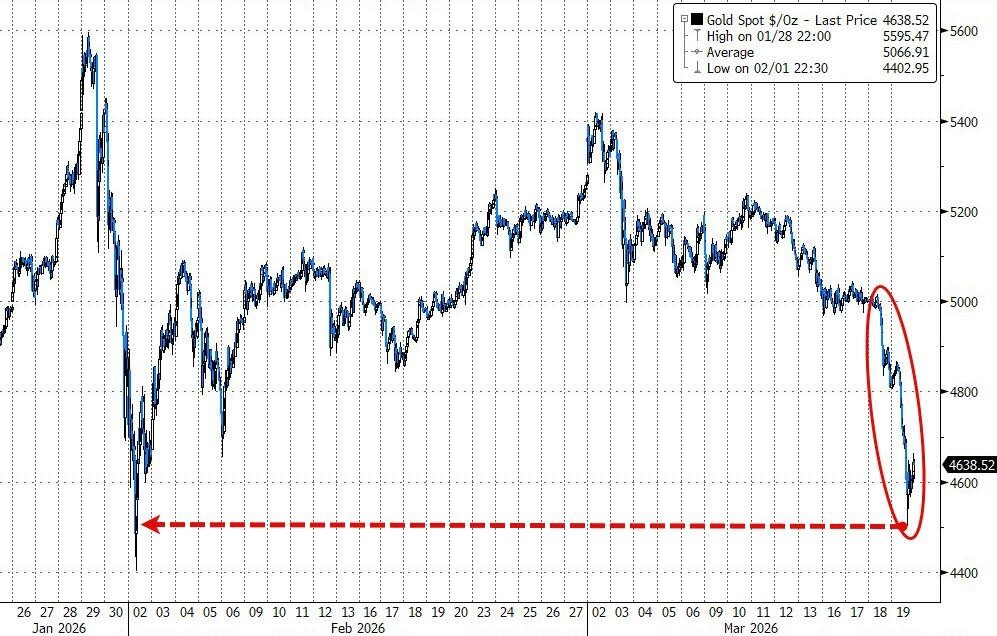 (Gold price plunge)
Since the conflict between the U.S. and Iran, gold has been declining for several consecutive weeks. This week, it has accumulated a nearly 8% drop, potentially marking the largest single-week decline since March 2020. Former JP Morgan precious metals trader Robert Gottlieb has warned investors:
Do not rush to bottom-fish; the market is currently too volatile.
He added that selling pressure may continue until volatility begins to narrow and prices stabilize.
Analysts believe that the signals released by the central banks of the U.S. and Europe this week suggest that the pace of interest rate declines may be slower than previously expected. Meanwhile, both professional and retail investors are simultaneously reducing their exposure to precious metals. Under the dual pressure of failed rate cut hopes and liquidity shocks, the long positions established in gold and silver are rapidly unraveling.
Reversal of Interest Rate Expectations is the Core Driver
The fundamental logic behind this round of declines lies in the repricing of the interest rate environment.
The conflict in the Middle East has triggered a significant rise in oil, natural gas, and fuel prices, leading to heightened concerns about global inflation prospects. Since gold does not generate interest income, the contraction of rate cut expectations directly undermines its relative attractiveness.
Gold tends to perform well in low-interest-rate periods because the opportunity cost of holding gold is low; when interest rates are high, assets like bonds that can provide stable returns become significantly more attractive to capital.
The energy shock caused by the Middle East conflict has put global central banks in a dilemma regarding inflation and economic growth prospects, prompting them to issue hawkish statements this week;
- The Federal Reserve kept interest rates unchanged, with a hawkish tone;
- The Bank of Japan also held steady and stated that the situation in the Middle East complicates the outlook for monetary policy;
- The Swiss and Swedish central banks announced unchanged rates while warning of uncertainty in the economic outlook for the coming months;
- The European Central Bank maintained its interest rates while lowering growth expectations and raising inflation forecasts, indicating an increased risk of stagflation;
- The statement from the Bank of England is particularly noteworthy. The Bank of England clearly stated it is ready to "take action" to address inflation, catching the market off guard.
Aakash Doshi, Global Head of Gold and Metals Strategy at State Street Global Advisors, stated:
Before the outbreak of war, the money market expected the Federal Reserve to cut rates twice this year, whereas the current market pricing reflects that there will be no easing this year.
A similar logic played out in 2022. After the Russia-Ukraine conflict, soaring energy prices pushed inflation higher, causing gold to decline for seven consecutive months from April to October that year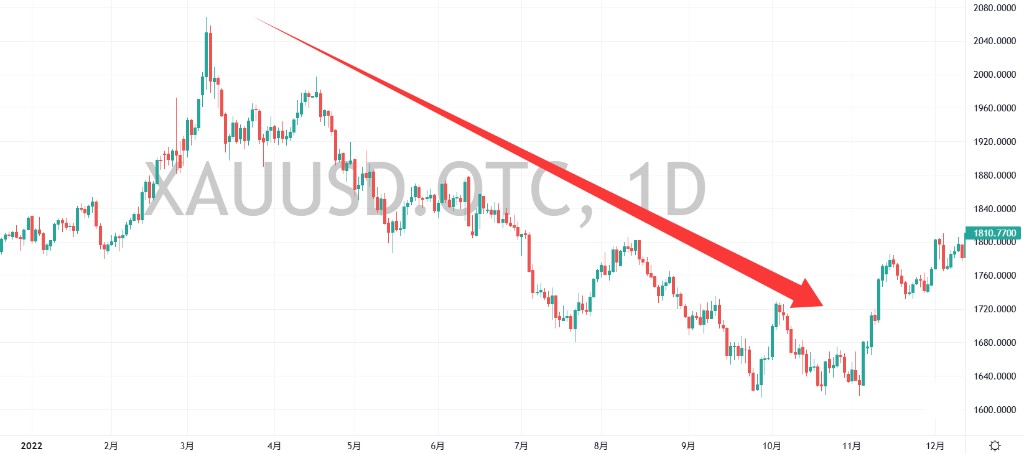 (After the Russia-Ukraine conflict, spot gold has fallen for seven consecutive months, source: Wall Street Insight)
Retail Enthusiasm Cools, Net Outflow from ETFs
Retail investors' enthusiasm for gold is showing signs of waning.
According to VandaTrack data, the world's largest gold ETF, SPDR Gold Shares, has seen net selling by retail investors for six consecutive trading days. As of Thursday's trading session, the net selling amount during this period was approximately $10.5 million.
However, this scale is still small compared to the previous buying spree, where the highest single-day net purchase reached $36.8 million last year. But analysts point out that the directional shift itself has released a clear signal that retail investors' willingness to allocate to gold is weakening.
Professional investors are also reducing their metal positions. Trend-following hedge funds (CTAs) that rely on algorithms to identify asset price patterns are actively reducing their gold positions in the current volatile market.
Tom Wrobel, Capital Consulting Director at Société Générale's Commodity Brokerage Division, stated:
Over the past six to twelve months, CTAs have indeed been in an established upward bullish trend in gold. However, they may still overall hold long positions in gold but are managing risk on these positions and significantly reducing their scale.
Suki Cooper, Global Head of Commodity Research at Standard Chartered Bank, pointed out that given the significant rise in gold and silver prices over the past two years, some investors are choosing to take profits to offset losses in other assets, such as meeting margin calls triggered by stock market declines.
The strengthening dollar and the rising attractiveness of emerging investment opportunities like energy stocks are also diverting funds. Cooper said:
The ongoing liquidity demand in other areas continues to suppress the geopolitical risk premium of gold.
This round of selling is not limited to gold and silver. Platinum and palladium have fallen by 17% and 15% respectively this month. Industrial metals like copper and aluminum have also declined, reflecting a systematic downgrade in market expectations for global economic growth.
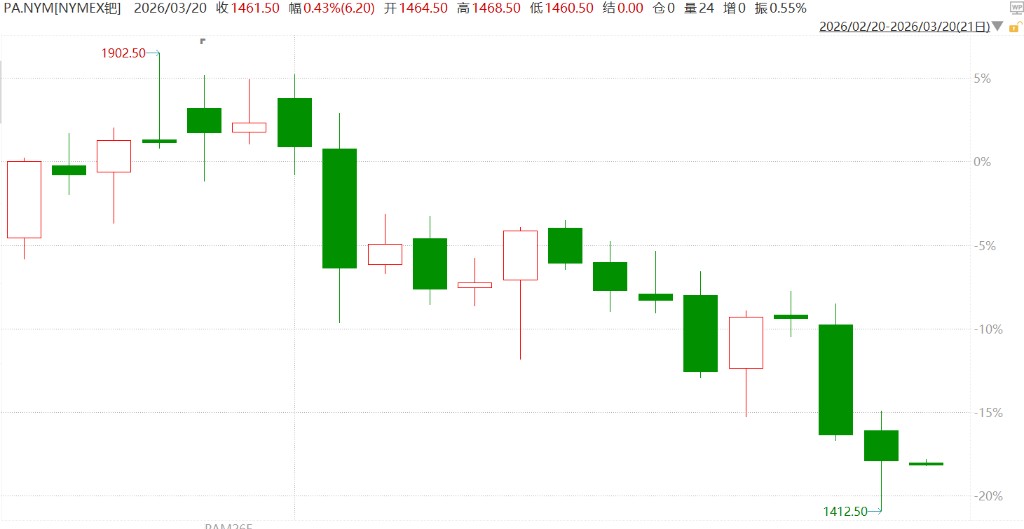 (Platinum has at one point dropped over 20% this month)
Edward Meir, an analyst at commodity trading company Marex, stated:
Investors may be concluding that once the global economy slows down, the demand destruction effect will inevitably occur
