


U.S. stock futures decline further, reports: Trump considers occupying or blockading Iran's Khark Island
Analysis suggests that the action will be implemented in phases—first, to further weaken Iran's military capabilities through about a month of strikes, and then to occupy the island, using it as a bargaining chip. Meanwhile, according to Xinhua News Agency, approximately 2,200 U.S. Marines from the 31st Marine Expeditionary Unit are en route to the Middle East aboard amphibious assault ships from Japan, expected to arrive in about a week
The Trump administration is considering occupying or blockading Iran's "oil lifeline" on Khark Island to force Iran to reopen the Strait of Hormuz.
According to media reports on Friday, the Trump administration is developing plans to occupy or blockade Iran's Khark Island, informed sources revealed that the plan is currently in serious discussion but no final decision has been made.
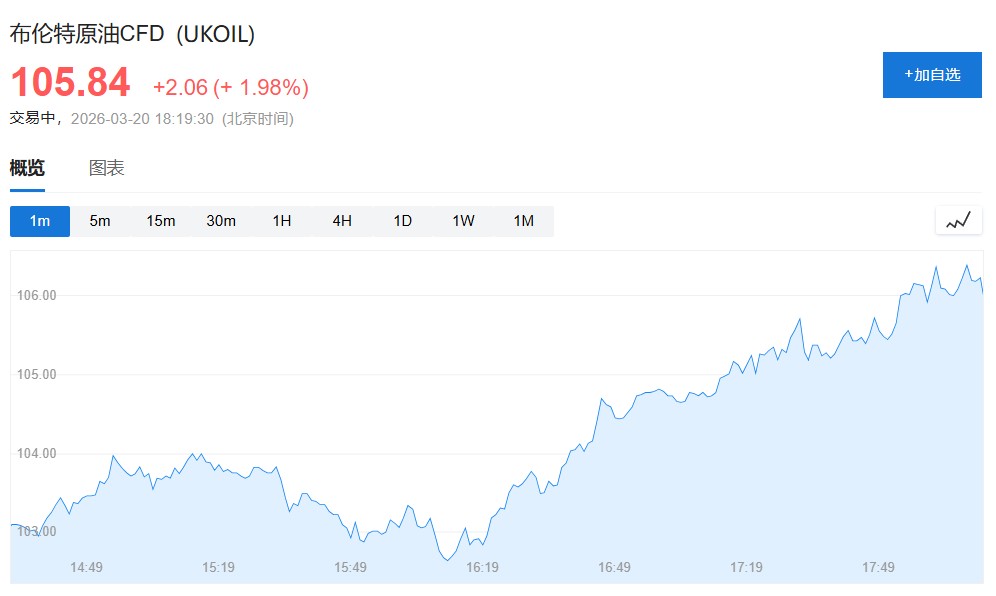
Following the news, Brent crude rose by 2%, and West Texas Intermediate turned positive. The three major U.S. stock index futures widened their declines, with Nasdaq futures down 1%.
Khark Island is located 15 miles off the coast of Iran and handles about 90% of Iran's crude oil exports. If related actions are implemented, it will have a direct impact on the global crude oil supply pattern. A source familiar with the White House's decision-making process stated that the planned actions will be carried out in phases—first, a month-long strike to further weaken Iran's military capabilities, followed by the occupation of the island, using it as a bargaining chip.
According to Xinhua News Agency on the 19th, the U.S. Marine Corps' 31st Expeditionary Unit, consisting of about 2,200 personnel, is en route to the Middle East aboard an amphibious assault ship from Japan, expected to arrive in about a week. The U.S. may use this force to occupy Khark Island as leverage to compel Iran to open the Strait of Hormuz.
Xinhua reported that, in addition to Khark Island, islands near the Strait of Hormuz, such as Qeshm Island, Kish Island, and Hormuz Island, may also become targets for seizure. Retired U.S. Navy Vice Admiral John Miller stated that U.S. forces would be in a "favorable strategic position" from which they could intercept Iranian speedboats and shoot down missiles threatening traffic in the strait.
Strategic Intent: Open the Strait of Hormuz to Create Bargaining Chips for Negotiation
The blockade of the Strait of Hormuz has become a core obstacle for Trump to end the conflict.
Reportedly, a senior White House official stated, "What he wants is for the Strait of Hormuz to be open. If it requires taking Khark Island to achieve that goal, then that will be done. If he decides to launch a coastal landing operation, that will also happen. But that decision has not yet been made."
Another senior official indicated that throughout the terms of previous presidents—including Trump's first term—ground forces have been deployed in conflicts, and there is currently no conclusion.
Last Friday, U.S. forces conducted large-scale airstrikes on dozens of military targets on Khark Island. U.S. officials described the strikes as a "warning action" aimed at urging Iran to reopen the strait, while also reducing the island's military capabilities and laying the groundwork for potential ground operations.
Trump stated on Thursday regarding the island, "We can take that island at any time. I call it that defenseless little island. We have destroyed everything on it, leaving only the pipelines, because rebuilding the pipelines will take them years."
In terms of troop deployment, a Marine Corps expeditionary force of over 2,000 personnel is expected to arrive in a few days, with two other similarly sized forces on the way. The White House and the Pentagon are discussing further reinforcement plans, but no specific decisions have been finalized
Occupying Khark Island Could Control Iran's Oil Production?
Media reports indicate that, according to three sources, a plan to occupy the island with ground troops is being seriously evaluated; another alternative is to implement a maritime blockade to prevent tankers from reaching the island. It is reported that Pentagon lawyers have provided legal opinions on the legality of these potential actions.
However, there is not unanimous support within the military.
According to reports, retired Rear Admiral Mark Montgomery stated that given the high uncertainty of the operation's outcome, occupying Khark Island could put American soldiers at unnecessary risk. "If we take Khark Island, they will cut off supplies from the other end. We cannot control Iran's oil production as a result." he said.
Montgomery believes a more likely path is for the U.S. to conduct strikes for about two more weeks to weaken Iran's capabilities, followed by deploying destroyers and aircraft to escort tankers through the strait, thus avoiding the necessity of a landing operation.
Cotton: Trump's "Cautious" Approach Does Not Rule Out Ground Combat
Senate Intelligence Committee Chairman and Republican Senator Tom Cotton stated that Trump's approach of not ruling out ground combat options is "cautious," but he did not explicitly express support for that option. Cotton believes that Iran's closure of the strait is a desperate move and that Trump has prepared "a lot of contingency plans" for this.
It is noteworthy that sources also indicate that the potential tasks for the Marine Corps in the region go far beyond just Khark Island—if necessary, they may also need to undertake emergency tasks such as evacuating embassy personnel from the area. This somewhat indicates that the strategic intent behind the troop increase has multiple dimensions and should not be interpreted in a singular manner
