Software Stocks Rout Again! Amazon’s New Tools Trigger Chain Reaction; Software ETF Plunges 4%, Year-to-Date Decline Widens to 23%
AWS is developing AI agents to seize white-collar jobs, while Anthropic has launched desktop agents to accelerate office automation. Under this dual impact, the software sector tumbled more than 4% on Tuesday, with its year-to-date decline widening to 23%, and its forward P/E ratio has fallen below the overall level of the S&P 500. Coupled with climbing 10-Year Treasury Yields and institutional bearishness, capital is abandoning traditional software subscription logic at a rare pace
The software sector suffered a heavy blow on Tuesday, as a combination of negative factors reignited market concerns about artificial intelligence disrupting traditional software business models.
On March 24, according to The Information, AWS, Amazon's cloud computing division, is developing AI agents to automate roles such as sales and business development—the very areas affected by Amazon's recent large-scale layoffs.
Meanwhile, AI startup Anthropic released the latest version of its Claude model on Monday night. The new version can take over a user's computer to complete office tasks such as browsing the web and filling out spreadsheets, further intensifying market fears of AI replacing human labor.
Software stocks suffered a collective plunge on Tuesday. The iShares Expanded Tech Software Sector ETF fell more than 4% on the day, its largest single-day drop in nearly a month. Its year-to-date cumulative decline expanded to 23%, potentially marking its worst quarterly performance since 2008. In contrast, the semiconductor stock index rose 1.2%.
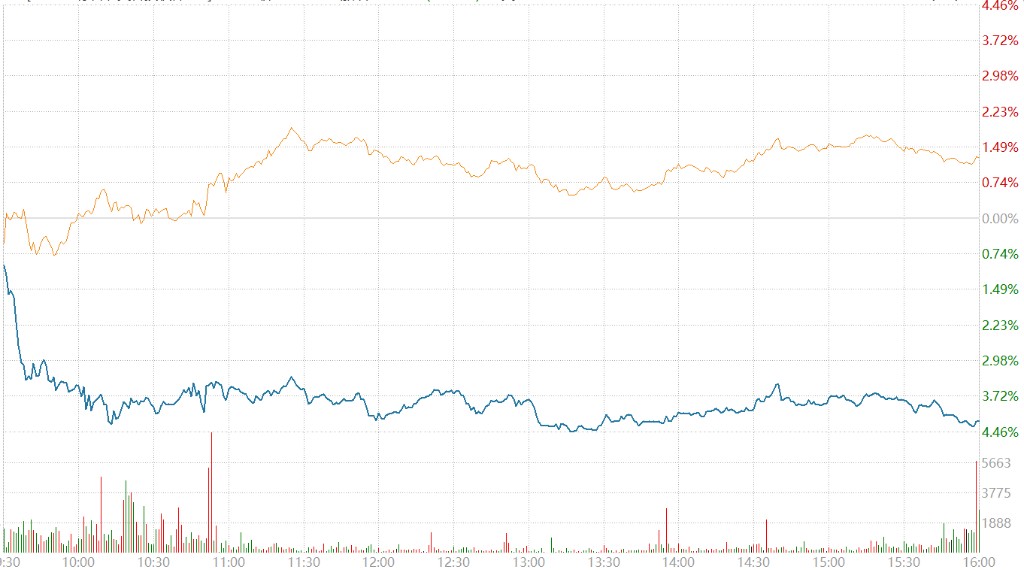
(The blue line shows the software sector ETF falling over 4% that day, while the orange line shows the Philadelphia Semiconductor Index rising 1.2%)
Currently, the forward P/E ratio of the technology software sector has fallen below the overall level of the S&P 500. One market participant stated bluntly:
The software sector is undergoing a massive destruction of capital.
For investors, the window for valuation recovery in this sector remains difficult to determine until the impact of AI on enterprise software subscription models shifts from narrative to actual results.
AWS Develops AI Agents, Anthropic Releases Desktop Agent, Targeting White-Collar Job Automation
According to The Information, citing people familiar with the matter, the AI agents AWS is developing can take on part of the workload of thousands of technical experts in areas like cybersecurity and server networking.
The report noted that the agents are intended to automate functions previously handled by sales and business development staff, roles that have been impacted by Amazon's recent wave of layoffs.
The report further reinforced market concerns about the logic of "internal replacement" by AI. Tech giants are not just cutting human jobs; they are filling functional gaps with self-developed AI tools. This trend poses a direct threat to the traditional software subscription model, which is priced based on the number of enterprise users.
Previously, Anthropic made two major updates to Claude on Monday night.
First is the new version of the Claude Cowork desktop agent, which has more powerful Mac system control capabilities and can be operated remotely via the Claude mobile app.
Second, a research report released by the Anthropic Economic Index shows that usage scenarios for Claude tools are rapidly expanding from programming development to office administration, finance, and management tasks.
The report also noted that power users with "AI fluency" consistently achieve better results than novices, creating a divide in productivity and income within the same job role. This conclusion was interpreted by the market as an early signal of AI replacing ordinary white-collar jobs.
Notably, the report pointed out that desktop agents are still in early research stages and are accompanied by significant risks, including data leaks, accidental deletions, and new types of security vulnerabilities.
Intersecting Pressures: Sector Strain Is Not Caused by a Single Factor
Daniel O'Regan, Managing Director of Equity Trading at Mizuho, said the weakness in software stocks on Tuesday was the result of multiple small factors combined. In addition to AWS's agent development and the new Claude release, he listed the following points:
First, the 10-Year Treasury Yield rose to an eight-month high this week, putting pressure on high-valuation sectors.
Second, David George, general partner at Andreessen Horowitz, wrote that software companies have only two paths left. They must either increase their annual revenue growth rate by more than 10 percentage points through the development of AI-native products in the next 12 to 18 months, or rebuild operating margins (including stock-based compensation) to 40% or even above 50%.
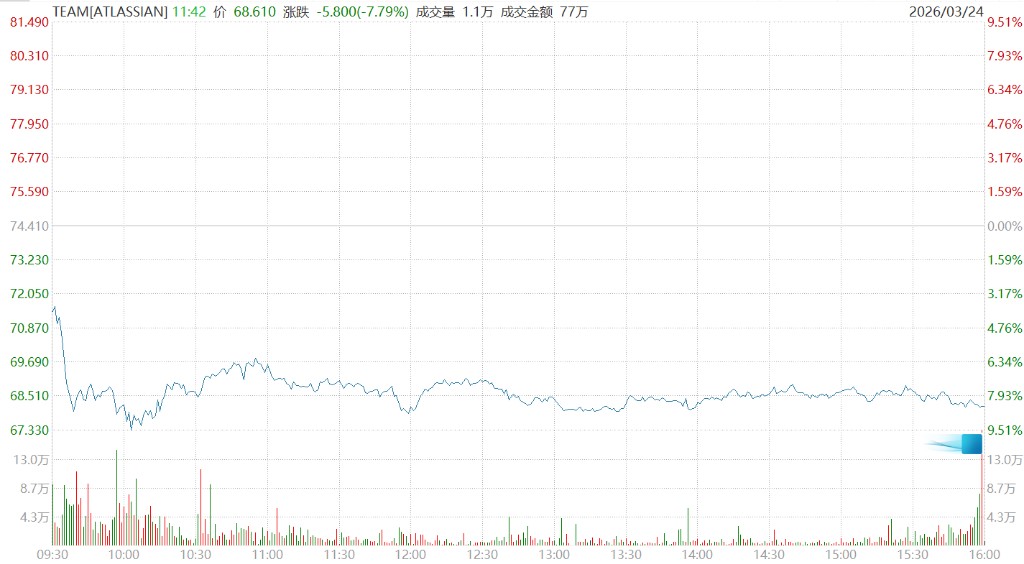
Third, a research firm released a negative report on global team collaboration software developer Atlassian, stating that its partners' results this quarter were slightly below plan and that growth in 2026 is expected to slow. Atlassian shares plunged more than 8% at the close.
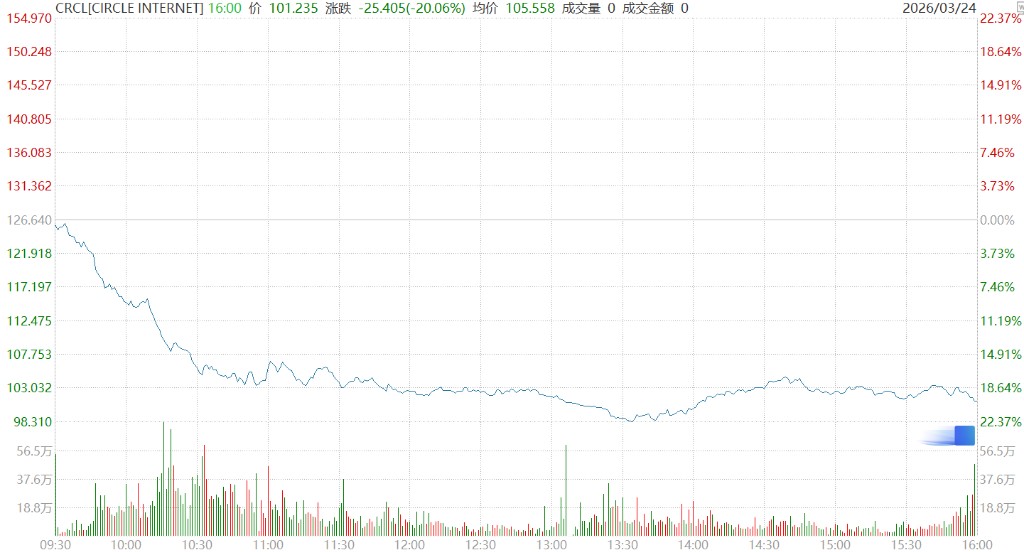
Fourth, Circle, a component of the technology software sector ETF, saw its share price tumble due to concerns regarding stablecoin legislation, crashing approximately 20% in a single day. Although its weighting is only 0.28% of the ETF, Daniel O'Regan believes the company is a fintech firm issuing stablecoins and should not have been included in the ETF at all.