


Not Just Cheap, But Premium: Chinese EVs Are Increasingly Popular in the US
US consumer interest in Chinese electric vehicles is rising, but high tariffs limit market access. A survey shows nearly half of prospective US car buyers believe Chinese EVs offer high value for money and support opening the market. Chinese brands like BYD and Geely offer high-spec models priced under $30,000, attracting consumers. However, US tariffs on Chinese autos exceed 100%, making it difficult for Chinese EVs to enter the market. Despite increasing consumer interest, policy restrictions and industry lobbying remain major obstacles
American consumers' interest in Chinese electric vehicles is heating up, but a high tariff barrier is keeping this enthusiasm at bay from reality.
According to Reuters, affordable and well-equipped Chinese electric vehicle models are attracting the attention of more and more potential US car buyers.
A survey shows that nearly half of prospective car buyers in the US believe Chinese cars offer outstanding value for money, and a considerable number even support the opening of the market to Chinese cars. However, current US tariffs on Chinese automobiles exceed 100%, effectively barring most Chinese models from the market.
Against the backdrop of the average price for a new car in the US approaching $50,000, Chinese brands generally sell their models for less than $30,000 in the international market, an advantage that directly appeals to consumer groups sensitive to purchase costs. However, there are no signs of easing policy-level restrictions in the short term, and US automakers and industry groups continue to lobby for the maintenance of existing barriers.
Dual Attraction of Price and Configuration
The appeal of Chinese electric vehicles to American consumers comes from the dual impact of price and quality.
Led by brands such as BYD, Geely, and ZEEKR, Chinese automakers have launched multiple models that not only sell for much less than the average US market price but also gradually approach high-end offerings in terms of interior and functional configurations.
Luxury interiors, advanced driver-assistance systems, in-car entertainment screens, and even mini-refrigerators are not uncommon features in these models, while such configurations typically only appear in higher-priced vehicles in the US market.
Industry experts point out that Chinese automakers have made considerable progress in quality and technological innovation.
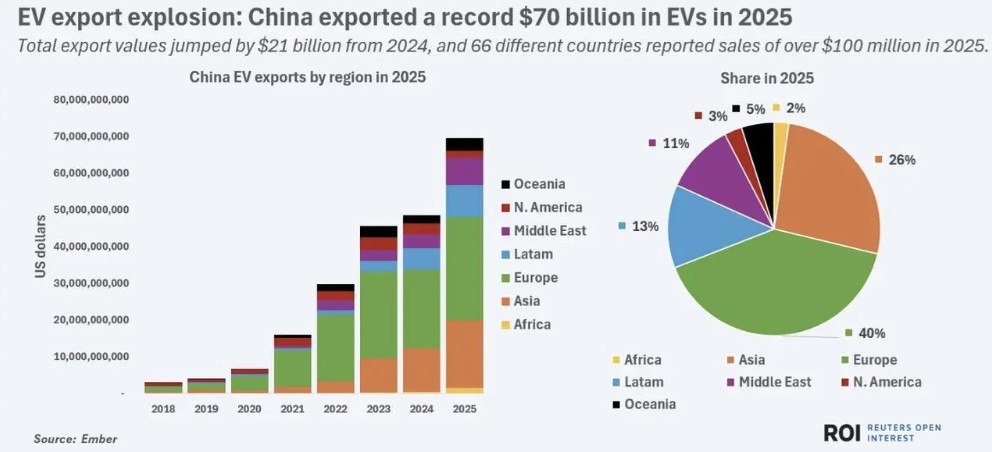
From a global perspective, China has recently surpassed Japan to become the world's largest automobile exporter, extending its sales reach to Europe, Latin America, and parts of North America. Canada and Mexico have begun to accept Chinese electric vehicles at lower tariff rates and are gradually integrating them into their local markets.
High Tariffs Create High Barriers to Entry
Despite rising consumer interest, the path for Chinese electric vehicles to enter the US market remains fraught with difficulties.
The US currently imposes tariffs exceeding 100% on Chinese automobiles, which is virtually equivalent to a market blockade from an economic standpoint.
Reasons cited by policymakers include data security risks, regulatory compliance issues, and concerns about the potential impact on domestic manufacturing jobs. Major US automotive industry groups also continue to call for the maintenance of existing restrictive measures, citing the significant competitive pressure domestic automakers would face if the market were opened.
Dealers also remain cautious. Although many dealers admit that competitive pricing for Chinese EVs could attract buyers, only a few have expressed support for introducing such models, primarily due to uncertainties in US regulatory compliance and potential market disruptions.
Market Pressure May Continue to Build
Chinese electric vehicles are currently almost invisible on American roads, but whether this situation can be maintained long-term is uncertain.
As global competition in the electric vehicle sector intensifies and purchase cost becomes an increasingly prominent consideration for American consumers, market pressure to expand access to low-cost electric vehicles may continue to build. The rapid expansion of Chinese automakers in other global markets also continues to provide a reference point for this issue.
Currently, the tension between policy barriers and consumer demand has not found an outlet. For investors, the direction of this game – whether it involves potential adjustments to tariff policies or the evolution of competitive pressures faced by domestic automakers – is worth continuous attention.
Risk Disclosure and Disclaimer
Markets involve risks, and investment requires caution. This article does not constitute personal investment advice, nor does it consider the specific investment objectives, financial situation, or needs of individual users. Users should consider whether any opinions, views, or conclusions in this article are appropriate for their specific circumstances. Investment based on this is at your own risk.
