


First Time Since August 2022! US Average Gasoline Price Breaks $4 Per Gallon
US average gasoline prices have surpassed $4/gallon, with a cumulative increase of nearly $1 since the US-Israel joint attack on Iran on February 28. JP Morgan estimates that if oil prices rise to $5/gallon and persist, the approximately $200 billion tax cut dividend from the "Big Beautiful Bill" (OBBBA) will be entirely swallowed by gasoline bills. Additionally, polls show 55% of Americans say their household finances have been hit by rising oil prices, and 87% expect prices to rise further
The average retail price of gasoline in the United States has surpassed the $4 per gallon mark for the first time since August 2022. Since the US-Israel joint attack on Iran on February 28, the cumulative price increase has been close to $1/gallon.
The rise in oil prices is directly eroding the purchasing power of American households. A recent Reuters poll shows that 55% of Americans say their household finances have been affected by rising gasoline prices, with 21% reporting a "significant" impact. Concurrently, 87% of respondents anticipate further increases in gasoline prices over the next month.
Following events such as Iran's attack on a Kuwaiti oil tanker, WTI crude oil prices briefly surpassed $106, and Brent crude reached $109. High energy costs are not only dealing a direct blow to the financial health of American households but may also offset the tax cut dividends from the "Big Beautiful Bill" (OBBBA) passed last year.
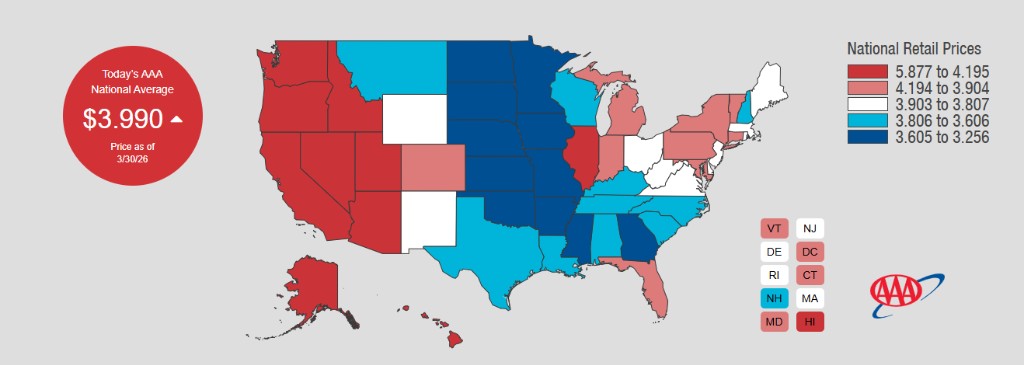
US-AAA National Average Gasoline Price
The $5 Red Line: Tax Cut Dividends May Be Swallowed
JP Morgan economist Michael S. Hanson estimates that if the current $4 oil price level is maintained throughout the year, American household purchasing power will suffer an additional loss of approximately $110 billion. Meanwhile, the OBBBA is estimated to provide slightly over $200 billion in tax cuts for individual households this year, leaving some buffer between the two.
But JP Morgan also drew a clear red line: once oil prices rise to $5/gallon and persist, additional household gasoline expenditures will reach approximately $233 billion, essentially canceling out all tax cut dividends. Due to persistent supply shortages, this price level is not a low-probability event before mid-April.
To make matters worse, the effectiveness of the tax cuts themselves is being discounted. As of March 25, tax refunds for this filing season were only about $32 billion more than the same period last year. At this pace, the total increase in refunds for the year would be around $55 billion, far below previous market expectations.
Structural issues also cannot be ignored. Tax cut benefits are highly concentrated among high-income groups, while gasoline expenditures are distributed relatively evenly across income levels—gasoline spending for families in the lowest income quintile accounts for more than 3% of total expenditures, over one percentage point higher than the highest quintile. This means the actual pain of oil price shocks for low- and middle-income families is far more concentrated than aggregate figures suggest.
Politically, Trump's support rating on cost-of-living issues has dropped to 29%, with 63% of Americans disapproving of his handling of prices. Trump himself acknowledged the economic cost of the conflict on Thursday, stating: "I saw what was happening in Iran, and I said, 'I wasn't willing to launch this operation, but we had to do it.'"
Structural Impact: Low- and Middle-Income Households Hit Harder
The distribution of oil price shocks and tax cut dividends differs significantly across income groups. Tax cut benefits are highly concentrated among high-income groups, while gasoline expenditures are relatively evenly distributed across income levels.
For families in the lowest income quintile, gasoline expenditures account for more than 3% of annual total expenditures, over a full percentage point higher than the highest quintile. Consequently, the pain of rising oil prices is more real and immediate for low- and middle-income families, while they receive relatively limited benefits from tax cuts. The actual drag of high oil prices on consumption will fall more heavily on those with weaker purchasing power.
