


Wall Street Sentiment Reaches Extreme Fear! Goldman Sachs Expert: Despite Trump's Hint of a Truce, I Remain Uneasy About "Going Long"
CNN's Fear & Greed Index drops to 9. Goldman Sachs' Rich Privorotsky points out that the situation has a "downward step" path. Holiday effects combined with extreme short positioning create significant short-term upward pressure; however, he emphasizes that he is "still uneasy" about holding long positions and does not expect a straight-line rally. Continued valuation compression in AI stocks and concerns over private credit pose upside constraints
The conflict has continued for five weeks, and market sentiment has fallen into extreme fear, but reversal signals are subtly emerging. Rich Privorotsky, Head of Delta-One business at Goldman Sachs, noted that the situation has a "downward step" path, with market sentiment, positioning structure, and holiday effects collectively creating short-term asymmetrical upward risk. However, he himself remains uneasy about holding long positions.
According to The Wall Street Journal, Trump has told aides that he would be willing to end U.S. military operations against Iran, even if the Strait of Hormuz remains largely blocked.
Trump subsequently stated publicly that Iran "has been effectively taken down" and addressed global oil buyers: "The hardest part is done, go find your own oil!" Meanwhile, U.S. Trade Representative Jamieson Greer, when asked about passage through the Strait of Hormuz, stated that "the U.S. is not affected by supply chain issues."
However, even as signs of a ceasefire emerged, the situation escalated significantly overnight – Iran attacked a heavily laden oil tanker docked in the port of Dubai, seen as a clear assertion of control over shipping lanes.
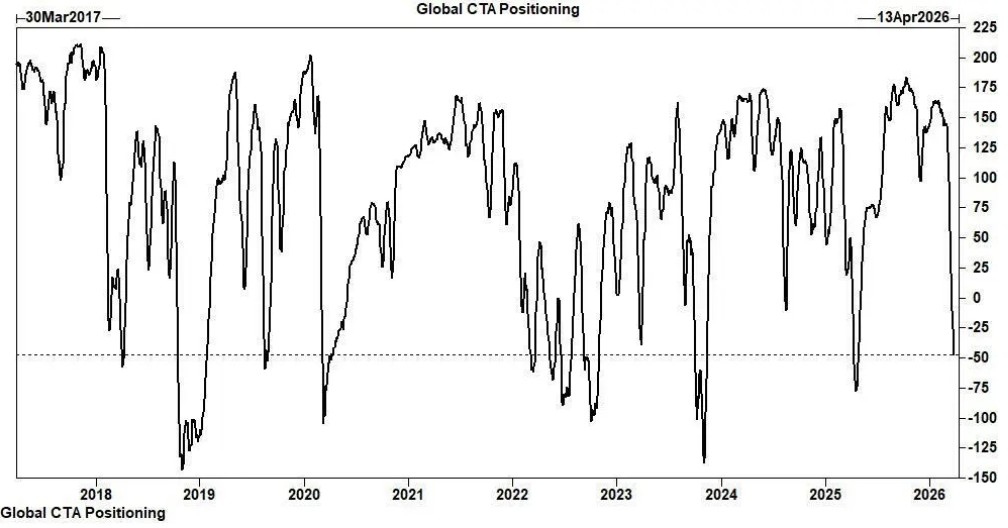
Privorotsky believes this move could be a retaliatory response to the U.S. military strike on Iran's nuclear facilities in Isfahan. The CNN Fear & Greed Index has fallen to 9, indicating that the market is undergoing large-scale deleveraging, with both sentiment and positioning data pointing to extreme pessimism.
Ceasefire Path: Controllable Political Costs, but Full of Variables
Privorotsky believes there is a possibility of a "downward step" in the current situation. The most optimistic near-term scenario is a "mission accomplished" type of declaration – substantial reduction of nuclear capabilities (regressing by about 10 to 20 years), providing a basis for the U.S. to disengage.
He also pointed out that if the U.S. chooses to suspend operations while Iran maintains some level of blockade, the pressure dynamic will flip. Asian, European, and Gulf Cooperation Council (GCC) member states will face direct pressure, creating incentives to push for the resumption of shipping.
He added that even unilateral restrictions targeting U.S. and Israeli vessels are, to some extent, manageable. Unilateral victories could actually lead to the reopening of strait passage and shift pressure onto other countries.
However, he admitted that there is "no clear indication of advantage" at the moment, and this path is politically complex, especially for the GCC, with greater controversy surrounding long-term implications.
Recession Expectations Rise, Defensive Assets Logic Strengthens
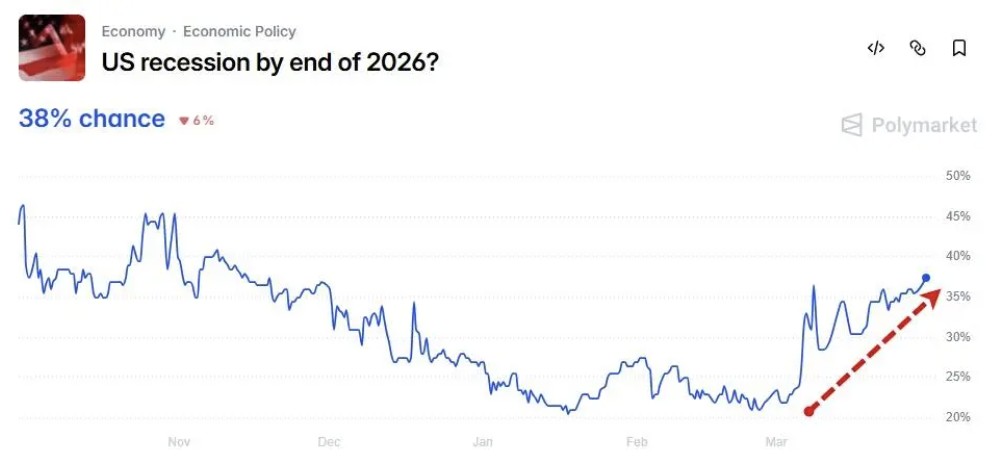
On a macroeconomic level, Polymarket data shows the probability of a recession in 2026 has risen to 36%, with interest rates and gold exhibiting defensive trading patterns. Privorotsky noted that the MOVE index declined by another 3 points yesterday, but this trend increasingly reflects downward revisions in growth expectations rather than pure risk aversion.
He believes the argument for policy over-tightening is becoming more persuasive, and growth is likely to continue weakening, jointly creating a favorable backdrop for defensive assets.
From a structural perspective, he views the performance logic of defensive sectors as closer to Treasury Inflation-Protected Securities (TIPS) than regular bonds. Current real interest rates are clearly too high relative to fiscal trends, and the ultimate outcome will be a compression of real rates.
Under this logic, he favors allocating to healthcare and utilities, and selectively increasing cyclical exposure in areas with genuine long-term growth narratives.
AI and Chips: Valuation Re-rating Pressure Continues to Unwind
Privorotsky's view on AI is markedly cautious. He believes the "liquidation day" for memory chips has arrived – a combination of capital expenditure intensity, lagging supply response, and demand uncertainty is forming a powerful downward pressure. The entire AI value chain, both software and hardware, faces pressure for valuation multiple compression.
He cited Nvidia as an example, stating that Nvidia has entered a technical bear market, and its forward P/E ratio has fallen below that of ExxonMobil, implying that the market has lost confidence in its terminal value.
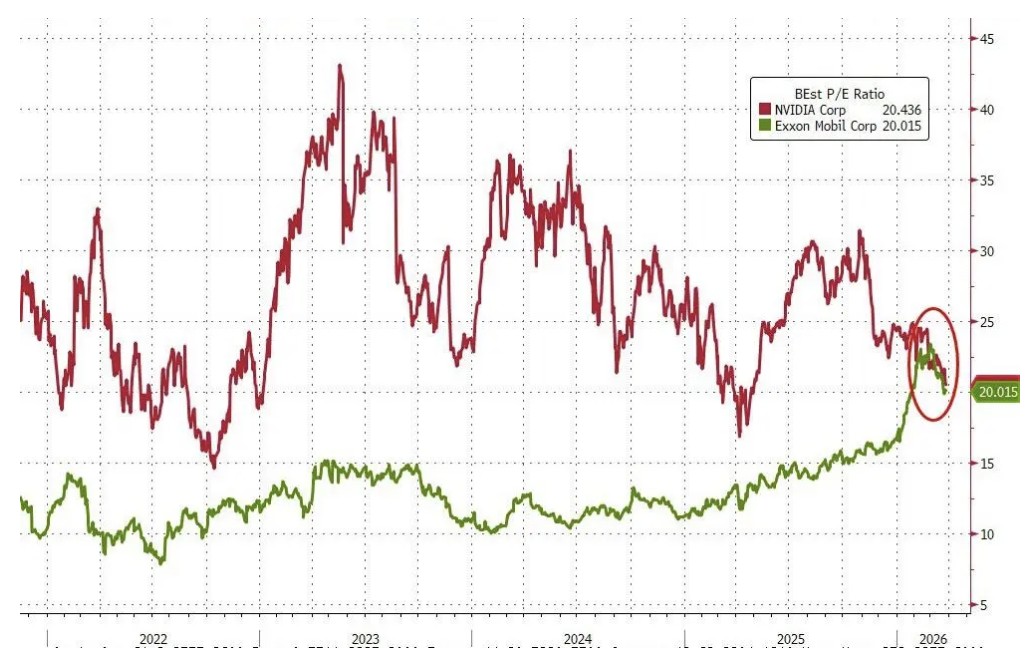
He emphasized that the core issue is not recent earnings, but pricing power and business sustainability: today's technology may become obsolete faster than expected, and the market is only willing to pay for short-term visibility.
Regarding expensive software stocks, he expressed higher conviction in shorting them, citing intensifying competition and eroding pricing power that will continue to drag on growth. These asset-light business models have almost no room for value recovery, and their terminal value is highly uncertain.
Sentiment Bottoming Out, but Bulls Still Need Patience
Despite an overall cautious optimism, Privorotsky stressed that he is "still uneasy" about holding long positions and does not expect a straight-line rally – continued valuation compression in the AI sector and lingering concerns over private credit pose constraints.
From the perspective of positioning and sentiment indicators, he described the current environment as one of extremely weak market sentiment, very low net positioning, substantial short positions held by Commodity Trading Advisors (CTAs), and the CNN Fear & Greed Index at 9 (he noted he will closely monitor if it touches zero). Large-scale deleveraging began last Friday and continued yesterday.
He believes that as the Easter and Passover holidays approach, the risk-reward profile presents an asymmetrical upward opportunity. The market's immunity to the White House's "verbal pronouncements" is strengthening, but he believes this overlooks its inherent mechanism – "the White House will continue to iterate until it gets the desired outcome; the deeper the market falls, the closer it is to a resolution."
In asset allocation, he favors TIPS, healthcare, utilities, select telecom stocks, gold, and adjusted European industrial stocks (steel, cement) and aerospace sectors. The core logic is to focus on "moats" – identifying companies that cannot be easily replaced.
