Australian Dollar: From Top Performer to Bottom of the Pack

Wallstreetcn
2026.04.01 01:35

Since the beginning of this year, the Australian dollar was once the strongest currency, but it has recently fallen consecutively from 0.7 to 0.6830 due to the situation in the Middle East and the poor performance of global stock markets, marking its worst monthly performance in 2024. The fundamental advantages of the Australian dollar's strength have been weakened, and market confidence in the Reserve Bank of Australia's interest rate hike policy has declined. In the short term, AUDUSD may fluctuate within the 0.68-0.7 range. However, in the medium to long term, if the tensions between the US, Israel, and Iran tend to subside, the Australian dollar is expected to outperform other non-US currencies

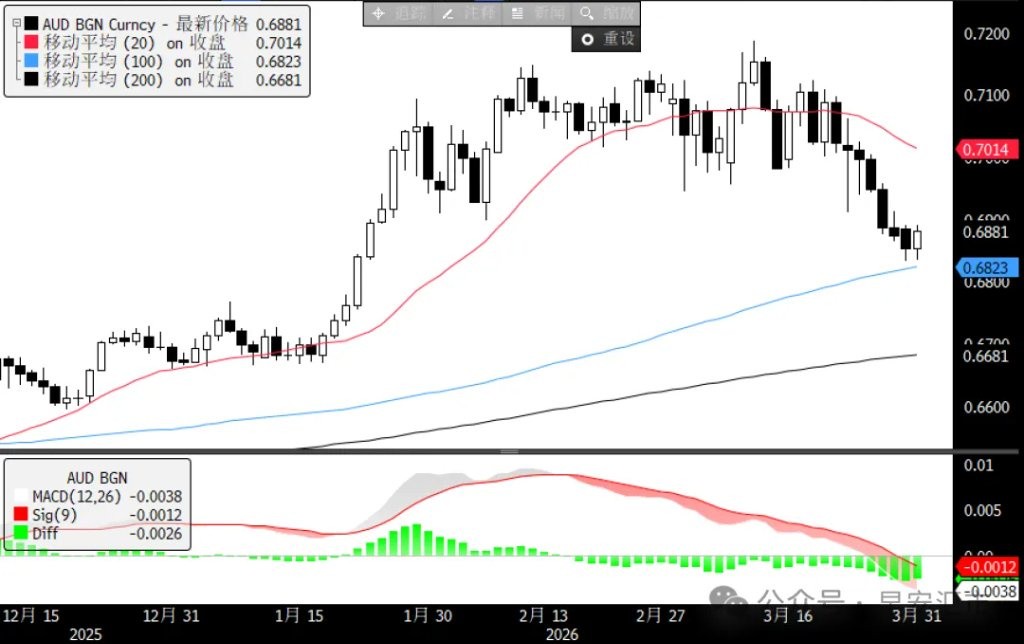
Since the beginning of this year, the Australian dollar was once the most outstanding currency. Even after the conflict between the US, Israel, and Iran broke out in March, AUDUSD once hit a new high in a harsh environment, approaching 0.72, with a year-to-date gain of over 6%. However, since last week, AUDUSD has fallen for six consecutive sessions, dropping from above 0.7 to as low as 0.6830, marking its worst monthly performance since December 2024.

1. Why did the Australian dollar experience such a rapid shift from "strongest" to "weakest"?

  • Impact of risk aversion: The continuous escalation of tensions in the Middle East and the poor performance of global stock markets have made risk-off sentiment the primary driver of the Australian dollar's pullback from its highs.

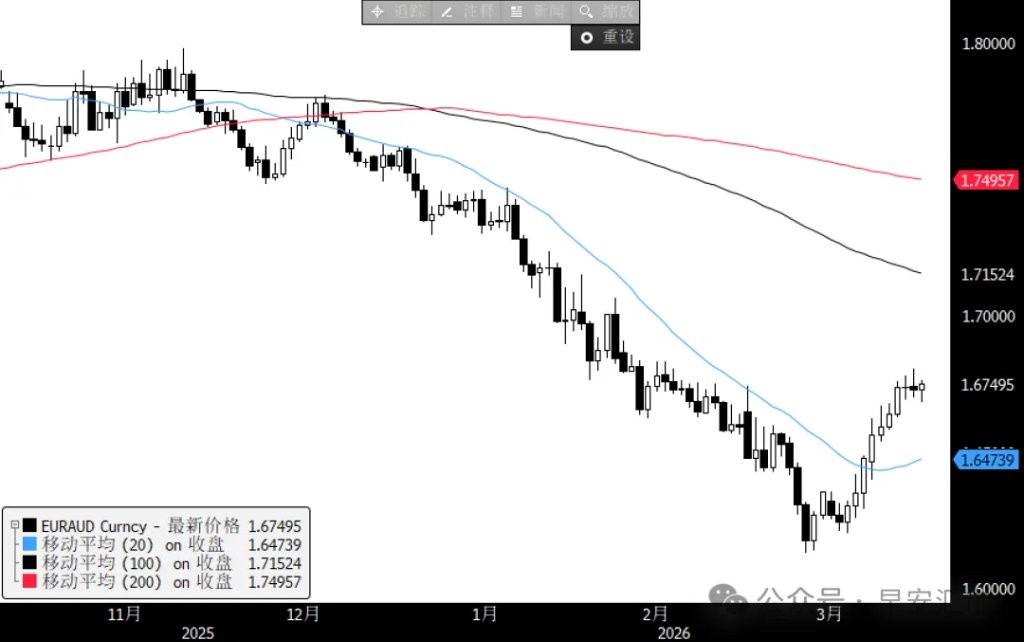
  • Weakening fundamental advantages: Previously, the AUD's strength benefited from Australia's robust fundamentals and the Reserve Bank of Australia's (RBA) hawkish stance. However, in March, the RBA completed an interest rate hike with a narrow 5-4 majority, indicating intensified divisions within the Monetary Policy Committee. Additionally, Australia's February CPI came in below expectations, weakening market confidence in the continuity of the RBA's rate hike policy. More critically, the recent hawkish pivots by European and American central banks have significantly reduced the RBA's comparative hawkish advantage. The most obvious manifestation is the sharp rebound in EURAUD after the ECB turned hawkish.

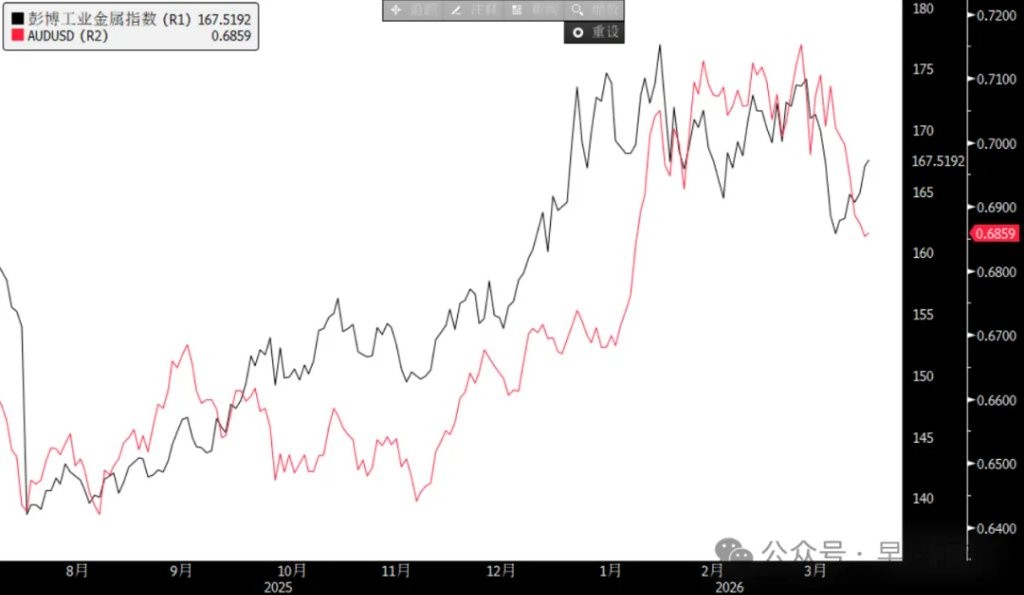
  • Impact of commodity attributes: The recent sharp drop in industrial metals has clearly dragged down the Australian dollar. However, since this week, the AUD's weakness has significantly exceeded the scope of industrial metals' influence, with AUDUSD diverging from the Bloomberg Industrial Metals Index.

2. Looking ahead, how can the AUD stage a comeback?

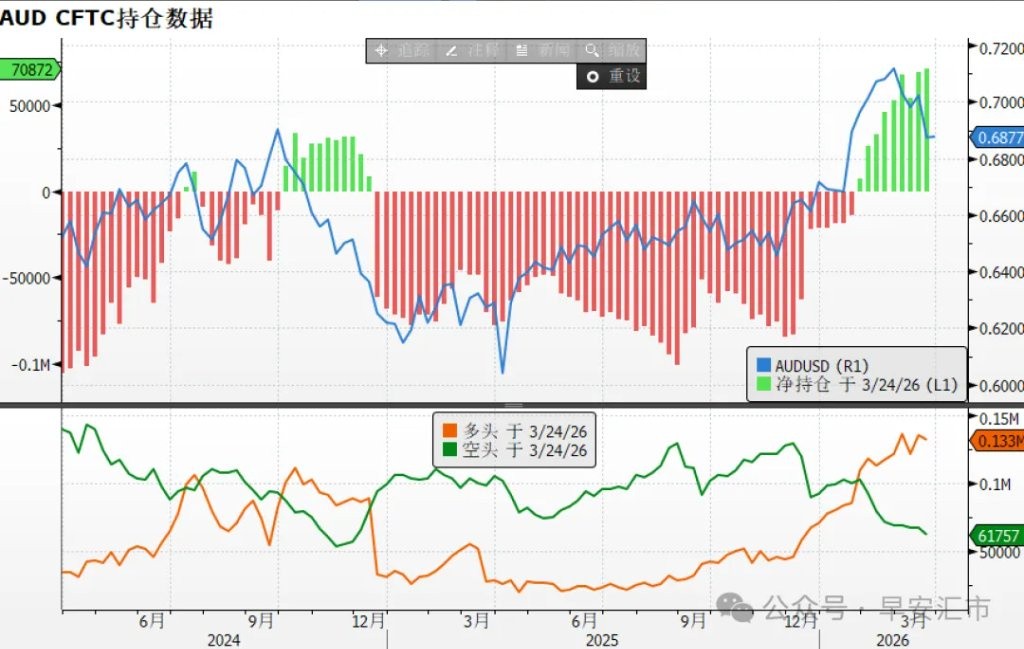
Although AUDUSD has pulled back more than 300 pips from its highs, CFTC positioning shows that the AUD is still in a net long state. Therefore, both AUD majors and crosses may still have room for further decline.

In the short term, combined with technical analysis, the 0.68 level, as a previous resistance level that was broken, will provide some support for AUDUSD. However, before the situation in the Middle East becomes clear and global risk sentiment improves, I believe it will be difficult for AUDUSD to rebound significantly, with the oscillation range likely between 0.68 and 0.7.

In the medium to long term, once the conflict between the US, Israel, and Iran moves toward an end, the Australian dollar will benefit from the recovery of risk sentiment and the cooling of interest rate hike expectations in Europe and the US. It is expected to outperform other non-US currencies such as the Euro and the RMB. Therefore, I still tend to build some medium- to long-term bullish positions when AUDUSD is near 0.68.

Risk Warning and Disclaimer

The market carries risks, and investment requires caution. This article does not constitute personal investment advice, nor does it take into account the specific investment objectives, financial situation, or needs of individual users. Users should consider whether any opinions, views, or conclusions in this article are appropriate for their specific circumstances. Investing based on this information is at your own risk.