Global Luxury Winter Quietly Arrives, LVMH's Quarterly Decline Sets Record Since Dotcom Bubble Burst
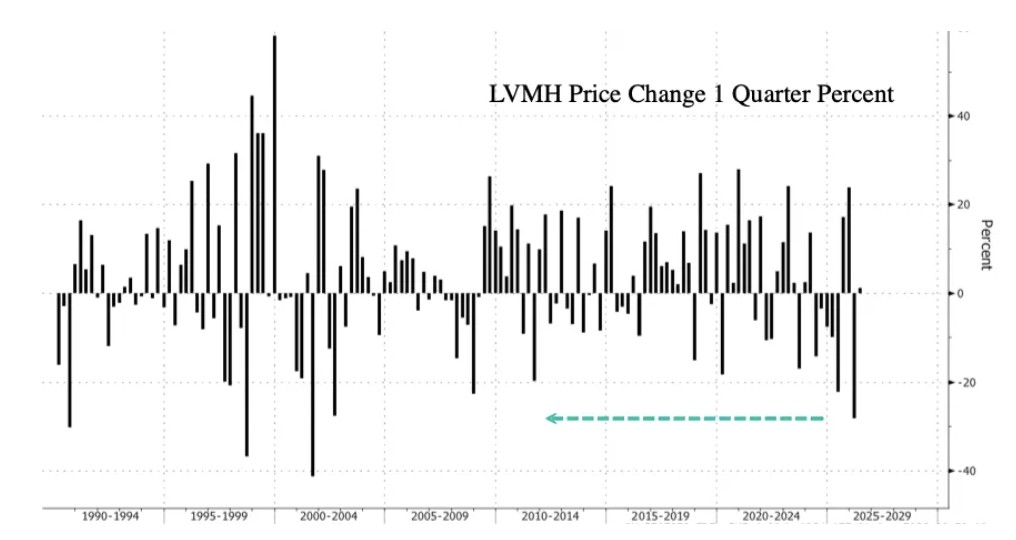
LVMH's stock price plummeted 28% in the first quarter, exceeding the single-quarter declines seen during the COVID-19 pandemic and the 2008 financial crisis. Geopolitical conflicts in the Middle East, combined with concerns regarding the company's significant exposure to customer segments with limited spending power, have led to an oversold position for LVMH. UBS analysts noted that under extreme pessimism, if performance slightly exceeds expectations, it could trigger a significant rebound in the stock price
The global luxury goods industry is undergoing its most severe market test since the turn of the century. LVMH's stock price plummeted 28% in the first quarter of this year, marking its largest single-quarter decline since the Dotcom Bubble burst, and becoming the worst-performing European luxury stock this year as the sector's overall valuation was sharply compressed.

Escalating geopolitical tensions in the Middle East have become the primary catalyst for this sell-off. Demand for categories such as handbags, footwear, watches, perfumes, and wines has softened across the board, affecting dozens of brands under LVMH including Louis Vuitton, Christian Dior, Fendi, Bulgari, and Moët & Chandon.
During the same period, Richemont fell 20% and Hermès dropped 25%, with the luxury sector's overall valuation approximately 15 percentage points below its long-term historical average.
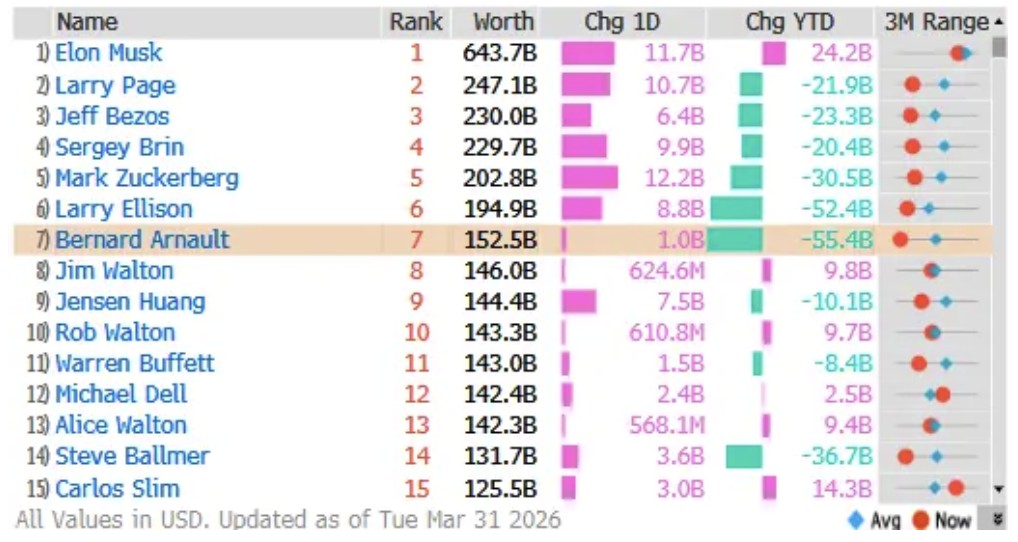
LVMH CEO Bernard Arnault's personal wealth evaporated by approximately $55.4 billion over the past quarter, the largest decline among the world's 500 wealthiest individuals.

LVMH Faces Multiple Internal Concerns
This sell-off reflects not only macroeconomic uncertainties but also exposes multiple internal concerns for LVMH.
As UBS analyst Zuzanna Pusz noted in a client report on Tuesday, LVMH currently faces triple pressure: weak earnings guidance in January, higher exposure of its brands to customer segments with relatively limited spending power, and the continued sluggishness of its wine and spirits business—particularly the weak performance of Hennessy.
The combination of these factors has led to LVMH's stock currently trading at a 20% discount relative to its peers, becoming a valuation trough within the industry.
In the first quarter of this year, LVMH's 28% stock price decline exceeded the maximum single-quarter drops during the COVID-19 pandemic and the 2008 financial crisis, though it has yet to surpass the historical extreme of 41% in the third quarter of 2001.
Geopolitical Conflicts Suppress Sector Valuation
The valuation compression in the luxury industry stems largely from geopolitical uncertainty.
Pusz wrote in the report, "Rising global uncertainty has triggered significant anxiety among investors, especially those who previously expected luxury demand to finally recover this year, driving a sharp contraction in the entire sector's valuation."
She noted that the evolution of geopolitical tensions in the Middle East is the primary factor driving down luxury stock valuations, with the sector's overall valuation now approximately 15 percentage points below its long-term historical average relative to the broader market.
John Plassard, head of investment strategy at Swiss private bank Cité Gestion, stated:
"LVMH is no longer just a luxury stock; it is now a barometer of global confidence. The core of the issue is not the Middle East exposure itself, but the signal it sends: uncertainty, pressure on wealth effects, and fears of a broader economic slowdown."
Analysts: Sluggish Valuations May Breed Opportunities
Despite the low market sentiment, some institutional analysts have begun to eye the possibility of valuation recovery.
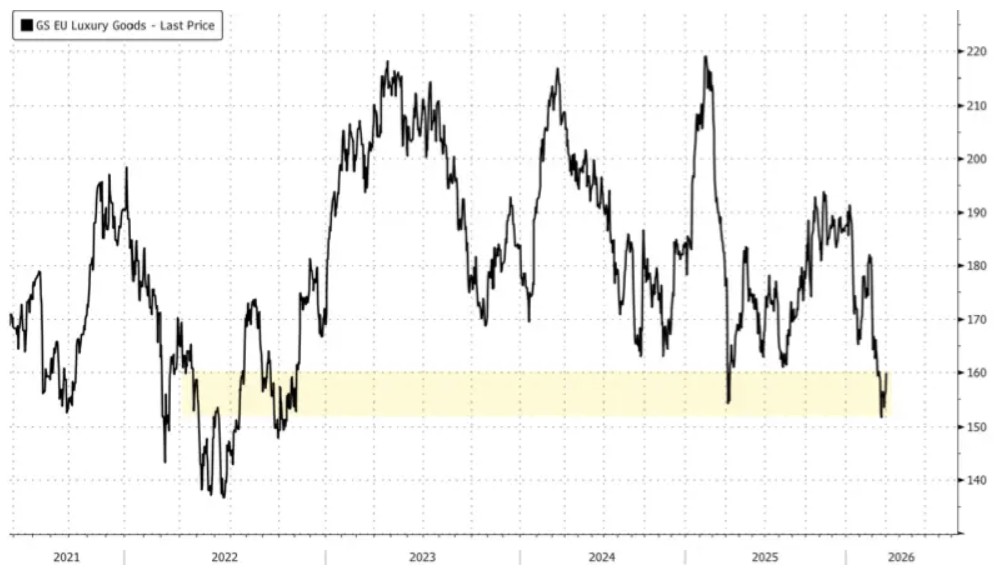
The Goldman Sachs European luxury stock basket (GSXELUXG Index) shows that the sector currently appears to have found support near its 2022 trading range.

Pusz stated that while the industry outlook remains unclear, she has not found clear signs of a real demand slowdown in her latest channel checks, particularly in the Asian market. She further noted:
"Against a backdrop of extreme market pessimism and persistently low valuations, even a slight beat in first-quarter results could trigger a disproportionately positive market reaction. From a fundamental perspective, we continue to expect sequential improvements for most companies, but stock selection remains crucial. Richemont and LVMH are our top picks."