Amazon Eyes $9 Billion Acquisition of Satellite Operator GSAT to Join the "Space War"

Wallstreetcn
2026.04.02 00:45

Amazon is reportedly in talks to acquire satellite operator Globalstar, aiming to accelerate its catch-up with SpaceX's Starlink. A key variable in the negotiations is Apple's approximately 20% stake in Globalstar, which requires Amazon to negotiate with Apple as well. Currently, Amazon has just over 180 satellites in orbit, a stark contrast to Starlink's fleet of more than 10,000

Amazon is seeking to challenge SpaceX in the low Earth orbit (LEO) satellite internet market through the Equity Acquisition of Globalstar.

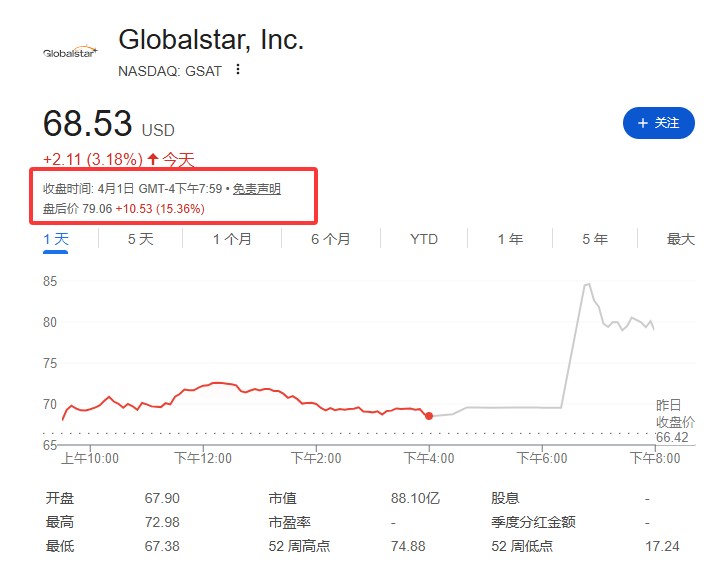
According to sources familiar with the matter who spoke to the Financial Times, Amazon is in acquisition talks with satellite telecommunications operator Globalstar. As of Wednesday, April 1, Globalstar had a market capitalization of approximately $9 billion, and its stock price has risen about 230% over the past year, as the market bets on the company as a potential competitor or acquisition target for SpaceX. Following the news, Globalstar rose more than 15% after hours.

Negotiations have been ongoing for some time, but both parties are still discussing several complex issues. Sources cautioned that there is no final agreement yet, and negotiations could still change or fall apart. Globalstar stated that "the company's policy is not to comment on industry rumors or speculation"; Amazon declined to comment; Apple did not immediately respond.

Apple's 20% Stake Adds Variables to Deal Structure

One of the core obstacles to this acquisition is Apple's stake in Globalstar.

In 2024, Apple invested $1.5 billion in Globalstar, acquiring approximately a 20% stake. As part of the agreement, Globalstar committed to reserving 85% of its network capacity for Apple for satellite messaging services for iPhones outside of cellular coverage.

This means that if Amazon is to complete the acquisition, it must simultaneously negotiate with Apple to address this strategic capacity arrangement, making the deal structure more complex.

Amazon's Pressure to Catch Up

Amazon's project to enter the LEO satellite internet market is named "Leo," and it completed its first batch of satellite launches last year.

However, the gap is substantial: Amazon currently has just over 180 satellites in orbit, while SpaceX's Starlink has more than 10,000 active satellites in orbit.

Progress is also under pressure. In February of this year, Amazon had to apply to the U.S. Federal Communications Commission (FCC) for a two-year extension to meet the regulatory requirement of launching 1,600 satellites by July of this year. According to regulatory filings, Amazon plans to increase its in-orbit satellite count to approximately 700 by mid-year, but insufficient launch capacity is constraining its pace of expansion.

Amazon CEO Andy Jassy told investors in February that Leo is one of a series of "incremental opportunities" that the $2.2 trillion e-commerce giant will pursue.

Globalstar's Commercial Value

Founded in 1991, Globalstar is already a satellite telecommunications company with actual operational scale.

Its latest annual report shows that for the full fiscal year 2025, revenue was $273 million, a 9% increase year-over-year; operating income was $7.4 million, compared to a narrow loss recorded in the previous year.

For Amazon, acquiring Globalstar not only means gaining a ready-made satellite network and spectrum resources but also directly narrowing the gap with Starlink. According to Bloomberg, Globalstar was exploring a potential sale last October and had initial contact with SpaceX, indicating that the asset has attracted interest from multiple parties.

At the level of commercial implementation, Amazon has signed agreements with JetBlue and Delta Air Lines to provide in-flight internet services for their flights in 2027 and 2028, respectively—this also makes Globalstar's network capacity even more strategically valuable to Amazon.