Abu Dhabi Natural Gas Hub Abruptly Shuts Down: Iranian Attack 'Debris' Triggers Fire, Disrupting 60% of UAE's Natural Gas Supply

Wallstreetcn
2026.04.03 13:11

Habshan, the UAE's core natural gas hub, was forced into a complete shutdown after air defense debris triggered a fire; the facility accounts for 60% of the UAE's natural gas supply. Analysis indicates that as the conflict subsides and the energy supply landscape is restructured, US Gulf Coast LNG exporters are expected to become beneficiaries, with the benefit cycle lasting for several years

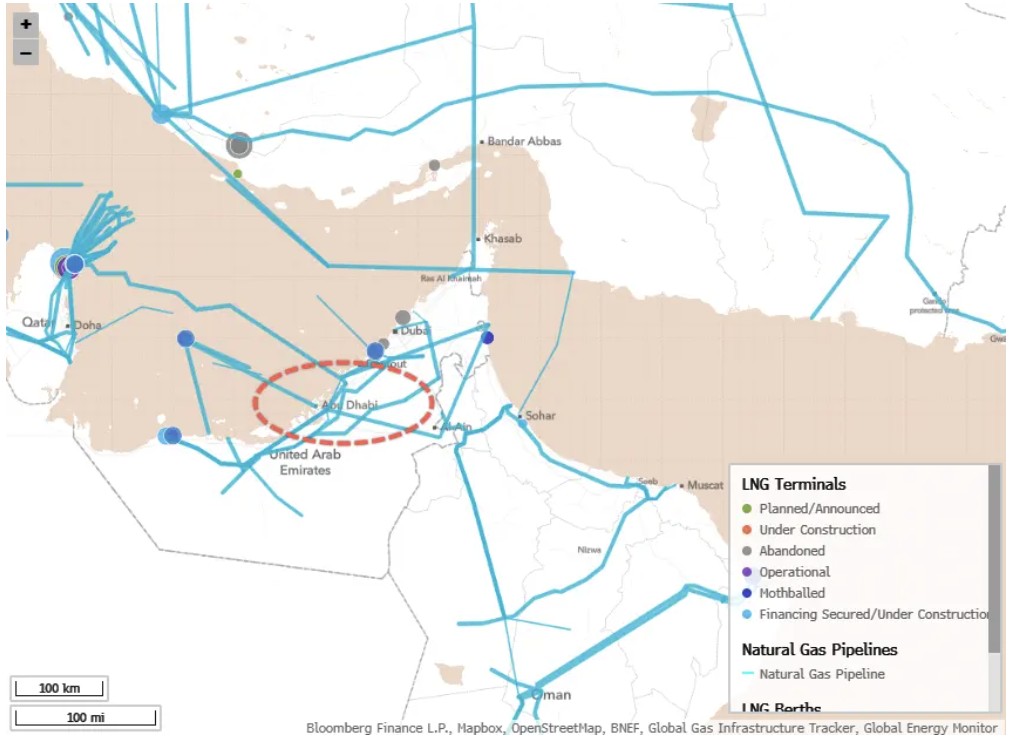
Habshan, the UAE's core natural gas processing facility, was forced into a total operational shutdown on Friday after falling debris from air defense systems intercepting Iranian aerial munitions ignited a fire. The facility accounts for approximately 60% of the UAE's natural gas supply, and this shutdown exacerbates the already fragile energy supply landscape in the Gulf region.

The UAE's National Emergency Crisis and Disaster Management Authority confirmed in a post on the X platform that falling debris from an Iranian aerial projectile intercepted by air defense systems ignited a fire at the Habshan natural gas facility; authorities have intervened and completely suspended operations. The statement said no casualties have been reported so far.

This incident occurred weeks after a large-scale LNG complex under QatarEnergy was struck by Iran. The resulting capacity loss is estimated to cost $20 billion and take several years to repair.

Natural gas research firm Criterion Research preliminarily assessed that as the fog of the Gulf conflict clears, LNG exporters in the US Gulf Coast (Gulf of America) may emerge as the biggest beneficiaries of this crisis for several years to come.

According to a previous article published by Wallstreetcn.com, production at Israel's largest gas field, Leviathan, has resumed, temporarily easing global natural gas supply pressures.

Habshan: The Core Hub of UAE's Natural Gas Supply

The Habshan facility, operated by ADNOC Gas, is one of the world's largest natural gas processing complexes. It is responsible for purifying, processing, and fractionating raw gas produced from Abu Dhabi's upstream energy assets to produce pipeline gas for domestic use, natural gas liquids (NGL), condensate, and sulfur.

According to ADNOC's official website, Habshan provides gas services to utility and industrial customers across the UAE, covering critical industries such as desalination and steel, with a supply volume accounting for approximately 60% of the nation's total natural gas demand.

The facility also serves as the starting point for the ADNOC crude oil pipeline to Fujairah.

Fujairah is the world's second-largest bunkering port and a crucial energy export route that bypasses the Strait of Hormuz. The shutdown of Habshan not only directly impacts domestic gas supply but also poses potential risks to related export logistics.

Aftershocks of Qatar LNG Attack Persist as Gulf Energy Crisis Compounds

The Habshan shutdown adds to the previous attack on QatarEnergy's LNG facilities. The damage to those facilities is expected to reduce LNG production capacity by approximately 12.8 million tons per year, with repair costs estimated at $20 billion and a recovery period of several years.

Last week, QatarEnergy officially declared force majeure on certain long-term LNG contracts, affecting customers in Italy, Belgium, South Korea, and China; delivery obligations under the contracts were effectively suspended.

Concurrently, the ongoing disruptions in the Strait of Hormuz have further constrained the export of Gulf energy via traditional routes. The simultaneous occurrence of major facility damage and the blockage of a critical shipping channel has placed multiple overlapping pressures on global LNG supply.

According to a previous article published by Wallstreetcn.com, Israel's largest natural gas field, Leviathan, announced its restart after a 33-day production halt, which is expected to alleviate pressure on the global natural gas market. The market is now watching when another Israeli gas field, Karish, will resume production.

Energy Shock Transmits Globally; US Gulf Coast LNG Exporters May Emerge as Winners

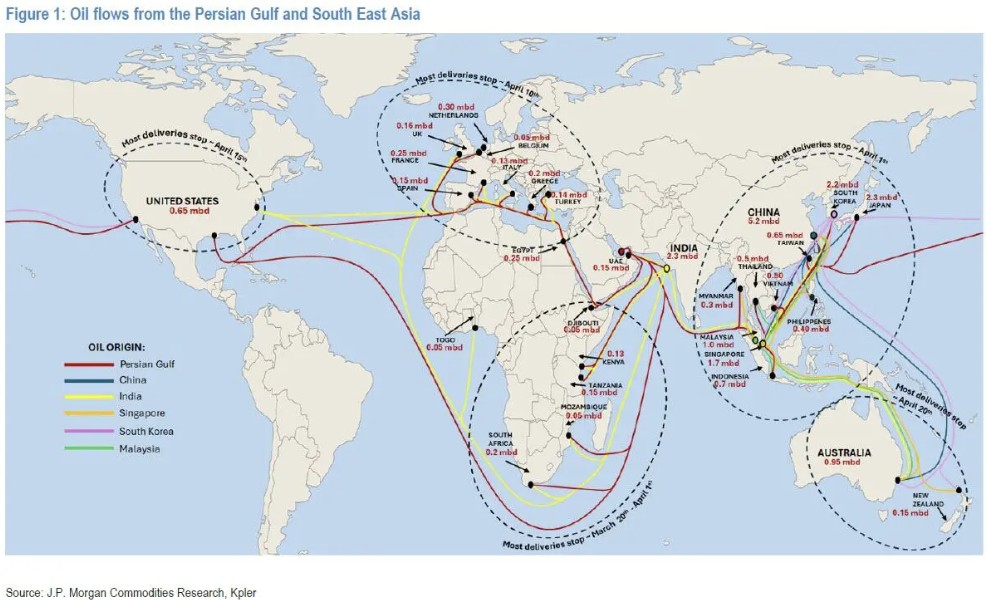
Top commodity analysts at JPMorgan Chase had previously warned that the transmission path of this energy shock has gradually become clear: it will first impact Asia, then spread to Africa and Europe, and finally reach the United States, with a concentrated impact on California.

LNG supply disruptions have already forced power operators in several Asian and European countries to switch generating units to coal to cope with the pressure of sharply rising energy prices.

Natural gas research firm Criterion Research pointed out in its analysis that once the fog of war in the Gulf region clears and the energy supply landscape is restructured, US Gulf Coast LNG exporters are expected to become the most definitive long-term beneficiaries of this crisis, with a benefit cycle that may last for several years.

As the production capacity of major Middle Eastern LNG suppliers is damaged and supply reliability is questioned, global buyers' demand for alternative sources is expected to persist. Consequently, the pricing power and contractual attractiveness of US exporters are likely to increase significantly.