Goldman Sachs Hedge Fund Business Head on "Dilemma of Long and Short": Return to Fundamentals, "You Can't Control the Market, But You Can Control Your Reaction to It"

Wallstreetcn
2026.04.07 00:14

Pasquariello believes that the risk-reward for the S&P 500 is currently balanced in both directions, suggesting a focus on highly liquid assets and reduced overall exposure. The technical outlook continues to improve, and hedge fund deleveraging is nearing its end, enhancing upside asymmetry. However, geopolitical scenarios are unpredictable, making it difficult to support aggressive directional positions. Earnings expectations are being consistently revised upward, and shorting requires a clear judgment on an earnings inflection point

Amidst sharp market fluctuations and persistent geopolitical noise, Goldman Sachs Head of Hedge Fund Strategy Tony Pasquariello advocates for a return to fundamentals. He believes the risk-reward for the S&P 500 is currently balanced in both directions, recommending a focus on highly liquid assets and controlled overall exposure, because "you can't control the market, but you can control your reaction to it."

Despite significant volatility in March, the S&P 500 has rebounded 5% from last week's low, now down only about 4% from its February 27 closing price. Pasquariello notes that despite a difficult March, market confidence in sustained economic growth remains unshaken – Goldman Sachs forecasts US GDP growth at 2.3% in 2026, roughly in line with trend levels.

Meanwhile, as earnings season officially kicks off next week, earnings expectations are being consistently revised upward, and US investment-grade corporate credit spreads are showing significant resilience under the dual pressures of increased volatility and substantial new debt issuance.

Against a backdrop of continued technical improvement, Pasquariello believes the downside asymmetry that previously weighed on the market has eased. However, he admits that faced with vastly different geopolitical scenarios such as "mission accomplished," "45-day ceasefire," or "ground troop intervention," he has no true predictive advantage, making it difficult to support aggressive directional positions at this time.

Technicals Continue to Repair, Hedge Fund Deleveraging Nears End

Pasquariello points out that the improvement in market technicals is one of the key supports for the recent rally.

Goldman Sachs Prime Brokerage data shows that hedge funds have been net sellers for seven consecutive weeks, with net exposure falling to the 31st percentile over the past three years. Systematic trading communities have also significantly reduced long positions over the past month, implying net buying demand in the market under a base case scenario, with greater upside asymmetry.

Furthermore, the end of March has allowed options market makers to regain some gamma exposure. Although corporate buybacks remained restricted before the end of the month, offering limited overall dynamic support, the deleveraging operations by "fast money" have become a core narrative of the current market structure.

From a performance perspective, March was generally challenging for hedge funds, but Pasquariello believes that the first quarter still represents a period where hedge funds create significant value for allocators.

According to Goldman Sachs Prime Brokerage's comprehensive tracking of various strategies, the average fund rose about 2% in the first quarter, while the 60/40 portfolio fell about 2% over the same period. "Safe assets" such as front-end bonds, precious metals, and defensive stocks failed to provide effective protection during the most severe risk aversion.

Risk Landscape Turning Two-Sided, Tactical Betting Becomes More Difficult

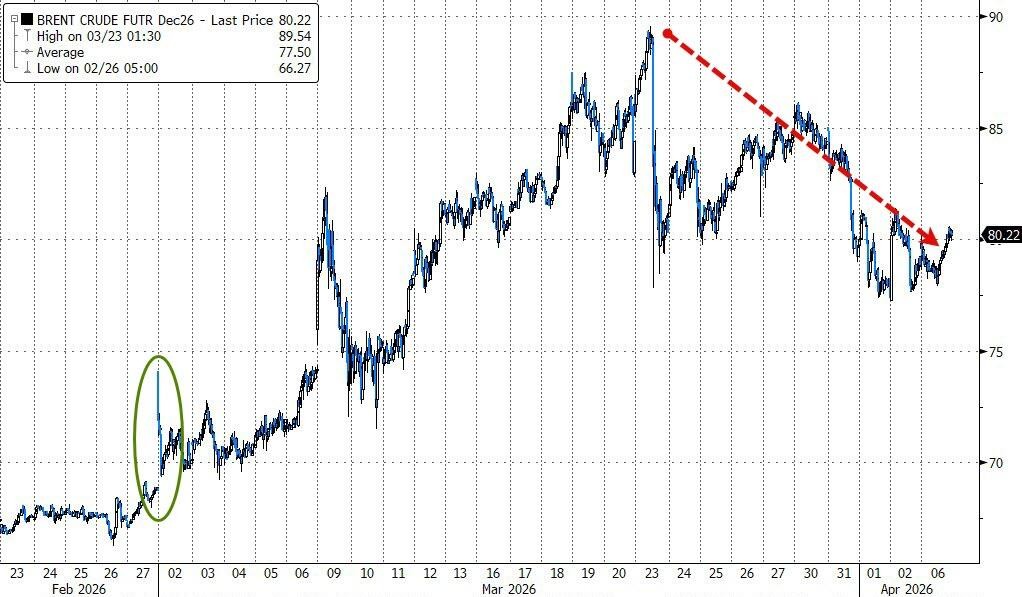
Pasquariello admits that over the past month, he consistently believed that localized downside asymmetry was greater than upside, but the risk balance has now shifted to become more two-sided. He attributes this shift partly to the decline in commodity prices – forward Brent crude oil futures, proxied by COZ6, have fallen 6% since their cyclical peak on March 20.

He also warns that in difficult years, it is not uncommon for the S&P 500 to experience counter-trend rallies of over 5%, with similar movements seen in 2018 and 2022.

However, he emphasizes that the real difficulty lies in the unpredictability of geopolitical scenarios: How the market will react to "mission accomplished," "45-day ceasefire," or "ground troop intervention" are three distinct narratives that investors need to evaluate individually and ask themselves if they have a genuine predictive advantage on which scenario is most likely to occur.

Pasquariello's answer is no, which is the fundamental reason he finds it difficult to support aggressive tactical positions. He cites a quote from an industry veteran as the guiding principle for the present: "You can't control what the market does, but you can control your reaction to it."

Based on the above judgments, Pasquariello offers three specific tactical recommendations:

  • First, limit risk-taking to securities with primary liquidity, avoiding liquidity traps in the current environment.
  • Second, given the extreme instability of the momentum factor recently and the market's continued leveraged exposure to it, it is recommended to actively reduce overall equity exposure.
  • Third, if seeking to capture opportunities from a long perspective, consider using call option spread strategies rather than directly holding long positions.

He also adds an important note: When market visibility truly improves, the rally has often already begun, regardless of direction. This means that waiting excessively for clear signals is itself a cost.

"Skeptics" and "Dreamers": Different Implications from Two Sets of Data

Pasquariello addresses market pessimists and optimists with two sets of data. The article states:

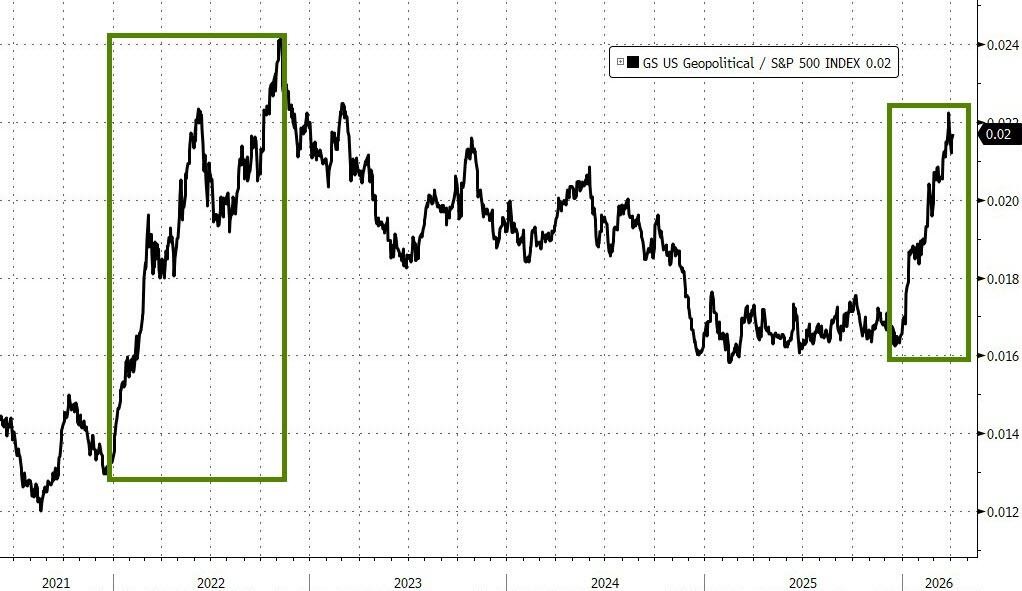
For the "skeptics," he presents a chart showing Goldman Sachs' US Geopolitical Risk basket relative to the S&P 500. This basket includes components like defense contractors, oil producers, and tankers. As seen in 2022, this combination continues to outperform the broader market and reach new highs, confirming the reality of geopolitical premiums.

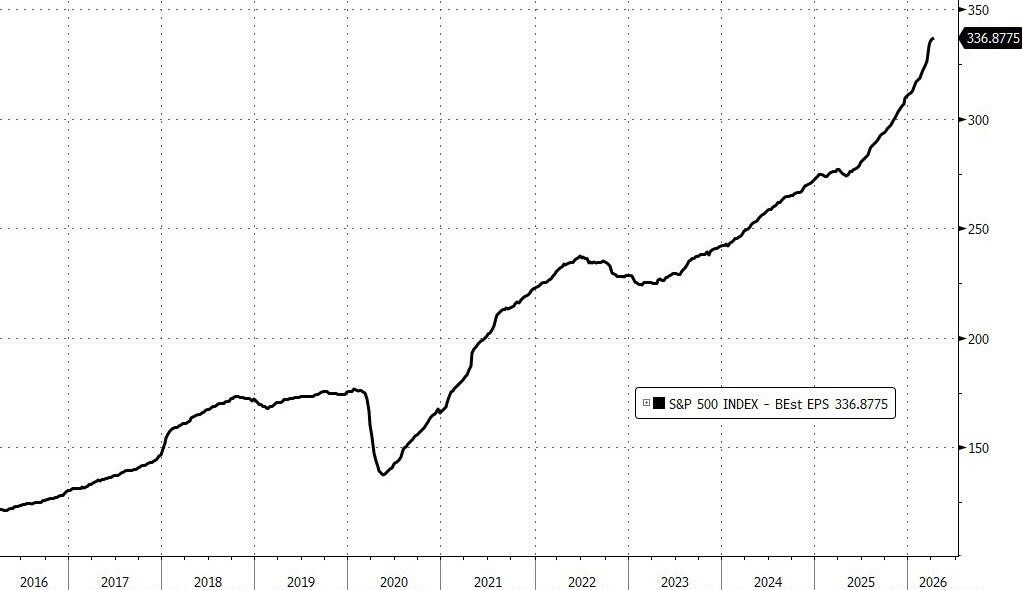
For the "dreamers," he presents a chart of S&P 500 earnings expectations for the next 12 months. The data shows that during the recent market turmoil, earnings expectations rose instead of falling, and have nearly doubled since the COVID-19 pandemic.

His conclusion is that to be a serious bear, one must be willing to explicitly forecast an inflection point for earnings expectations to turn downward from here; otherwise, the logic for shorting is not robust.