Global Scramble for Crude Oil as US Crude Premium Hits Record High
The effective closure of the Strait of Hormuz has caused a sudden disruption in Middle Eastern crude oil supplies, leading Asian and European refiners to scramble for alternative sources. Spot premiums for West Texas Intermediate (WTI) have soared to a historical high of $30-$40 per barrel, unusually surpassing Brent. US state-owned refinery enterprises are caught between two fires—needing to ensure supply while bearing exorbitant procurement costs. Traders suggest that purchasing refined products may be more economical than refining
Asian and European refiners are engaged in a fierce competition for alternative crude oil supplies due to the disruption from the Middle East, driving the spot premium for US West Texas Intermediate (WTI) to a record high.
According to media reports on Tuesday, the Strait of Hormuz has effectively entered a state of closure, with Middle Eastern crude flows severely blocked. Against this backdrop, the spot premium for West Texas Intermediate for July delivery has jumped to the $30 to $40 per barrel range, a significant climb from the approximately $20 premium at the end of March.
Paola Rodriguez-Masiu, Chief Oil Analyst at Rystad Energy, noted in a report on April 3 that "Asian refiners shut out from Middle Eastern supplies are aggressively bidding for every available barrel of crude in the Atlantic Basin."
The surge in premiums is significantly driving up costs for refiners in Asia and Europe, leading to widening losses. Some US state-owned enterprises are under particularly severe pressure as they bear the burden of ensuring fuel supply as required by the government. One trader remarked, "Every day brings a new price," while another said it might be more economical for refiners to reduce crude processing and instead buy refined products—provided there are still sellers in the market.
Record Premiums: WTI Unusually Surpasses Brent
According to reports citing multiple traders, quotes for WTI for July delivery to North Asia are at a premium of about $34/bbl over the Dubai benchmark and about $30/bbl over Dated Brent, while the ICE Brent benchmark for August delivery is nearing $40/bbl.

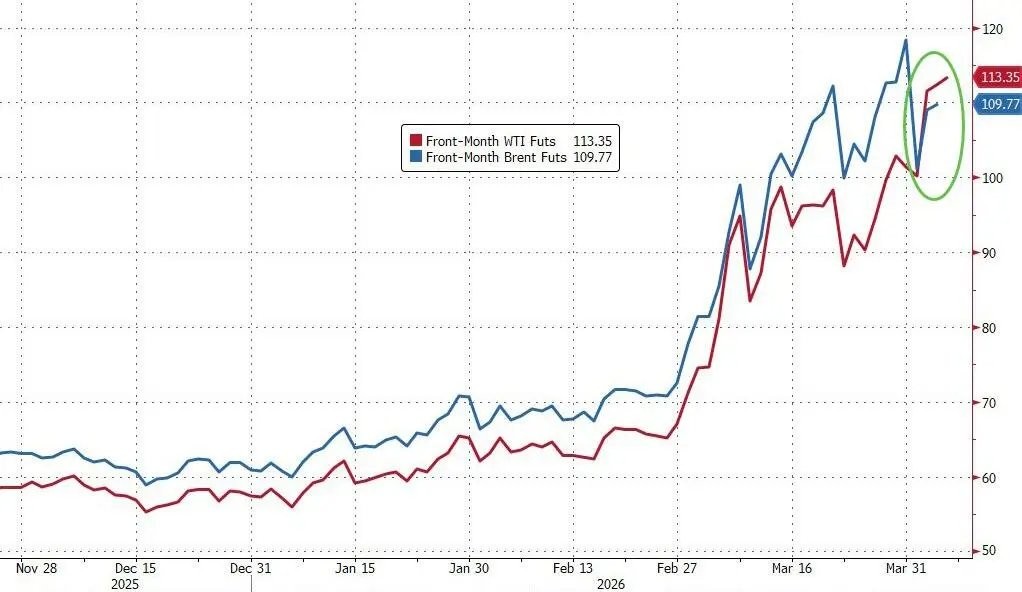
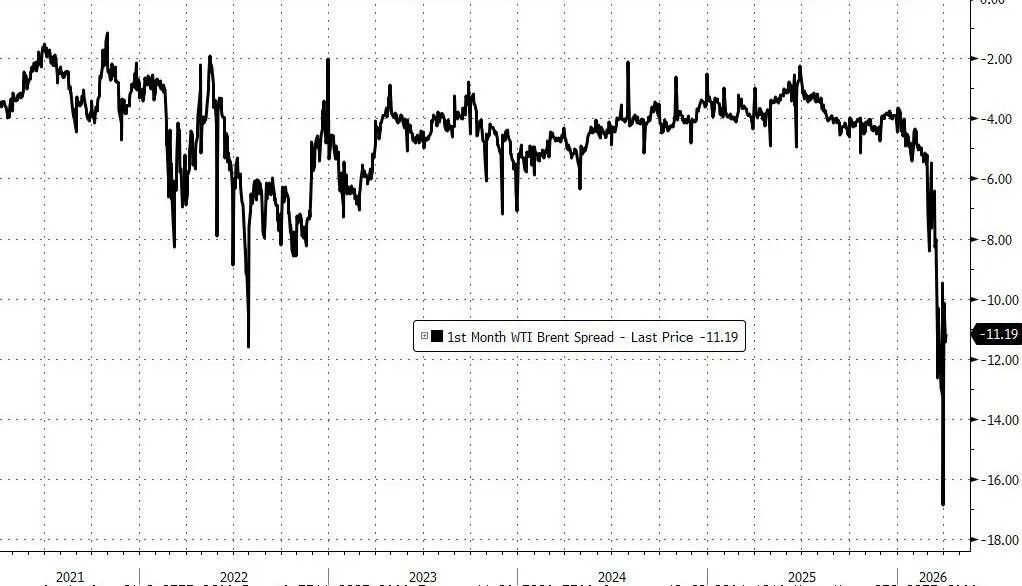
This premium level pushed WTI crude futures prices to unusually surpass Brent crude futures last weekend. Typically, Brent crude, as the pricing benchmark for seaborne oil, tends to lead in global supply shocks, while WTI long traded at a discount.
Notably, part of this price inversion stems from technical factors—WTI's front-month contract corresponds to May delivery, while Brent has rolled over to the June contract, causing a distortion in the apparent spread. However, the deeper driver is the extreme tightness in the physical market: the spread between WTI's front and forward months has risen to a record high, reflecting urgent demand for secure, immediately deliverable barrels of crude.

Middle Eastern Supply Blocked, Atlantic Basin Crude Becomes Focal Point
The effective closure of the Strait of Hormuz has prevented large volumes of Middle Eastern crude from being exported normally, and Gulf oil producers have correspondingly cut upstream production, further tightening global supply. Europe is usually the largest importer of US crude, but the aggressive entry of Asian buyers has disrupted the original supply-demand landscape.
Asian refiners are currently expanding their procurement to the Americas, Africa, and even Europe to seek alternative supplies. Japanese refiners, such as Taiyo Oil, completed West Texas Intermediate purchases at a premium of about $20/bbl between late March and early April; the subsequent surge in premiums means following procurement costs will be significantly higher.
As uncertainty over global shipping routes continues to rise, WTI has effectively gained a "safety premium," with its traditional discount to Brent not only narrowing significantly but even reversing. Analysts point out that the current price inversion suggests a structural failure in normal pricing signals linked to physical flows.
Refiners Under Pressure, State-Owned Enterprises Bear the Brunt
Record crude premiums are eroding refining margins across the board. According to media reports, losses for refiners in both Asia and Europe continue to widen, with some companies facing severe operational pressure.
State-owned refinery enterprises are in an especially difficult dilemma—on one hand, they must fulfill government-mandated fuel supply obligations, while on the other, they must bear high crude procurement costs. Some traders suggested that at current premium levels, reducing crude processing to buy refined products is economically more rational, but supply in the refined products market is also tightening.
WTI front-month futures backwardation has risen to historic extremes, further validating the market's intense craving for immediately deliverable crude oil. For investors, this signal implies that the supply tightness in the crude spot market is unlikely to ease quickly in the short term, and price volatility risks will remain high.