


Iran-US Ceasefire Deal Falters, Oil Prices Rebound Strongly, Global Stock Rally Stalls, Korean Stocks Lead Decline at 1.53%
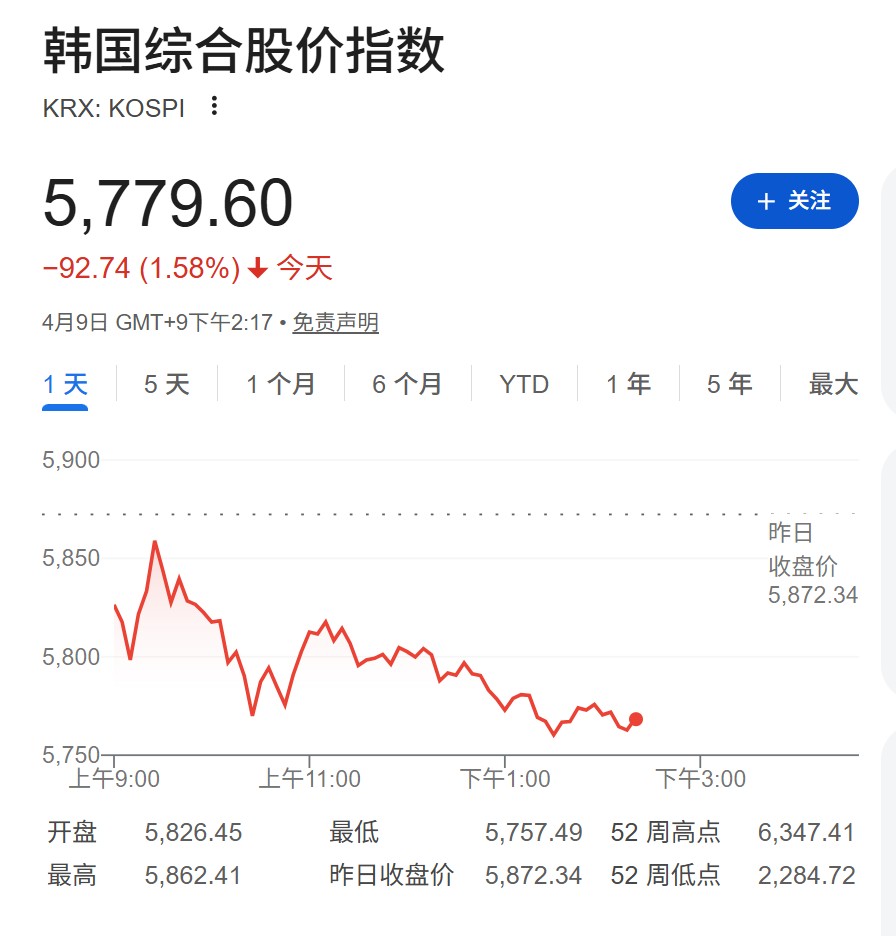
The MSCI Asia Pacific Index fell 0.9%, with the Korean Composite Index leading the decline, down 1.53%. The Nikkei 225 Index fell 0.77%, and the TOPIX fell 0.78%. U.S. and European stock index futures both fell 0.2%, signaling an end to the global stock market's four-day rally. Brent crude futures jumped 2.7% to about $97 a barrel, a strong rebound from their largest single-day drop in more than six years
The Iran-US ceasefire agreement was questioned less than a day after its signing, halting the multi-asset rebound previously triggered by easing tensions in the Middle East. Asia-Pacific stocks broadly declined, while oil prices surged, leaving investors in a wait-and-see mode regarding the smooth resumption of passage through the Strait of Hormuz.
According to Xinhua News Agency, on the afternoon of April 8, the Israeli army conducted simultaneous airstrikes on more than 100 targets in Beirut, the Bekaa Valley, and southern Lebanon within just 10 minutes. Mohammad Bagher Ghalibaf, Speaker of the Iranian Parliament, accused the US on Thursday of violating three terms of the ceasefire agreement, including denying Iran's uranium enrichment rights, Israel's continued attacks on Lebanon, and drone incursions into Iranian airspace.
This statement caused market sentiment to plummet. The MSCI Asia Pacific Index fell 0.9%, with one rising stock for every two falling stocks within the index. U.S. and European stock index futures both fell 0.2%, signaling an end to the global stock market's four-day rally.
Brent crude futures jumped 2.7% to about $97 a barrel, a strong rebound from their largest single-day drop in more than six years. The Strait of Hormuz remains almost entirely blocked. According to Xinhua News Agency, citing data from S&P Global Market Intelligence as reported by The Wall Street Journal, only 4 ships were permitted to pass through the Strait of Hormuz on the 8th after the ceasefire announcement. U.S. Treasury bonds erased earlier gains and stabilized, while Japanese and Australian government bonds also retreated, as markets worried that rising oil prices would further exacerbate inflation pressures.
- The Korean Composite Index led the decline, falling 1.53%, with the small-cap KOSDAQ Index down 1.38%. The Nikkei 225 Index fell 0.77%, and the TOPIX fell 0.78%.
- India's Nifty 50 Index fell 0.3%, after the Reserve Bank of India previously warned of inflation risks and economic growth concerns stemming from the Iran conflict. Australia's S&P/ASX 200 Index was flat.
- U.S. and European stock index futures both fell 0.2%, signaling an end to the global stock market's four-day rally.
- The yield on U.S. 10-year Treasuries was little changed at 4.29%.
- The yield on Japanese 10-year Treasuries rose 3 basis points to 2.395%.
- Brent crude futures jumped 2.7% to about $97 a barrel, a strong rebound from their largest single-day drop in more than six years.
- The US Dollar Index rose slightly by 0.1%.
- Bitcoin fell 0.5% to about $71,000.
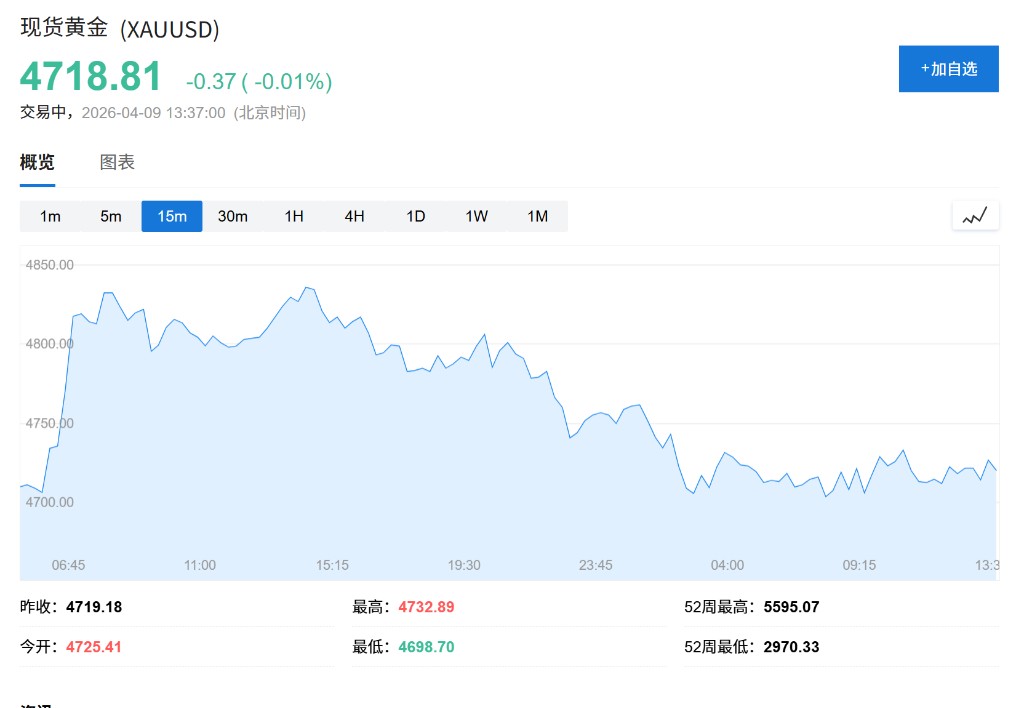
- Gold fluctuated widely around $4,700 per ounce.
Ceasefire Agreement Under Controversy, Statements Fuel Uncertainty
The fragility of the ceasefire agreement began to be tested on the day of its signing. Under the framework, Trump announced a two-week pause in strikes against Iran in exchange for Iran reopening the Strait of Hormuz and using a 10-point plan as a basis for negotiation. Israel also reportedly agreed to join the ceasefire.
However, according to a Wallstreetcn.com article, less than 24 hours after the ceasefire announcement, Israel launched its largest airstrikes on Lebanon, causing over a thousand casualties. Meanwhile, Trump made contradictory statements regarding the negotiation framework and whether Lebanon would be included in the ceasefire, and the White House subsequently stated that it had "thrown Iran's 10-point plan in the trash." Iran promptly closed the Strait of Hormuz and warned that the US must choose between a ceasefire and "continuing the war through Israel." This ceasefire was fragile and chaotic from the very beginning.
Molly Schwartz, a cross-asset macro strategist at Rabobank, noted:
"The problem with ceasefire agreements is that they typically require consensus on a set of terms and actual cessation of hostilities. However, if the terms are not fully established, and neither party can be held accountable for stopping hostilities, the so-called 'ceasefire' loses its meaning."
Strait of Hormuz Disruption, Energy Flows as Key Variable
Whether passage through the Strait of Hormuz will resume remains the core issue most closely watched by traders.
On Wednesday, despite the ceasefire announcement, ship owners were still waiting to see if passage was safe, and the strait remained largely blocked. Ship tracking data from Bloomberg showed only 3 vessels observed departing the area that day.
Peter Dragicevich, a currency strategist for the Asia-Pacific region at Corpay Solutions in Sydney, wrote in a research note: "The fragility of the ceasefire agreement has been tested, with reports of Iran closing the Strait of Hormuz due to Israeli attacks on Lebanon. The situation in the Middle East has improved somewhat, but the situation remains volatile, and the situation could deteriorate at any moment given the instability of the parties involved."
Garfield Reynolds, a market strategist at Bloomberg, also pointed out that Israel's intensified strikes on Lebanon and Iran's reported threat of a strong response mean that the prospects for substantive progress in the negotiations scheduled to begin on Friday are not optimistic.
Asia-Pacific Stocks Decline Broadly, Tech Stocks Under Pressure
Major Asia-Pacific markets saw varied declines. The Korean Composite Index led, falling 1.53%, with the small-cap KOSDAQ Index down 1.38%. The Nikkei 225 Index fell 0.77%, and the TOPIX fell 0.78%. Satsuki Katayama, Japan's Minister of Finance, warned on Thursday that the impact of cross-market volatility on interest rates cannot be ignored, stating that "the speed of interest rate transmission from other markets may be far greater than expected." According to Reuters.
India's Nifty 50 Index fell 0.3%, after the Reserve Bank of India previously warned of inflation risks and economic growth concerns stemming from the Iran conflict. Australia's S&P/ASX 200 Index was flat.
Asian technology stocks followed their U.S. counterparts lower. This comes after Meta Platforms released new AI models and Anthropic launched its Claude tool for building agents, putting pressure on the technology sector as a whole.
Other Asset Performance and Market Outlook
In other asset classes, the Bloomberg Dollar Index rose slightly by 0.1%, Bitcoin fell 0.5% to about $71,000, and gold fluctuated widely around $4,700 per ounce.
The sharp rebound on Wednesday occurred against the backdrop of the recent adjustment. After Trump announced a pause in strikes against Iran, the Dow Jones Industrial Average surged 1,325.46 points, or 2.85%, in a single day, its largest single-day gain since Trump softened his tariff stance for the first time in April 2025. The S&P 500 rose 2.51%, and the Nasdaq Composite rose 2.80%. The Asia-Pacific Index saw its largest single-day gain in a year.
Yiping Liao, a portfolio manager at Templeton Global Investments, stated: "It will largely depend on the execution of the ceasefire agreement and the progress of negotiations. Returning to the pre-conflict state will not be easy. This may mark the bottom of further escalation, but risks remain high."
