


Aluminum "Black Hole" Descends! JPMorgan Warns: Largest Supply Gap in 25 Years Becomes Inevitable, Price Target Hits $4,000
The aluminum market faces its most severe supply crisis in 25 years. JPMorgan warns that the global aluminum market has entered a supply "black hole," and even if the Middle East conflict ends, it cannot prevent deep shortages. Aluminum prices could break through $4,000 per ton due to production losses from Iran's attacks on smelters in Abu Dhabi and Bahrain. Western manufacturers are hit hard, while China and Russia are excluded due to sanctions, leaving some buyers with unsolvable shortages. Smelter restart cycles will take at least one year, with the historical high for aluminum prices at $4,073.50 per ton
The aluminum market is facing its most severe supply crisis in decades.
JPMorgan issued a warning that the global aluminum market has entered what it calls a supply "black hole." Even if the Middle East conflict were to end immediately, this deep and persistent supply shortage could not be prevented.
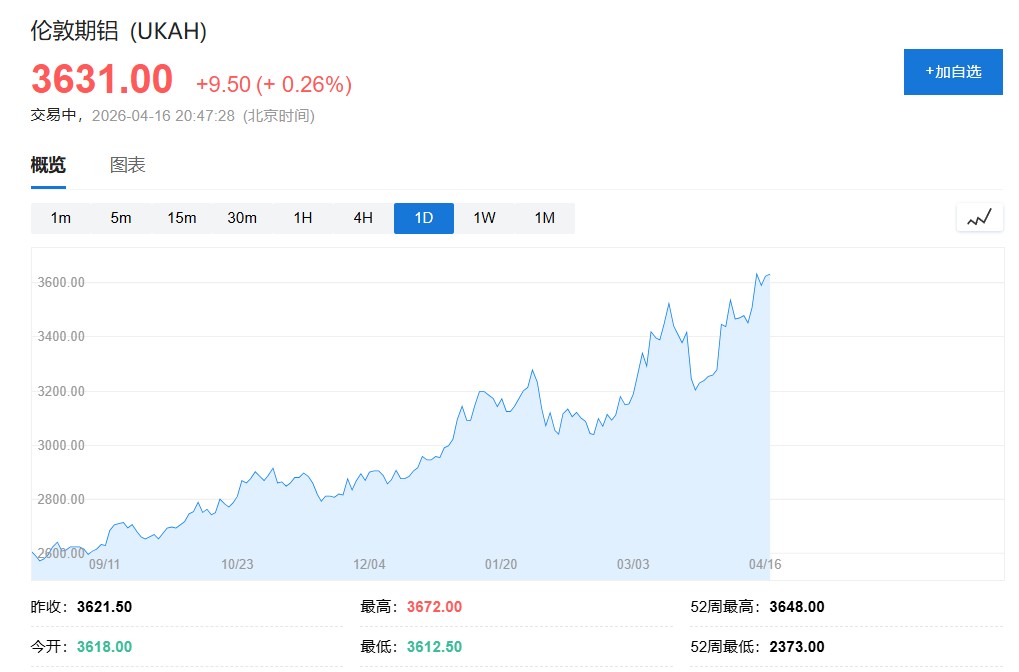
This week, JPMorgan alerted clients that the aluminum market is experiencing its largest supply gap in over 25 years, forecasting that aluminum prices may break through $4,000 per ton. Previously, direct strikes by Iran on two key smelters in Abu Dhabi and Bahrain caused irreversible capacity losses, pushing London aluminum prices above $3,600 per ton and reaching a four-year high.
This supply shock has hit Western manufacturers particularly hard. China and Russia, as major alternative supply sources, have been effectively excluded from US and European markets due to sanctions and trade tariffs. Some downstream buyers face shortages that may be impossible to resolve.
The Supply "Black Hole" Becomes Reality, JPMorgan Warning Confirmed
JPMorgan had previously warned continuously that the aluminum industry was heading toward a "metaphorical point of no return"—even if logistics via the Strait of Hormuz were restored, the global aluminum market would still face severe and persistent supply disruptions. This week, the bank formally informed clients that the market has entered this "black hole."
Since the outbreak of the Middle East conflict, the aluminum industry has warned that if the flow of raw materials through the Strait of Hormuz to the region is blocked for several weeks, smelters in the Middle East would be forced to cut production. Some production cuts have already occurred. Furthermore, last month's direct strikes by Iran on two key smelters in Abu Dhabi and Bahrain drastically expanded supply losses and created permanent capacity deficits.
JPMorgan forecasts that aluminum prices are expected to break through $4,000 per ton. The historical high for aluminum prices was $4,073.50 per ton, set in 2022 when the war in Ukraine triggered a similarly profound supply shock.
Smelter Shutdowns Are Hard to Reverse; Restart Cycle Takes At Least One Year
The severity of this crisis stems partly from the structural characteristics of the aluminum smelting industry. While bauxite supplies are ample and smelter construction costs are relatively low, once a smelter shuts down, restarting it comes at an extremely high cost and involves significant technical challenges.
Consequently, even with expectations of rising prices and a gradual easing of the conflict, a complete recovery of aluminum supply in the Middle East will take at least one year, possibly longer. This characteristic has historically led to another distortion: smelters were reluctant to cut production even during periods of low prices, thereby exacerbating supply-demand imbalances; once shut down, capacity was often permanently lost.
Analysts had previously questioned whether short-term supply disruptions caused by the blockade of the Strait of Hormuz would be offset by demand declines resulting from the war dragging down the global economy. However, the direct strikes on smelters by Iran completely changed this logic.
Western Manufacturers Hit First, Alternative Sources Limited
This supply shock has disproportionately impacted Western manufacturers. Although China and Russia are major global sources of aluminum supply, both countries have been effectively isolated from US and European markets due to sanctions and trade tariffs.
Factories are paying higher prices to find alternative sources, but for certain downstream products specifically produced by Middle Eastern smelters, the supply gap may simply be impossible to fill. This means the impact of this supply crisis will not only remain at the price level but will directly strike the production chains of Western manufacturing.
The aluminum market had long been trapped in oversupply conditions, yet in just a few weeks, it has sharply reversed into the "black hole" state described by JPMorgan. For investors, the $4,000 price target is no longer a distant prediction but a reality rapidly approaching.
Risk Disclaimer
Investment involves risk. Caution is advised. This article does not constitute personalized investment advice and does not take into account the specific investment objectives, financial situations, or needs of individual users. Users should consider whether any opinions, views, or conclusions contained herein align with their specific circumstances. Investments made based on this content are at the user's own risk.
