


Liang Wenfeng's Historic First Financing Revealed! DeepSeek V4 Completely Breaks Away from NVIDIA
DeepSeek is seeking external financing for the first time, planning to raise at least $300 million with a valuation of no less than $10 billion, breaking its tradition of not raising funds. Founder Liang Wenfeng hopes to strengthen the company's financial strength through financing to cope with fierce AI competition. The release of DeepSeek V4 has been delayed multiple times and is expected to adopt a trillion-parameter MoE architecture to enhance computing power and compensation to attract top researchers
This morning, the AI community was shaken by this news.
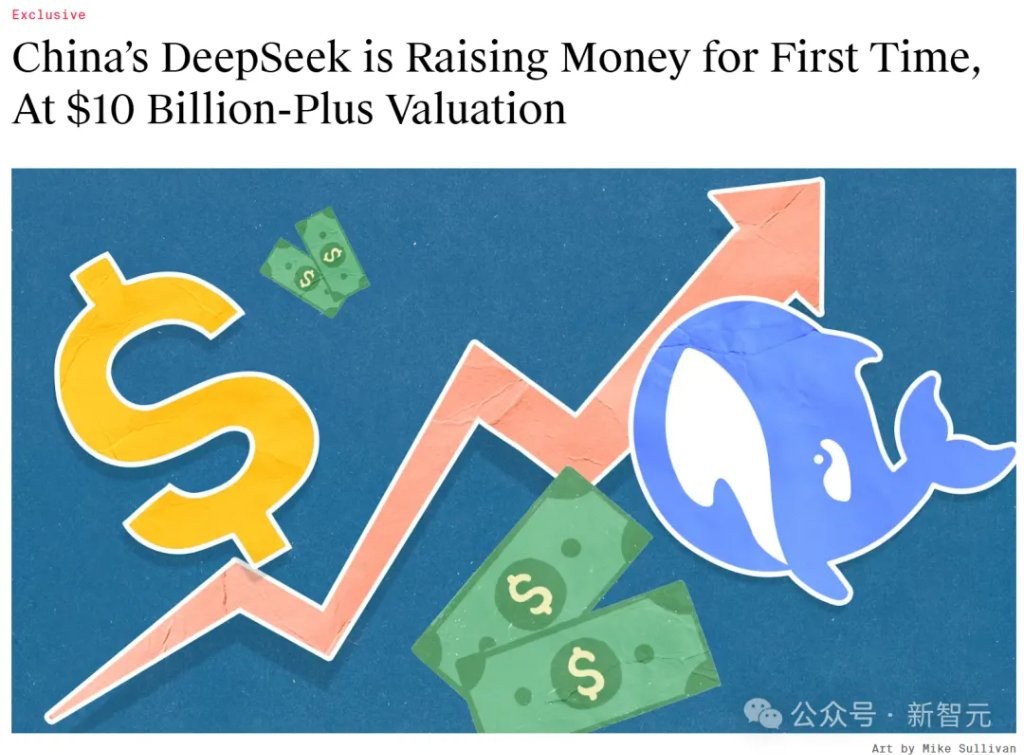
Foreign media outlet The Information revealed that DeepSeek is seeking its first external financing!
Breaking the iron law of "never raising funds," DeepSeek is now seeking to raise at least $300 million with a valuation of no less than $10 billion.
In the extremely capital-intensive race to develop large AI models, DeepSeek also needs to replenish its arsenal of funds.
The Former DeepSeek, Resolutely Refused Financing
DeepSeek, under the hedge fund giant High-Flyer Quant, repeatedly rejected investment intentions from top domestic venture capital firms and tech giants after R1 caused a sensation in Silicon Valley and Wall Street.
DeepSeek's decision to launch financing this time means that Liang Wenfeng has finally made a huge shift.
Previously, as a technical idealist, he had always hoped to maintain DeepSeek's independence, free from interference by commercial pressures.
The last time a new generation model was released was back in 2025 when DeepSeek R1 went viral. Now, the entire industry has been waiting for DeepSeek for a year and a half.
If this financing is successful, DeepSeek will have more computing power available and can offer higher salaries to prevent top researchers from leaving.
However, due to DeepSeek's identity as a "Chinese startup," some American venture capitalists are taking a cautious stance.
The release date of DeepSeek V4 has been postponed again and again, and the competitive landscape in the AI circle has changed dramatically.
Now, top models around the world are iterating rapidly, and tech giants from both China and the US are continuously occupying high ground thanks to their immense financial resources.
Perhaps, this pressure has finally prompted DeepSeek to change its financing strategy.
V4: A Hard Battle of Trillion Parameters
According to The Information, V4 was originally scheduled to debut in February this year but has been delayed multiple times.
Reuters provided the latest timeframe in early April as "within the next few weeks."
From currently known information, the scale and ambition of V4 far exceed those of previous generations.
- Parameter count leaps to the trillion level.
V4 adopts a MoE architecture with a total of approximately 1 trillion parameters, but only about 37 billion parameters are activated per token, keeping inference costs on par with V3. This design philosophy continues DeepSeek's consistent priority on efficiency.
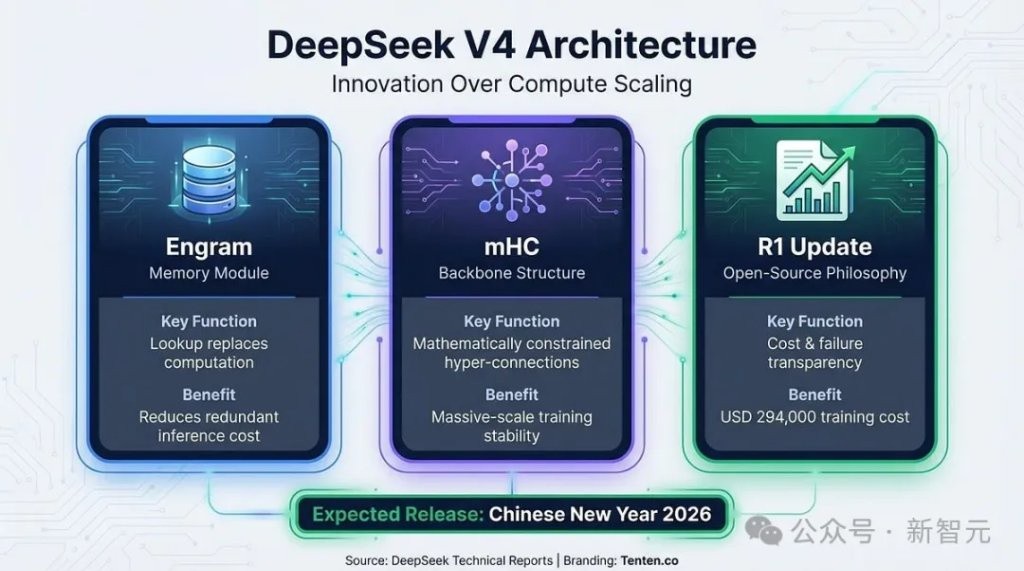
Leaked image from the internet
- Context window expanded to 1 million tokens.
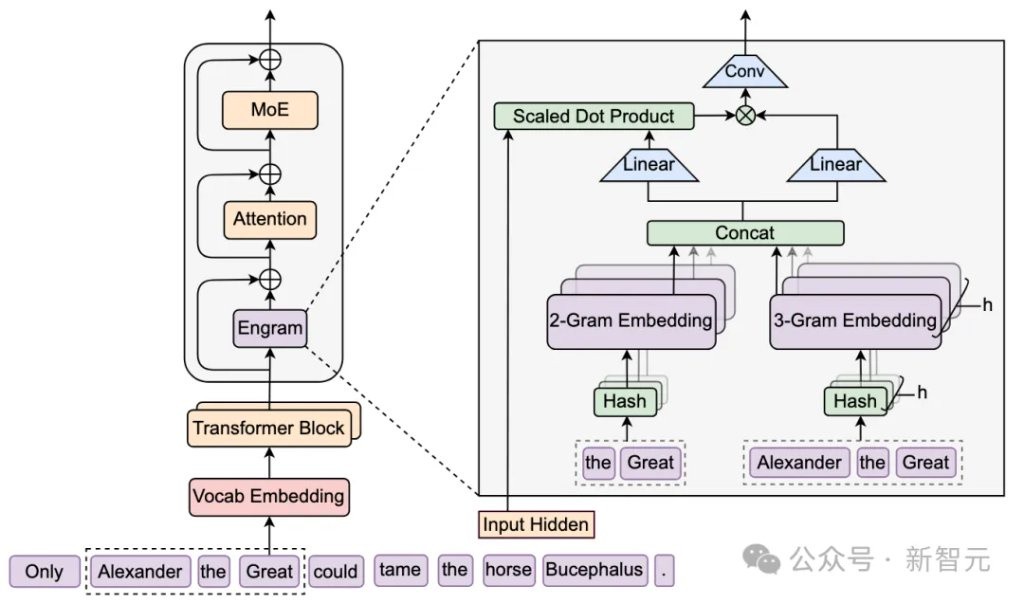
V4 introduces a conditional memory architecture named Engram, achieving constant-time retrieval for ultra-long contexts. According to internal tests, the information recall rate reaches 97% at a 1 million token length, far surpassing V3's performance at 128K context.
- Native multimodality.
According to FT reports, V4 will be DeepSeek's first native multimodal model, supporting text, image, and video generation. Previously, DeepSeek's models were primarily text-only, while other flagship models had long embraced multimodality.
- Code capabilities significantly enhanced.
From the outset, V4 has taken code generation as its core objective. Internal benchmarks show SWE-bench scores exceeding 80% and HumanEval reaching 90%. It is claimed that V4 can handle complex bug fixes at the level of an entire code repository, and its performance in long-context code reasoning will surpass the Claude and GPT series.
Additionally, there are rumors suggesting that V4 is expected to be released in two versions.
The full version exceeds one trillion parameters, optimized for advanced reasoning and complex code tasks, targeting Huawei Ascend chips; the lightweight version has approximately 200 billion parameters, aimed at general conversation and API services, capable of running on other domestic chips.
Regarding open source, V4 plans to release weights under the Apache 2.0 license, continuing DeepSeek's consistent open-source strategy.
When can it be used? Multiple sources point to late April.
On March 9, a version named "V4 Lite" briefly appeared on the DeepSeek platform before being removed.
In early April, developers discovered a test version of V4 Lite appearing on API nodes, with inference speed increased by 30% and the information recall rate at 128K context jumping from 45% to 94%.
Recently, DeepSeek also posted job openings for server operations engineers and delivery managers in Ulanqab, Inner Mongolia. This marks the company's first public recruitment of on-site personnel related to computing infrastructure.
All signs indicate that V4 is no longer in the lab but is making final preparations for large-scale deployment.
The Worst-Case Scenario Huang Is Most Afraid Of Is Happening
The core reason for V4's delay has little to do with the model itself. The real challenge lies in a major migration of underlying hardware.
All of DeepSeek's previous models were trained based on NVIDIA chips. But V4 took a different path.
According to Reuters, V4 will run on Huawei's latest Ascend chips.
DeepSeek's engineers spent a significant amount of time solving V4's adaptation issues for Huawei chips, rewriting core code, and migrating from NVIDIA's CUDA ecosystem to Huawei's CANN architecture.
This is both a technical decision and a strategic signal.
DeepSeek deliberately did not provide NVIDIA and AMD with early access to optimize and adapt V4, instead granting exclusive early access rights to domestic chip manufacturers.
If V4 delivers competitive performance on Huawei chips, it will be the world's first frontier AI model that does not rely on NVIDIA.
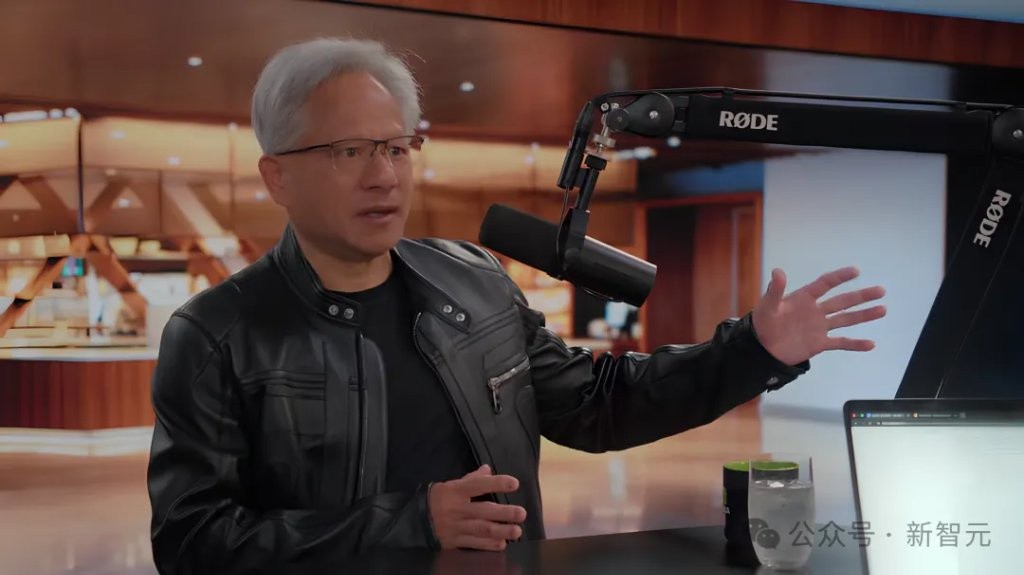
Jensen Huang himself is not calm about this.
In recent interviews, he stated outright that DeepSeek's new model based on the Huawei platform "will be a bad outcome for the United States."
The implication is that once AI models are optimized to run best on Chinese hardware, the moat protecting US chips will no longer be solid.
$300 Million, Breaking Away from the NVIDIA Ecosystem?
Even now, DeepSeek, known for "doing big things with small money," cannot rely solely on continuous funding from a single source.
According to Stanford University's 2026 AI Index Report, as of March this year, the performance gap between top US models and China's strongest competitors is only 2.7 percentage points. The smaller the gap, the higher the marginal cost of each step in catching up.
Earlier this month, OpenAI just completed a $40 billion financing round with a $300 billion valuation; compared to that, $300 million doesn't seem astronomical.
The true bet for V4 lies in proving that frontier AI can operate completely independently of the NVIDIA ecosystem.
$300 million is wagered on this very proposition.
Risk Disclosure and Disclaimer
There are risks in the market; investing requires caution. This article does not constitute personal investment advice and does not take into account the special investment objectives, financial conditions, or needs of individual users. Users should consider whether any opinions, views, or conclusions in this article conform to their specific circumstances. Investments made based on this content are at the user's own risk.
