


The Shaky Foundation Behind Record US Stocks: How Long Can Two 'One-Time' Factors Last?
US stocks have repeatedly hit record highs while the price-to-earnings ratio has simultaneously dropped significantly—a unique combination driven by a surge in demand for AI chips and the Iran war, two temporary tailwinds that artificially inflated earnings outlooks. Once AI momentum reverses or a ceasefire is reached, valuations that appear 'cheap' today may turn out to be expensive in hindsight
US stocks hit new record highs this week, but the foundation supporting this rally is facing scrutiny. The current surge in corporate earnings expectations stems almost entirely from two one-time tailwinds: a boom in demand for AI chips and the Iran war—both of which are clearly temporary and could reverse at any moment.
This week, the S&P 500 index climbed to a new high, rising approximately 3% from its peak last October. At the same time, the index's forward price-to-earnings ratio fell sharply from over 23 times, briefly dipping below 20 times, and currently stands around 22 times. This combination of a significant drop in the P/E ratio alongside rising stock prices has never occurred in historical data since 1985; every previous instance of such a sharp valuation decline was accompanied by a simultaneous drop in stock prices.
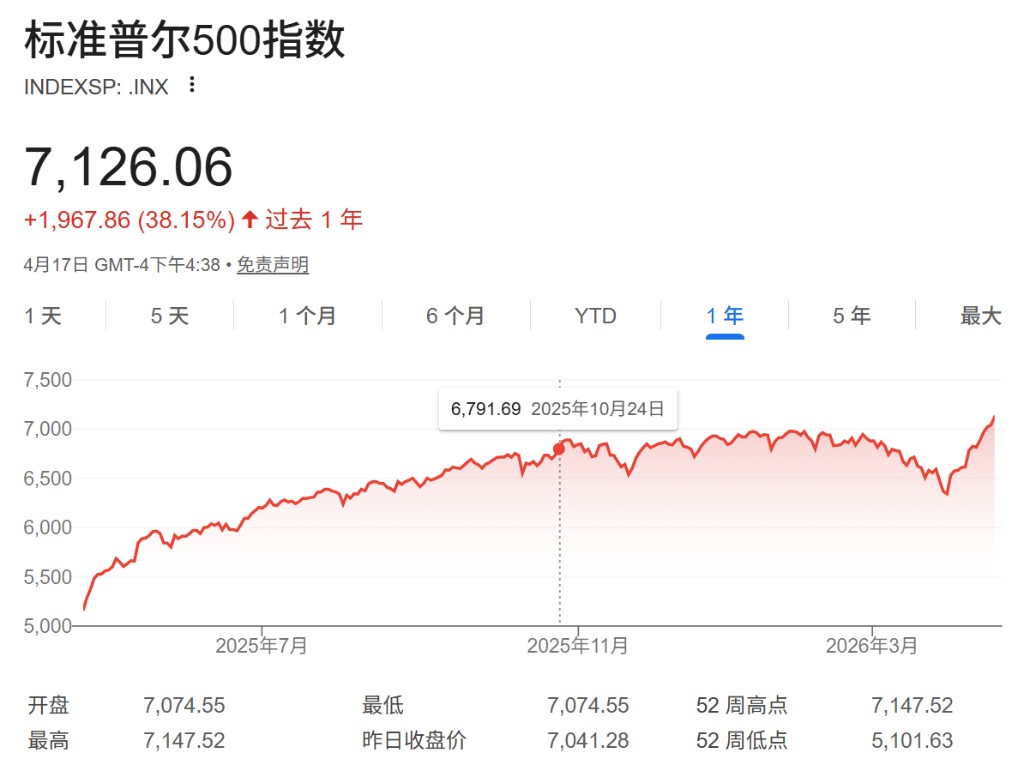
This apparent "valuation improvement" offers some comfort to investors, but The Wall Street Journal warns that the current "cheapness" may be an illusion. A boom in AI data center construction has driven chip prices skyrocketing, while the Iran war has pushed oil prices up and significantly boosted energy company profits. Together, these factors have lifted earnings expectations and compressed the P/E ratio. Should AI sentiment reverse or tensions in the Gulf ease, the low valuations that seem reasonable today may prove expensive in hindsight.
The current forward P/E ratio of the S&P 500 is approximately 22 times. Although down from its peak last October, it remains far above the long-term average of 16 times. There is a clear divergence between bulls and bears regarding whether current valuations are sustainable.
Unprecedented: Record Stock Prices and Declining Valuations Side by Side
The basic logic of the forward P/E ratio is to divide the stock price by the projected earnings per share for the next 12 months as forecast by Wall Street analysts. When earnings expectations are raised significantly while stock prices rise only modestly, the P/E ratio naturally declines.
In the past, significant upward revisions in earnings expectations typically fueled shareholder enthusiasm, causing stock prices to rise even more and thereby pushing valuations higher rather than lower. A sharp drop in the P/E ratio almost always signaled bad news in the past—often because economic recessions caused earnings expectations to fall faster than stock prices.
This time, there are two main drivers behind the surge in earnings expectations: first, a boom in AI demand has driven chip prices skyrocketing; second, the Iran war has significantly boosted energy company profits. Both are viewed by the market as temporary factors. This combination has created a divergence between valuation and stock prices unseen in history.
AI Chips: Underlying Cyclical Concerns Persist Despite Surging Earnings
The valuation changes in the AI sector are most typified by Micron Technology, a memory chip manufacturer. The company produces high-speed memory chips required for AI, and its sales have surged far beyond market expectations, driving significant price increases and expanded profit margins.
Last October, the median analyst expectation for Micron's 2027 earnings per share was $19; today, that forecast has risen to $101. However, while expected earnings have nearly quintupled, its stock price has more than doubled, leading to a sharp decline in its P/E ratio.
The Wall Street Journal points out that a lower valuation does not mean the stock is cheap; rather, it reflects the market's expectation that the current ultra-high profits will be temporary. The memory chip industry has historically been highly cyclical, and prices will eventually fall as more capacity comes online; data center demand will also slow once needs are met.
Optimists argue that AI stocks are moving from speculative trading to genuine profitability. Scott Chronert, head of US Equity Strategy at Citigroup, noted that based on the Price/Earnings-to-Growth (PEG) ratio, the eight major technology and AI stocks were valued at their lowest levels since 2013 earlier this week.
Pessimists, however, believe growth expectations remain too high, with data center expansion forecasts vastly exceeding reality. Major tech companies have shifted from asset-light models to capital-intensive ones, compounded by the fact that Wall Street earnings forecasts often carry significant error margins. Additionally, the risk of renewed conflict in the Iran region has been overly ignored by stock market investors, creating multiple downward threats.
Oil Stocks: War Dividends Fade, Valuation Compression Becomes Unsustainable
The distortion of oil sector valuations by the Iran war is equally impossible to ignore. Oil prices soared as both Iran and the US restricted petroleum exports from the Persian Gulf. The expected earnings for the three major oil giants over the next 12 months are roughly one-third higher than at the end of February, pushing the oil sector's forward P/E ratio down from 23.8 times before the war to 15.6 times.
However, upon news of a ceasefire, oil stock prices plummeted sharply, retreating to pre-war levels even as earnings expectations continued to climb. News of the reopening of the Strait of Hormuz further pressured oil prices on Friday—although Iran claimed again on Saturday that the strait was closed, markets were already closed.
The oil futures market had long anticipated that oil prices would eventually fall. For shareholders, while temporary boosts in earnings are positive, the market truly cares about profits that grow sustainably year after year. The speed at which war dividends fade clearly reveals the structural limitations of this benefit.
Pricing Based on Two Themes May Fail, Low Valuations Carry Reversal Risks
Current pricing for both AI and oil stocks is built on the market's most optimistic expectations regarding two core themes: the boom in data center construction and the Iran war. This makes the overall market appear cheaper on paper than before.
But the fragility of this "low valuation" is obvious: if the AI boom turns into a bust, or if a peace agreement is reached in the Gulf region, today's bargain may prove expensive in hindsight. For investors, the current forward P/E ratio based on the next 12 months cannot adequately reflect the risk of earnings slowdowns that may arrive a year from now, offering very limited buy or sell signals.
