


Is the SaaS Apocalypse Here? After Private Meetings with 40 Companies, Goldman Sachs Declares: This May Be a Much Larger Growth Narrative
Goldman Sachs believes software companies are shifting their business models from selling features and seats to selling "labor or productivity units," enabling them to tap into labor budgets far larger than traditional software budgets and significantly expand the total addressable market (TAM). Meanwhile, value is being reallocated from frontier large model labs to the software application and runtime layers; this structural shift provides positive support for the long-term valuation logic of SaaS stocks
Amidst the disruptive wave of AI, the "SaaS Apocalypse" narrative is facing its most powerful systematic rebuttal on Wall Street.
After Gabriela Borges led a team in intensive visits to approximately 40 software companies, Goldman Sachs released an in-depth report stating unequivocally: AI is not a zero-sum game for the SaaS industry but has the potential to significantly expand its total addressable market size. The narrative of "death" for software companies has been severely overestimated.
The report points out that software companies are shifting their business models from selling features and seats to selling "labor or productivity units." This means they can enter the labor budget market, which is far larger than traditional software budgets, thereby significantly expanding the overall Total Addressable Market (TAM). At the same time, value is being reallocated from frontier large model labs to the software application and runtime layers. This structural shift provides positive support for the long-term valuation logic of SaaS stocks.
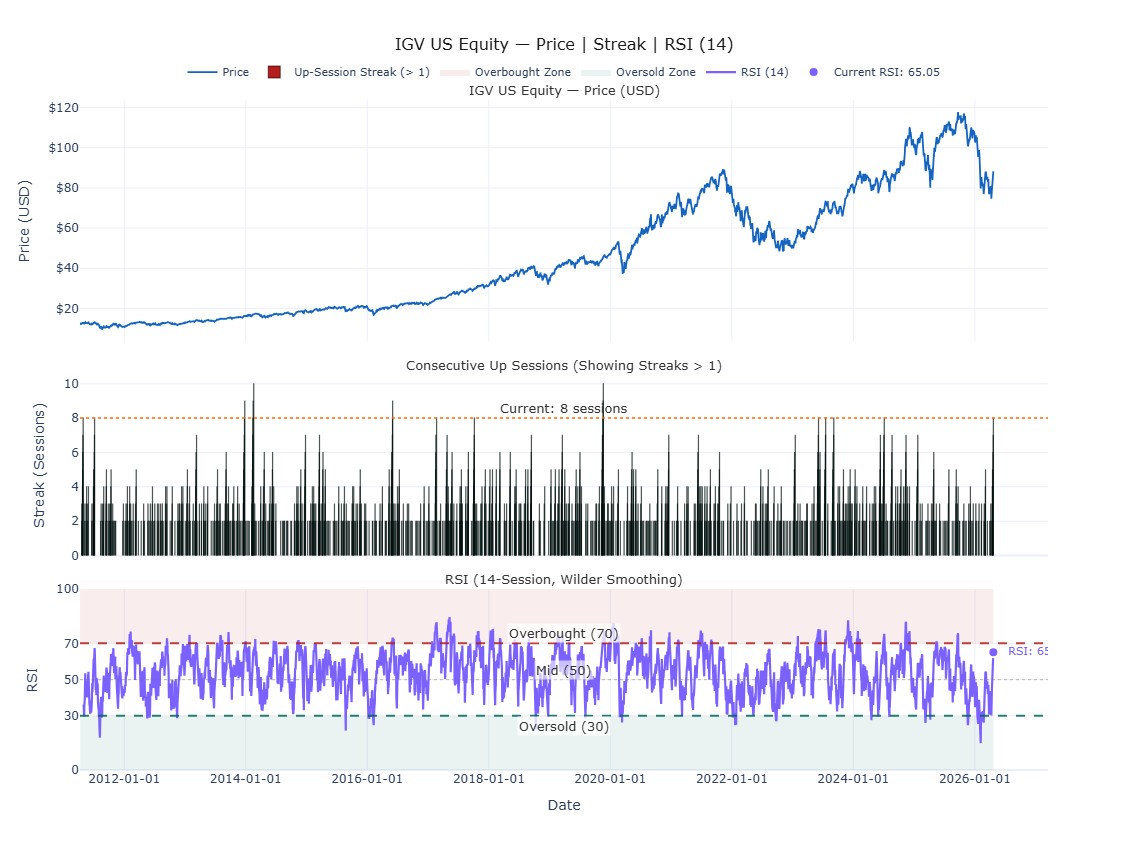
However, market sentiment has not yet turned unilaterally. Brian Heavy, a trader at JPMorgan Chase, recently pointed out that the software sector's eight consecutive days of gains are "largely tactical," driven more by short covering than fundamental improvement. ServiceNow subsequently issued weaker earnings guidance, further crushing its stock and dragging down the sector, extinguishing early signs of recovery. This debate over the life and death of SaaS is approaching a critical juncture under the dual pressure of earnings season and AI benchmarking tests.
AI is a TAM Expander, Not a Value Destroyer
The core logic of the Goldman Sachs report is that AI and SaaS are not engaged in a zero-sum game.
Traditional SaaS charges based on "seats," while AI is driving software companies to reprice based on "labor units" or "productivity processes" as granularity. This allows them to penetrate human cost pools that are far larger than software IT budgets—meaning a quantum leap in the magnitude of the addressable market.
At the same time, the center of gravity in the value chain is shifting.
As benchmarks for frontier large models continue to be broken and inference costs accelerate downward, value is moving from frontier labs to the software/application/runtime layers.
Borges notes that enterprises are actively building independent software ecosystems that are "model vendor agnostic," prioritizing open-source distilled models or proprietary Small Language Models (SLM) to avoid excessive reliance on any single model vendor. The benefits include: more efficient request routing, lower inference costs, and immunity to sudden price spikes if a model vendor stops subsidizing tokens.
The report also emphasizes that computing power scarcity is becoming a new core constraint, tipping the balance of power toward those with inference capabilities—that is, the software layer controlling agent orchestration, routing, and costs.
AI-Native Companies Forge a New Path, Filling Traditional SaaS Gaps
Regarding the competitive landscape, Goldman Sachs specifically noted that AI-native startups have not chosen to directly confront SaaS giants like Salesforce and Workday. Instead, they are targeting the "white spaces" between traditional SaaS products.
These white spaces refer to business processes and workflow scenarios that remain effectively uncovered across various verticals of traditional SaaS. Leveraging more flexible architectures and process-centric product designs, AI-native companies are establishing beachheads in these areas rather than fighting over the same slice of the pie with established players.
This competitive landscape means that AI Natives, legacy SaaS vendors, and frontier model providers each have their strengths and weaknesses at the software application layer, presenting an overall pattern of "additive effects" rather than mutual cannibalization.
Disagreements Persist: The Bearish Narrative Is Not Yet Dead
Among the public companies surveyed, Goldman Sachs highlighted five targets believed to possess structural advantages:
CRM (Salesforce): Goldman Sachs believes its agent strategy is clearer, and upcoming developer tools warrant attention;
CRWD (CrowdStrike): Demand across multiple modules shows significant improvement;
GWRE (Guidewire): AI is accelerating its cloud transformation, representing a pure incremental market expansion logic;
IOT (Samsara): Demand is driven by ROI, with data and AI capabilities offering differentiation;
RBRK (Rubrik): Agent Cloud and identity security businesses have broadened the growth narrative, while demand for enterprise resilience continues to expand.
Disagreements Persist: The Bearish Narrative Is Not Yet Dead
Despite Goldman Sachs' clear stance, internal market disagreements remain unresolved. The software application layer currently faces competitive shocks from two new forces—AI-native companies and frontier large model providers. Even Goldman Sachs acknowledges that the core question remains which group can best fill their respective shortcomings.
The answer provided by the report is a "game of addition" rather than zero-sum: all parties continue to create customer value in their areas of strength, benefiting the overall software market rather than shrinking it. However, whether this assertion will be validated by upcoming corporate earnings reports remains to be seen by the market.
From current signals, the impact of ServiceNow's guidance downgrade reminds investors that uncertainty during the AI transition period remains real. Brian Heavy's assessment further warns the market: the scale of long-term capital redeployment into the software sector is still small. If this rebound lacks continuous validation from fundamentals, its sustainability will continue to be questioned.
