


Eightfold Surge in a Month Followed by Avalanche! Avis Short Squeeze Ends, Shares Halved in One Day, Second Consecutive Plunge
In Thursday's pre-market trading, Avis shares plummeted 50% after falling 38% on Wednesday. The stock had surged from around $100 to nearly $850 over the past month, with its major gains coinciding with the fastest rebound in U.S. stock market history. Signs of cooling speculative sentiment are emerging
Avis Budget Group (CAR) shares fell for a second consecutive day, after surging from around $100 to nearly $850 within a month. This dramatic rise occurred alongside the fastest rebound in U.S. stock market history. Signs of cooling speculative sentiment are now appearing.
During Thursday's pre-market session, Avis shares plunged 50%, dropping $179 per share to close at $223.50. On Wednesday, the stock had already fallen 38% to $444, though it briefly touched an all-time high of nearly $848 earlier that morning. Market expectations pointed toward a potential equity offering by the company to alleviate the short squeeze.
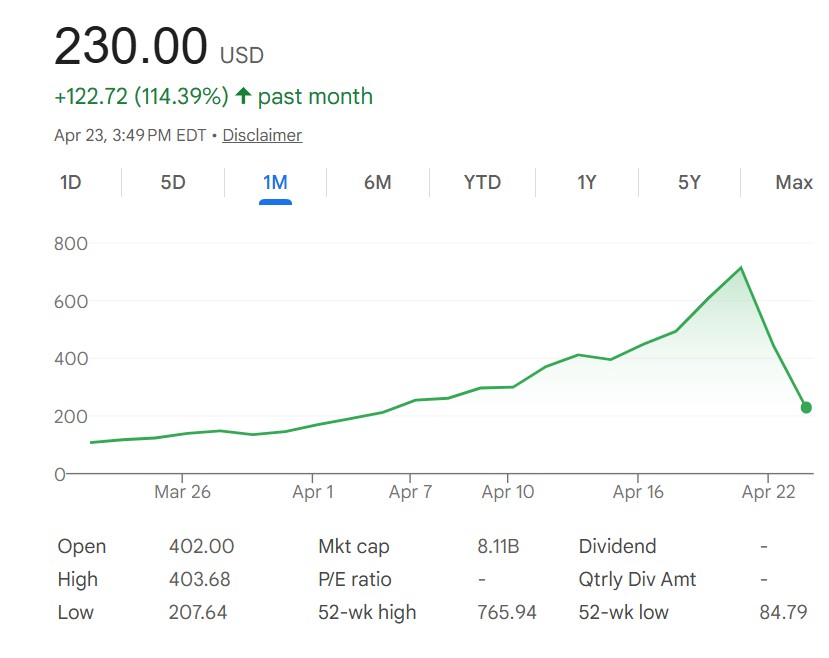
After Wednesday's market close, Avis announced it would release its first-quarter earnings report before the opening bell on April 29, approximately one week earlier than last year. The early announcement has fueled concerns that the company may use this timing to issue new shares, adding pressure to the stock price.
J.P. Morgan analyst Ryan Brinkman downgraded Avis from "Neutral" to "Underweight" in his Thursday client report while raising the price target from $123 to $165. He noted that the recent abnormal surge driven by the short squeeze might offer management a significant opportunity to create long-term value through capital market actions. However, even under the most optimistic fundamental assumptions, current valuations remain far beyond reasonable levels.
According to Bloomberg data, Avis currently has about 35 million shares outstanding, with short positions totaling approximately 9 million shares as of March 31. The company's market capitalization stands at roughly $9 billion.
The catalyst for this short squeeze was two investors—SRS Investment Management and Pentwater Capital Management—who, through a combination of direct holdings and total return swaps, effectively controlled more than 100% of Avis's publicly traded shares. This maneuver drove the stock price up from around $100 near March 20 to its peak.
In March, the company filed to issue up to 5 million new shares via Wall Street dealers at market prices, with proceeds intended to repay debt. However, market consensus suggests the company is unlikely to proceed with the offering before releasing its earnings report. Additionally, two major shareholders may be waiting until after the earnings announcement before considering any sell-offs.
SRS Investment Management is led by Jagdeep Pahwa, who also serves as Executive Chairman of Avis. Due to Pahwa's insider status, SRS may be restricted from selling shares prior to the earnings release. SRS holds 17.4 million shares directly and an additional 2.9 million through swaps, making it Avis's largest shareholder.
According to an April 2 proxy statement, Florida-based Pentwater holds 7.8 million shares directly and another 10.2 million via swaps. Led by Matthew Halbower, Pentwater is known for participating in merger arbitrage strategies. Furthermore, the "short-swing trading rule" under the Securities Exchange Act of 1934 may require Pentwater to return profits from shares held for less than six months to the company. Approximately 3 million of Pentwater's holdings have been held for less than half a year.
Even after the sharp decline, Avis remains relatively expensive. Based on expected earnings per share of around $4 in 2026, the P/E ratio stands at approximately 60 times. With estimated EBITDA (earnings before interest, taxes, depreciation, and amortization) of about $800 million for 2026, the enterprise value-to-EBITDA multiple approaches 20 times, whereas historically Avis typically traded around 10 times. The company currently carries approximately $6 billion in corporate debt.
By comparison, competitor Hertz generates revenue equal to about 75% of Avis's and has a market cap of just $2.1 billion, roughly 20% of Avis's valuation. YTD, Hertz shares have risen about 20%, while Avis has gained approximately 100%. Together, Avis, Hertz, and privately held Enterprise control about 90% of the U.S. car rental market.
