


Goldman Sachs Backs BYD: Operating Profit Beats Expectations, Bullish on Overseas Markets as Second Growth Engine
Goldman Sachs stated that BYD's performance in the first quarter of 2026 was impressive, with EBIT and gross margin both exceeding expectations. The core driver was the surge in the proportion of overseas sales from 21% in the same period last year to 46%, demonstrating the significant effectiveness of its global expansion strategy. Although net profit declined year-on-year due to a drag from RMB 1.2 billion in foreign exchange losses, Goldman Sachs still views the overseas business as the second growth engine, predicting its profit contribution will reach 62% by 2030, and maintains a Buy rating
BYD's operating profit in the first quarter of 2026 significantly exceeded Goldman Sachs' expectations, with the proportion of overseas sales jumping to nearly half. The gross margin surpassed market consensus by nearly two percentage points. While maintaining a Buy rating, Goldman Sachs positioned the overseas business as BYD's most critical second growth engine for the next decade.
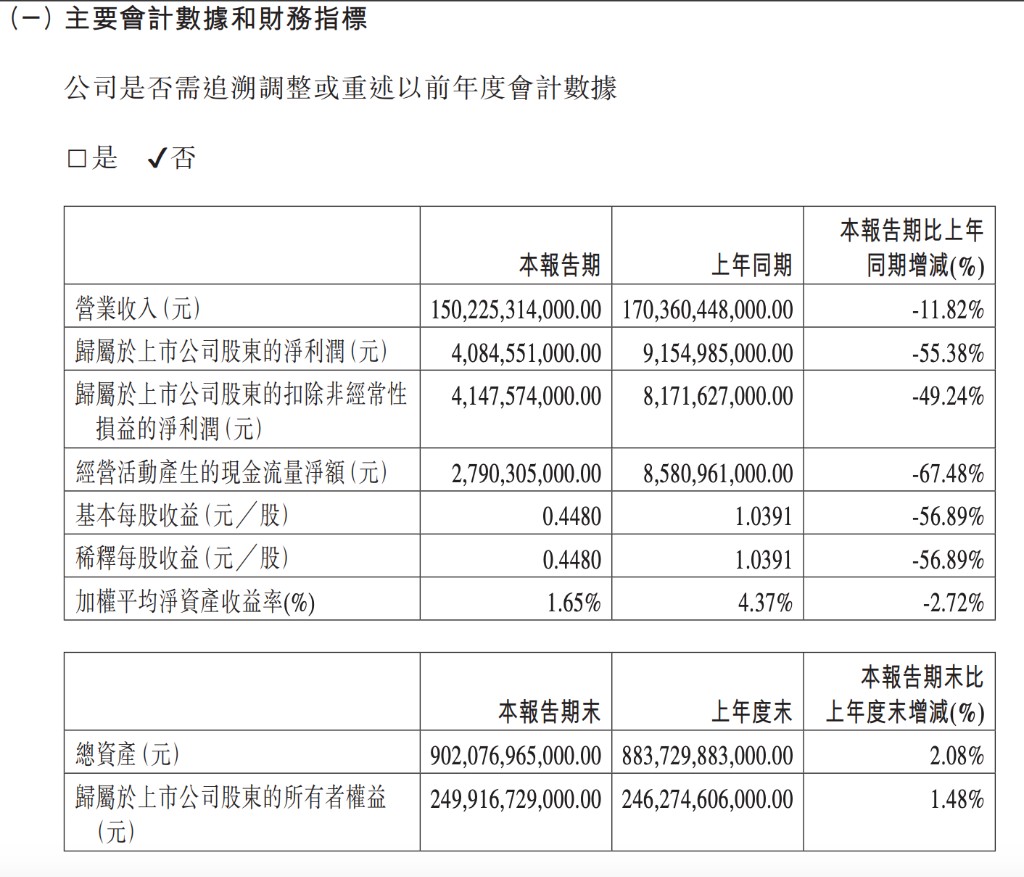
According to Zhuifeng Trading Desk, a report released by Goldman Sachs on April 28 showed that BYD's first-quarter earnings before interest and taxes (EBIT) exceeded Goldman Sachs' expectations by 82%, gross profit beat expectations by 18%, and revenue surpassed expectations by 12%. All three core operating indicators exceeded sell-side consensus. In terms of net profit, it was 19% higher than the Visible Alpha consensus and basically in line with the Bloomberg consensus, but 19% lower than Goldman Sachs' own expectations, mainly dragged down by non-operating losses such as foreign exchange losses (a loss of RMB 1.2 billion was recorded in the first quarter) and asset impairments.
Goldman Sachs maintained its Buy ratings for BYD's A-shares and H-shares. Based on a DCF model (WACC 10.8%, terminal growth rate 2.0%), the 12-month target prices are RMB 137 and HKD 134, respectively. Goldman Sachs pointed out that the core driver of this earnings beat was the significant jump in the proportion of overseas sales—the proportion of overseas sales reached 46% in the first quarter, far higher than 21% in the first quarter of 2025 and 26% in the fourth quarter of 2025; the gross margin for the same period reached 18.8%, exceeding Goldman Sachs' expectation of 17.8% and the market consensus of 16.8%, indicating that the company still possesses strong pricing power and cost control capabilities against the backdrop of rising raw material costs.
Goldman Sachs will host a post-earnings investor conference call with BYD's management on April 29. Goldman Sachs expects investors to focus on key topics such as the outlook for domestic market demand and potential upside in overseas markets, market demand for new models equipped with the second-generation Blade Battery, the pace of overseas expansion and supply-side bottlenecks, as well as the transmission of cost inflation to profit margins and the timing of the bottoming out.
Operating Profit Significantly Beats Expectations, Gross Margin Stronger Than Forecasts
In the first quarter, BYD's revenue decreased by 12% year-on-year and 37% quarter-on-quarter, corresponding to a 30% year-on-year and 48% quarter-on-quarter decline in vehicle sales during the same period. Despite pressure on overall sales volume, revenue still exceeded Goldman Sachs' expectations by 12%, mainly benefiting from structural improvements driven by a substantial increase in the proportion of overseas sales, as well as higher-than-expected external battery sales revenue; revenue from the mobile phone components business was below expectations, partially dragging down overall revenue.
The gross margin reached 18.8%, exceeding Goldman Sachs' expectation of 17.8% and the market consensus of 16.8%. Goldman Sachs attributed this to superior product pricing and effective control of bill of materials (BOM) costs, achieving better-than-expected performance under external pressure from rising raw material prices. In terms of operating profit, operating expenses decreased by 16% year-on-year and 23% quarter-on-quarter, and were lower than Goldman Sachs' expectations. Among these, selling, general and administrative expenses (SG&A) increased, but this was offset by a significant decrease in other expenses. The combination of multiple factors drove EBIT to exceed Goldman Sachs' expectations by 82%.
Foreign Exchange Losses Drag Down Net Profit, Significant Year-on-Year Decline
In terms of net profit, it decreased by 55% year-on-year and 56% quarter-on-quarter in the first quarter, showing a significant decline. Goldman Sachs analyzed that there were two main dragging factors: First, a foreign exchange loss of RMB 1.2 billion was recorded in the first quarter, compared to a foreign exchange gain of RMB 2.8 billion in the same period of the first quarter of 2025, and a foreign exchange loss of RMB 1.7 billion in the fourth quarter of 2025. The significant fluctuation in foreign exchange gains and losses had a major impact on net profit; Second, non-operating losses such as asset impairments also brought additional pressure.
It is worth noting that although net profit was 19% lower than Goldman Sachs' expectations, it was 19% higher than the Visible Alpha consensus and basically in line with the Bloomberg consensus, indicating that the market's previous expectations for net profit were relatively conservative, and the actual results were still within the range of overall market expectations.
Overseas Market: Expected to Contribute 62% of Profits by 2030, Strengthening the Logic of the Second Growth Engine
Goldman Sachs emphasized in its investment logic that the overseas market is the core driver of BYD's future growth. Goldman Sachs predicts that from 2025 to 2030, the overseas market will contribute 83% of the incremental vehicle sales volume for BYD; the proportion of profit contribution from overseas business is expected to rise from 40% in 2025 to 62% in 2030. The better-than-expected performance in the first quarter, where the proportion of overseas sales surged from 21% to 46%, further strengthened Goldman Sachs' confidence in this long-term logic.
In terms of overall sales volume forecasts, Goldman Sachs expects BYD's total vehicle sales to grow from 4.6 million units in 2025 to 7.1 million units in 2030. Goldman Sachs believes that BYD, with its complete product matrix covering mass market to high-end segments, as well as strong independent R&D capabilities, has the ability to continuously promote technological innovation in complete vehicles. Currently, both BYD's A-shares and H-shares are trading below their historical average 12-month forward P/E levels, and Goldman Sachs believes the current valuation is attractive.
