


Alphabet Records "largest percentage gain in history" While NVIDIA Plunges; Goldman Sachs Senior Semiconductor Analyst Recommends "Long Cloud, Underweight Chips"
Goldman Sachs analysts recommend that investors shift capital from chip stocks to cloud computing giants. Alphabet's stock price surged 10%, adding $421 billion to its market capitalization and marking the largest single-day market cap increase in its history. Meanwhile, NVIDIA's stock fell more than 4%. Google Cloud's quarterly revenue growth reached 63%, with a significant improvement in operating margins, as AI solutions became the primary growth driver. Alphabet's market capitalization is now approaching NVIDIA's, with the gap narrowing to $203 billion
Goldman Sachs believes that amid the AI infrastructure construction boom, investors should shift their positions from chip stocks to cloud computing giants.
On Thursday, Alphabet's stock price surged 10% in a single day, increasing its market capitalization by $421 billion. This marked the largest single-day market cap increase in the company's history and the second-largest single-day market cap gain for any U.S. corporation.
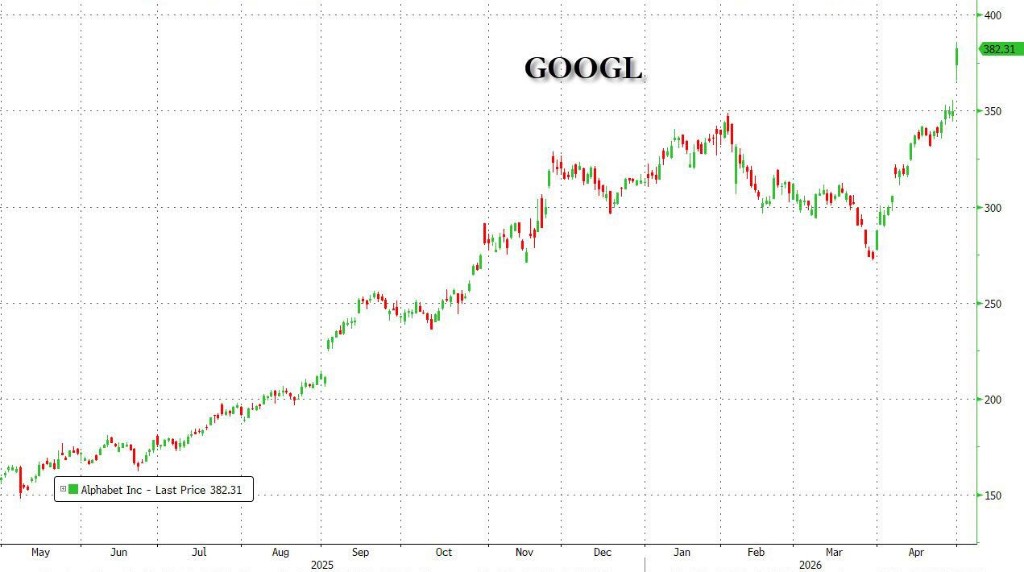
(Google's stock performance over the past year)
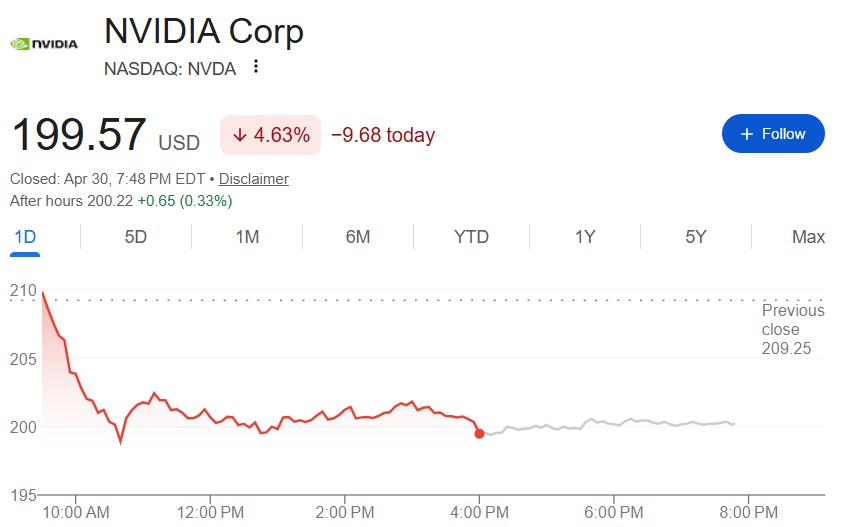
Meanwhile, NVIDIA's stock dropped more than 4%, falling below the $200 mark, with a single-day decline of nearly $10 per share.
Jim Covello, a senior semiconductor analyst at Goldman Sachs, advised clients in a report to "go long on hyperscale cloud providers and underweight semiconductors."
Covello pointed out in the report that the current market pricing for the return on investment (ROI) of hyperscale cloud providers already reflects a "considerable degree of pessimism," leading to a significant compression in valuation multiples for the sector. In contrast, semiconductor stock valuations are clearly elevated.
Strong Growth in Google Cloud Ignites Market Enthusiasm
The trigger for Alphabet's recent surge was an impressive quarterly earnings report.
Google Cloud's quarterly revenue growth rate reached 63%, impressing investors. The cloud business's operating margin expanded significantly from 17.8% a year ago to 32.9%, which management attributed to more efficient technical infrastructure and process innovations.
JPMorgan analyst Doug Anmuth wrote in a research note on Thursday:
We believe Google is generating clear, quantifiable returns on its AI investments.
He noted that Google Cloud's contract backlog nearly doubled quarter-over-quarter in the first quarter, reaching $462 billion. Anmuth also emphasized:
The virtuous cycle between underlying chips, model improvements, user engagement, and commercial monetization continues to compound.
During the earnings conference call, Alphabet stated that AI solutions have become the primary growth driver for Google Cloud, with strong demand for AI agent products based on Gemini.
The company disclosed that Gemini processes over 16 billion tokens per minute, a 60% increase from the previous quarter.
Alphabet's Market Cap Approaches NVIDIA's, Gap Narrows to Approximately $203 Billion
Strong earnings propelled Alphabet's stock to a record high. According to Dow Jones Market Data, the stock has risen 33.8% so far this month, marking its best monthly performance since October 2004.
In terms of market capitalization ranking, the gap between Alphabet and NVIDIA has narrowed to approximately $202.9 billion, the smallest difference since February 5 of this year.
In January, Alphabet surpassed Apple to become the world's second-largest company by market capitalization.
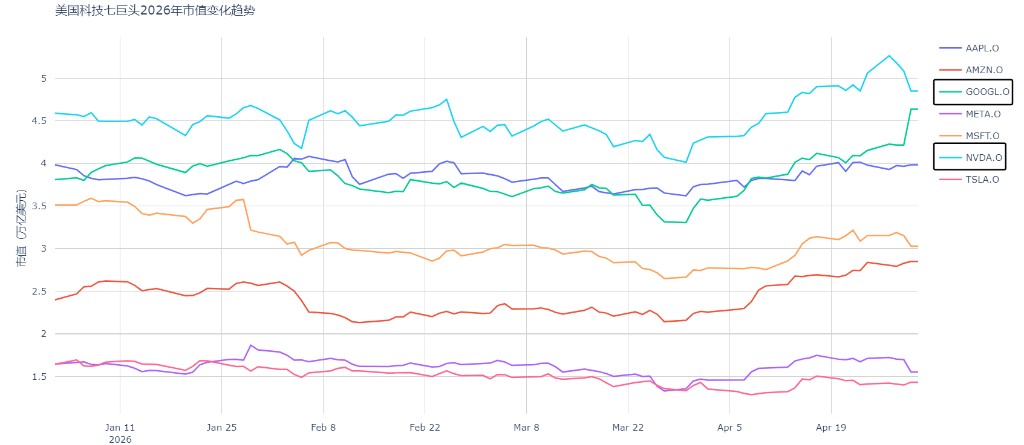
Over the past year, Alphabet's stock price has cumulatively risen 138.5%. The company has gradually dismantled the narrative that AI poses an "existential threat" to its business. Google Search revenue grew 19% in the first quarter, with query volumes hitting record highs, confirming the logic that AI expands rather than cannibalizes the search business.
According to Sensor Tower data, Gemini has become the second most-downloaded AI app globally, trailing only OpenAI's ChatGPT.
Goldman Sachs: Chip Valuations Are High, Cloud Giants Are Undervalued by the Market
Covello pointed out in the report that current semiconductor stock valuations are clearly elevated, while hyperscale cloud providers are trading below their historical average valuations.
The 12-month forward price-to-earnings (P/E) ratio of the Philadelphia Semiconductor Index has risen to approximately 24 times, higher than the 10-year average of 19 times. The forward P/E ratio for hyperscale cloud providers is also around 24 times, but given their sustained cash flows and growth prospects, this sector has historically commanded a higher premium.
In recent months, semiconductors have been investors' favorite AI-themed assets, with the Philadelphia Semiconductor Index rising nearly 150% over the past year.
Meanwhile, hyperscale cloud providers such as Amazon, Oracle, Microsoft, Alphabet, and Meta have lagged due to investor concerns over massive capital expenditures on data centers.
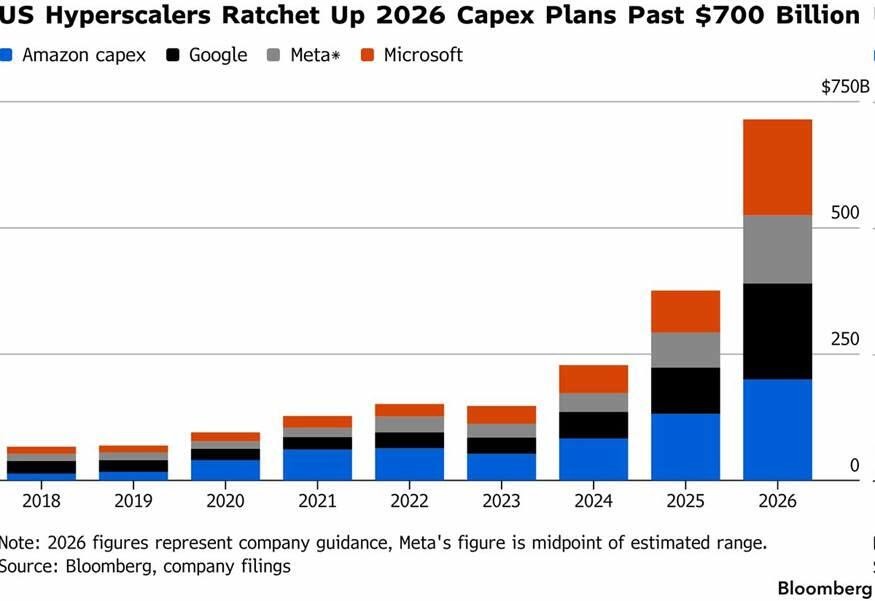
(Total capital expenditure for the four major hyperscale data center operators this year is expected to exceed $700 billion)
Covello outlined two scenarios favorable to cloud providers in the report:
Scenario 1: Cloud giants begin to demonstrate positive returns on investment, alleviating market concerns about their capital expenditures and driving a valuation recovery, while the upside potential for chip stocks is limited as they are already fully priced in.
Scenario 2, viewed by Covello as the "best-case scenario": If the ROI for hyperscale cloud providers remains under pressure, forcing them to cut capital expenditures, "we believe cloud giants will see a significant rebound due to improved cash flow prospects, while semiconductor stocks will plunge sharply as reduced capital spending impacts revenue."
The only negative scenario is "status quo": where cloud giants continue to spend heavily despite doubts about ROI, continuously compressing their own cash flow dynamics while simultaneously supporting semiconductor stock valuations. Covello noted that this scenario is the most unfavorable for the aforementioned relative value trade.
Risk Disclosure and Disclaimer
The market involves risks, and investment requires caution. This article does not constitute personal investment advice, nor does it take into account the specific investment objectives, financial status, or needs of individual users. Users should consider whether any opinions, views, or conclusions in this article align with their specific circumstances. Investment decisions made based on this content are at the user's own risk.
