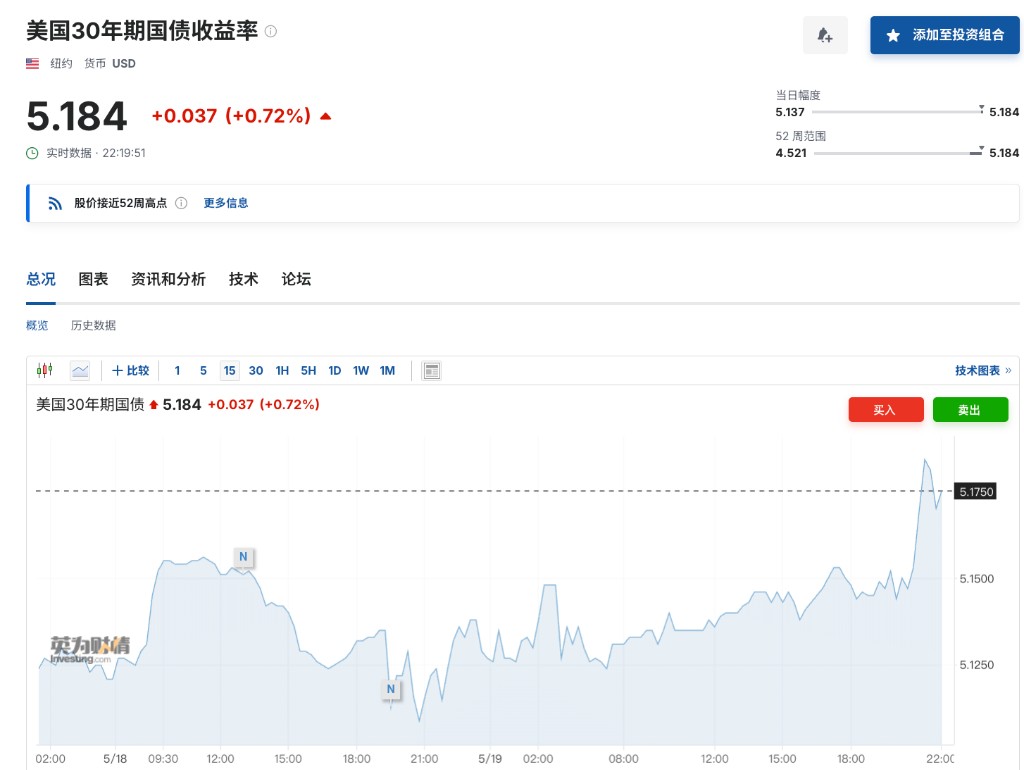
Inflation Concerns Ignite Global Bond Market Turmoil; 30-Year Treasury Yield Surges to 5.18%, Highest Since 2007
War-driven energy price hikes and widening fiscal deficits have plunged the global bond market into a new round of turmoil. The 30-year U.S. Treasury yield rose to 5.18% on Tuesday, marking its highest level since 2007, while the two-year yield climbed to 4.11%, reaching a new high since February 2025. The narrative of "higher rates for longer" has gained deep market consensus, with bets on Federal Reserve rate hikes intensifying
Renewed inflation concerns have plunged the global bond market into a new round of turmoil.
On Tuesday, the yield on the 30-year U.S. Treasury note climbed 5 basis points to 5.18%, touching its highest point since 2007. The two-year yield rose to 4.11%, marking a new high since February 2025. This continues the weak trend seen in recent weeks, characterized by sustained weakness in the bond market and constantly rising yields.
Behind this round of selling lies the inflationary pressure from war-driven energy price hikes, coupled with deep market concerns over the continuous expansion of fiscal deficits.
Previously, most investors viewed 5% as the "psychological barrier" for the 30-year Treasury yield, expecting that a breach would trigger bargain hunting. However, the recent sharp rise in long-end interest rates is breaking this assumption, potentially signaling that this $31 trillion market is entering a new era.
According to Wallstreetcn's previous article, Jim McCormick, macro rates strategist at Citi, stated that traders have locked in the next key integer level for the 30-year Treasury yield at 5.5%. He pointed out that core inflation has not shown significant cooling and the U.S. economy continues to demonstrate resilience, meaning the Federal Reserve is unlikely to cut rates in the near term. Consequently, investors are reassessing the cost-effectiveness of holding long-term Treasuries.

Inflation and Fiscal Pressures Mount as Pessimism Spreads Across Long-Term Bonds
Pessimism among institutional investors toward long-term bonds is becoming increasingly evident. Ajay Rajadhyaksha, Chairman of Global Research at Barclays, stated: “With debt growth outpacing economic growth, the inflation outlook continuing to deteriorate, and a lack of political will for fiscal reform, there is little reason to chase long-end assets.”
This statement reflects the market's deep acceptance of the "higher rates for longer" narrative. With inflation expectations and fiscal concerns overlapping, investors are forced to reassess their judgments on the Federal Reserve's policy path. Positions previously built on rate-cut expectations are facing pressure for systematic adjustment.
Pricing in the interest rate swap market is particularly noteworthy. Data shows that market bets on the Federal Reserve's next rate hike are intensifying, standing in stark contrast to pre-war expectations of multiple rate cuts. This reflects a substantive shift in investors' assessment of inflation persistence.
As the benchmark anchor for global asset pricing, the continued rise in long-end Treasury yields is transmitting to the real economy through channels such as mortgage rates and corporate financing costs, exerting a broad impact on the global lending environment.