


Reversing Years of Bearishness! JPMorgan Upgrades Tesla Rating: Humanoid Robots to Drive Growth in the Next Decade
JPMorgan has upgraded Tesla's rating from "Underweight" to "Neutral," significantly raising its price target to $475 (previously $145). This marks a fundamental shift in the Wall Street giant's valuation framework for Tesla over the years—moving from the profitability of traditional automotive business to the long-term growth potential of autonomous driving and robotics technology
JPMorgan has upgraded Tesla's rating from "Underweight" to "Neutral," significantly raising its price target to $475, marking a fundamental shift in the Wall Street giant's valuation framework for Tesla over the years—moving from the profitability of traditional automotive business to the long-term growth potential of autonomous driving and robotics technology.
Led by Rajat Gupta, who recently took over coverage of Tesla last month, JPMorgan's analyst team pointed out in a report released on Friday that investors are looking beyond Tesla's slowing core electric vehicle business, focusing on future growth engines such as robotaxis, humanoid robots, AI chips, and software services. These businesses are expected to reshape the company's earnings structure over the next decade.
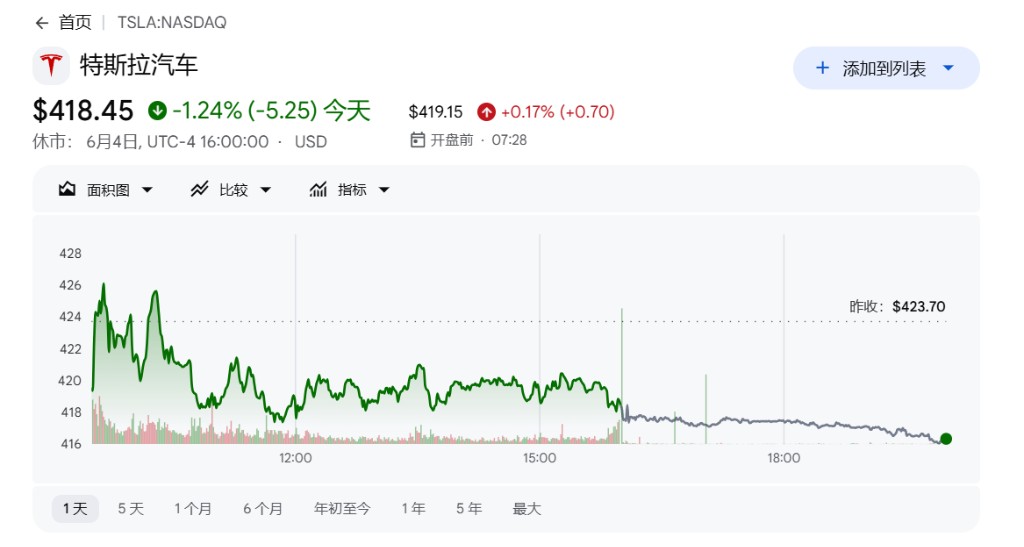
The rating upgrade also saw the price target jump from $145 to $475, an increase of more than two-fold. Tesla's stock rose slightly in pre-market trading during the early U.S. session on Friday.
Shift in Valuation Logic: Undervalued Vertical Integration of Hardware and Software
JPMorgan emphasized in the report that Tesla's unparalleled vertical integration capabilities at both the hardware and software levels are its core competitive advantages, but the market currently still underestimates and misunderstands this to some extent.
"We believe this characteristic remains underestimated and misunderstood in terms of starting advantage," Gupta's team wrote in the report.
Gupta broke down Tesla's valuation into five interconnected markets: automobiles, energy storage, robotaxis, humanoid robots, and infrastructure licensing. He estimated that the combined potential total addressable market for these five sectors will reach approximately $3.9 trillion by 2035.
Earnings Forecast: EPS Expected to Nearly Triple by 2030
In terms of financial forecasts, JPMorgan provided a relatively aggressive outlook. The bank expects Tesla's earnings per share (EPS) to see a significant turning point after 2028, jumping from about $1.95 in 2026 to approximately $7.50 in 2030, a near three-fold increase.
For reference, Tesla's adjusted EPS for the first quarter of 2026 was 41 cents.
On the revenue side, JPMorgan expects Tesla's revenue to grow from about $95 billion in 2025 to approximately $203 billion in 2030, achieving more than double the growth. Nearly half of this incremental growth will come from services and emerging businesses related to autonomous driving and robotics.
Despite the overall optimistic tone, JPMorgan also warned that Tesla still faces high execution risks, particularly concentrated in regulatory approvals, safety verification, and the large-scale implementation of new technologies.
This warning echoes the current market environment for Tesla. According to data compiled by LSEG, at least 24 analysts currently rate Tesla as "Buy" or higher, 23 rate it as "Hold," and another 7 maintain a "Sell" or lower rating, indicating significant market divergence.
Tesla's Narrative Under the SpaceX IPO
This rating upgrade comes against the backdrop of simultaneous advancements in multiple technology businesses under Elon Musk.
Musk is pushing for SpaceX to go public, with an expected valuation of approximately $1.7 trillion, poised to become the largest IPO in history. Market expectations place the listing date on June 12.
Musk's multi-pronged technology empire is providing broader imaginative space for Tesla's long-term narrative, causing investors' valuation judgments to increasingly detach from the analytical framework of the traditional automotive industry.
