


Structural Divergence Intensifies Behind the AI Boom: 59% of S&P Tech Stocks Have Fallen into Bear Market Territory
The AI sector is undergoing its most severe internal correction since the pandemic. Goldman Sachs data shows that momentum trades related to AI have retraced 27% from their late June highs, with 59% of S&P technology stocks already falling into bear market territory. Market capital is shifting from semiconductors to cloud computing, accelerating the rotation in AI investment logic
The internal fractures within artificial intelligence trades are widening. The market volatility superficially characterized by Wall Street as "unwinding of momentum factors" is, in essence, a hidden correction in the AI sector—and the intensity and speed of this correction have reached their highest levels since the outbreak of the COVID-19 pandemic.
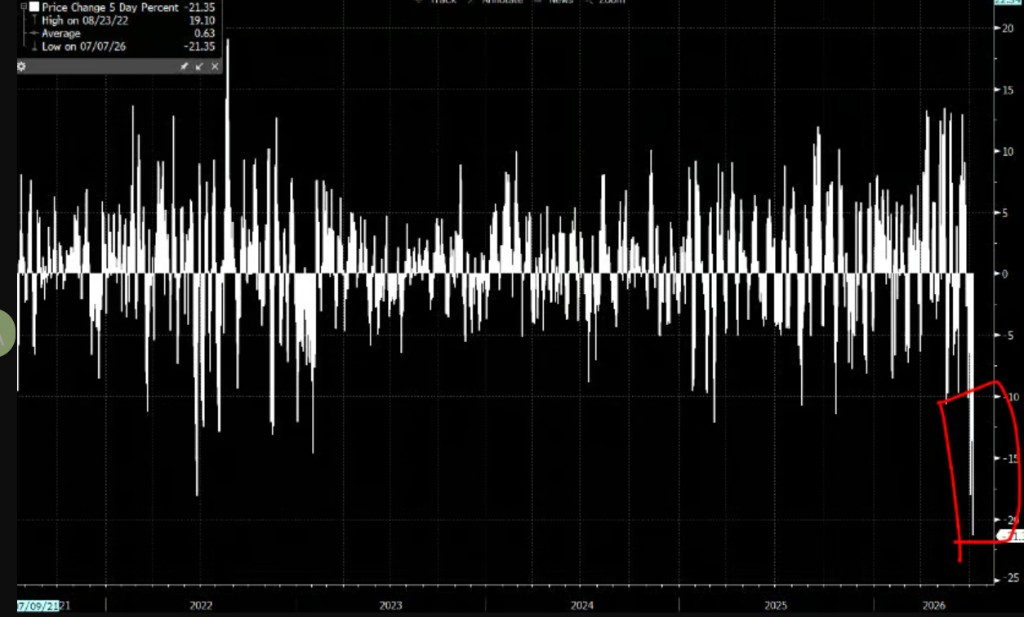
According to Goldman Sachs data, its momentum paired portfolio has fallen 27% since its peak on June 22, marking the largest five-day decline and fastest pace unseen since the pandemic.
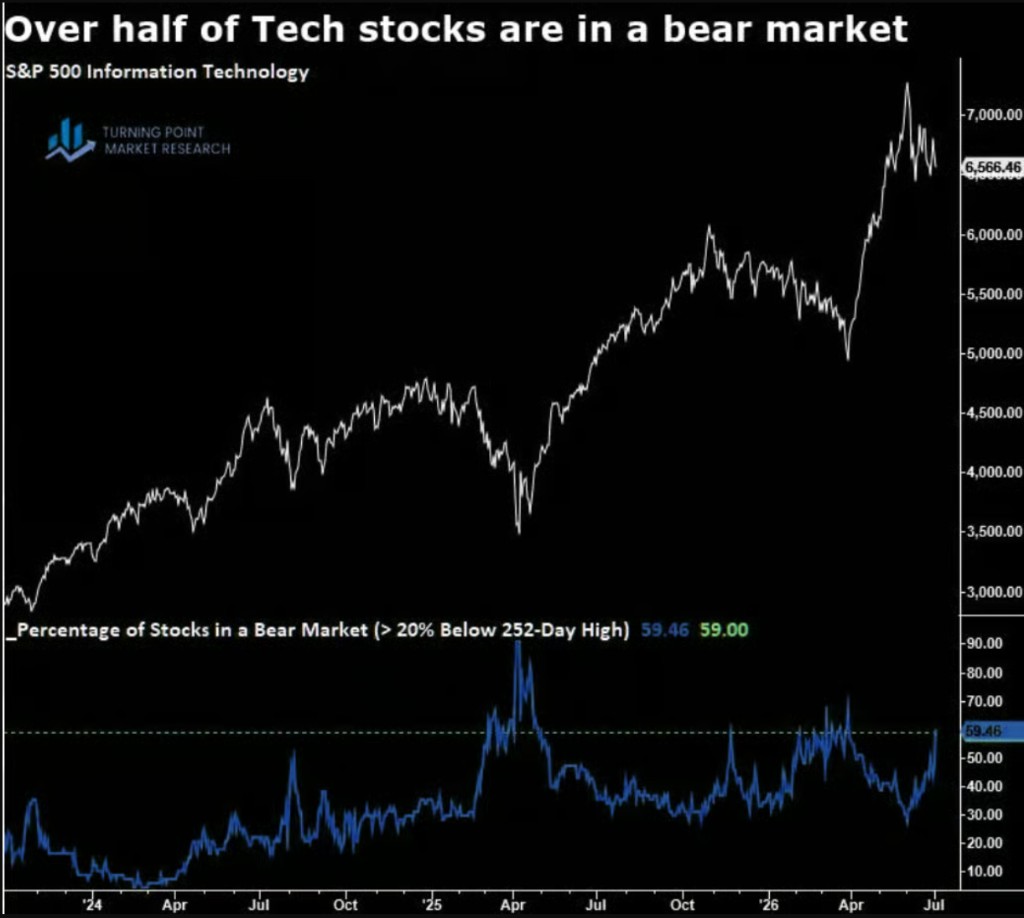
Meanwhile, among technology stocks in the S&P 500, 59% have retreated more than 20% from their highs over the past 252 trading days, entering bear market territory by conventional definition. This figure reveals a key reality: the prosperity of the AI rally is highly concentrated in a few leading targets, while a large number of tech stocks have long been left behind.
Semiconductor stocks are also showing technical warning signals—the components of the Philadelphia Semiconductor Index have fallen below their 50-day moving average for the first time since April this year. UBS trading desks characterize the current trend as "controlled de-risking" rather than panic selling, believing that this round of adjustment is mainly driven by systematic factor flows. Investors are actively reducing high-beta, high-consensus long positions after disappointing catalysts emerged and before key supply events arrive.
Momentum Is AI: A Misread Sector Correction
Wall Street attributes recent volatility to the unwinding of momentum factors, but this interpretation obscures deeper structural issues. According to data from Goldman Sachs' Marquee platform, the correlation between momentum factors and AI trades has exceeded 95%, making the two virtually equivalent.
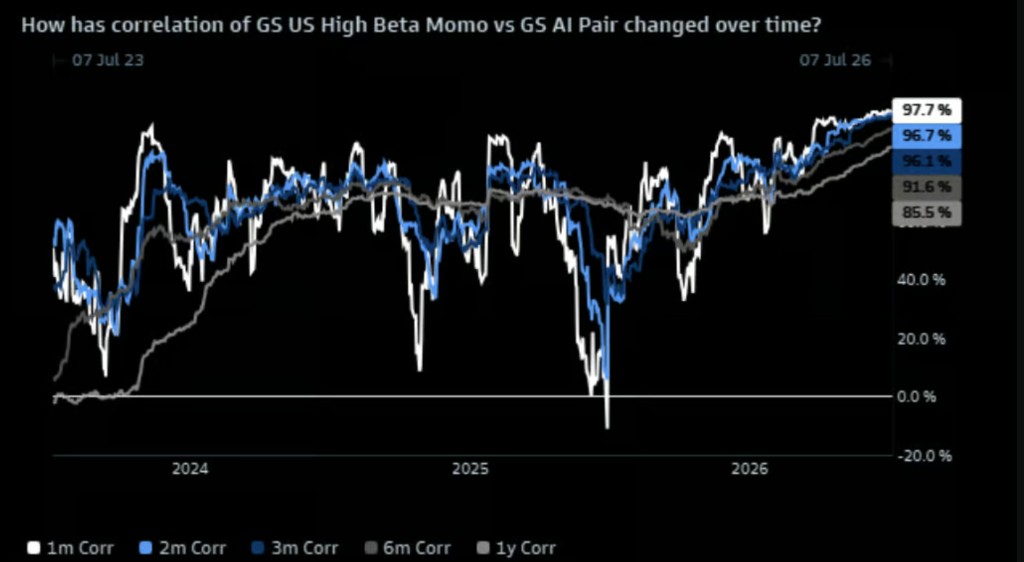
This means that the violent fluctuations in momentum factors essentially reflect the concentrated exposure of AI holdings—going long on AI winners and shorting software stocks deemed AI losers constitutes the most mainstream factor structure in the current market. Goldman Sachs Prime data shows that momentum factor exposure has fallen significantly from its peak and is currently at the 60th percentile over the past year.
Historical data from Morgan Stanley's Quantitative and Derivatives Strategy team shows that this momentum retracement ranks as the seventh largest in the past decade, but in terms of the speed at which this retracement magnitude was reached in 14 days, it is the fastest in history.
AI Volatility Surges, Clearly Diverging from the Broader Market
Goldman Sachs data shows that the volatility of momentum factors (i.e., AI trades) has risen to its highest level since the pandemic, while the overall volatility of the S&P 500 remains mild. This divergence indicates that current pressure is highly concentrated in AI-related holdings and has not yet spread to the broader market.
The judgment of UBS trading desks confirms this observation. The institution pointed out that this round of selling exhibits characteristics of "controlled de-risking," primarily driven by systemic and factor flows. Core pressure is concentrated on crowded exposures in AI, semiconductors, and memory, rather than representing broad market panic.
However, UBS also retained cautious wording—the phrase "no need to panic for now" implies uncertainty about future trends.
Insiders Buy Against the Trend: Historical Signals Worth Watching
As institutional investors accelerate de-risking, insiders at technology companies are increasing their holdings against the trend. According to market data, buying activity by corporate insiders has heated up significantly in recent times.
Historical experience suggests that active buying by insiders rarely coincides with important market tops, although their timing ability is not always precise. For investors seeking bottom signals, this movement may have certain reference value.
Hyperscale Cloud Providers vs. Semiconductors: New Rotation Logic Within AI
The focus of current market discussion has shifted from "whether to continue holding AI" to "how to adjust structures within AI." It is reported that "going long on hyperscale cloud computing providers and shorting semiconductors" is rapidly becoming the most watched trading strategy on Wall Street this summer.
Behind this rotation logic is investors' re-evaluation of the distribution of value in the AI chain. Against the backdrop of questioning marginal benefits of computing power investments, cloud infrastructure operators that directly benefit from the implementation of AI applications are considered to have stronger earnings certainty than upstream chip manufacturers.
The fact that 59% of S&P tech stocks have fallen into bear market territory is itself a footnote to the high concentration of the AI rally. For investors, the current market environment tests not only belief in the long-term AI narrative but also the ability to select stocks structurally against the backdrop of intensifying internal sector divergence.
