


Zuckerberg sets a "radical" pricing strategy for Meta's paid artificial intelligence tools
Meta released the advanced AI model Muse Spark 1.1 and launched a paid version for the first time, aiming to win in the AI market with a highly competitive pricing strategy (about 25% of competitors). Zuckerberg stated that the model's agent capabilities are leading and will open up new revenue sources, encouraging developers to use it
In the fiercely competitive AI tools market, Mark Zuckerberg hopes to win with a price advantage.
Meta Platforms Inc. has released its advanced artificial intelligence model Muse Spark 1.1 and launched a paid version for developers for the first time. This marks the first time Meta has charged businesses for model usage, opening up a new revenue stream for the company. Zuckerberg stated in an interview before the launch that this model will be one of the lowest-priced options on the market.
"Since this is not an open-source model, I think this is our first serious launch of an API," Zuckerberg said, "and its pricing will be highly competitive and very attractive."
Zuckerberg noted that the biggest improvement of the new model lies in its agent capabilities. Agents are one of the hottest directions in the AI field this year, typically referring to systems that can represent users in completing multi-step tasks. He stated that Muse Spark 1.1 has reached "industry-leading or very close to leading" levels in agent reasoning and tool usage.
He also mentioned that the model has significantly improved in programming capabilities, with Meta employees already using it internally to develop products and features for various applications.
Meta will also launch a new Meta Model API system to charge developers. Zuckerberg stated that its API pricing is only about 25% of the top models from OpenAI and Anthropic. Developers can use the Meta model for free, but will need to pay once their token usage reaches a certain threshold.
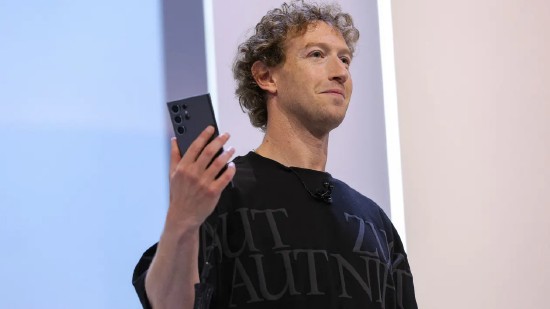 Meta Platforms CEO Mark Zuckerberg
Zuckerberg stated, "The pricing of some other AI labs is very high, and their profit margins are also very high." He emphasized that Meta's strategy is to allow as many people as possible to use its AI technology. "We believe we have the ability to provide cutting-edge, or high-level, artificial intelligence at a lower cost."
Despite significant investment, the Meta model has historically performed worse in tests compared to Anthropic, OpenAI, and Google. However, Zuckerberg stated that Muse Spark 1.1 has significantly enhanced its competitiveness and outperformed Google's Gemini model in multiple categories of testing, including agents, programming, and multimodal capabilities.
He said, "This is quite an interesting milestone. I think this may be the first time in my memory that the Meta model has comprehensively surpassed all of Google's models."
"Performance exceeded expectations"
Zuckerberg's investment in the AI race has led to a series of major strategic and resource adjustments over the past year. Following a disappointing model release in the spring of 2025, he personally intervened to rebuild the Meta AI lab, including hiring former Scale AI CEO Alexandr Wang to lead the new team, followed by large-scale layoffs and multiple rounds of internal restructuring Meta, which once firmly committed to making its open-source AI models available for free to external developers, has now shifted its focus to prioritizing the development of chargeable closed-source models, such as Muse Spark 1.1. This shift almost implies that the relevant technology needs to be rebuilt from scratch.
Zuckerberg stated that he is satisfied with the current progress of the AI lab.
"Overall, we are performing better than expected," he said, noting that Meta is still behind large AI labs like Anthropic and OpenAI, but the company is developing a new model codenamed Watermelon, which he believes will help Meta "further advance the frontier of intelligence." He declined to disclose the release date of Watermelon, only stating that the current focus is on improving quality.
Zuckerberg does not agree that AI will ultimately become a homogeneous commodity, where various models converge in functionality and become indistinguishable from each other. He cited Anthropic's latest model, Mythos, as an example, stating that the model has been restricted due to national security concerns in the United States, indicating that companies have begun to control certain technologies rather than making them widely available.
He said, "These capabilities have not actually diffused, nor have they been made widely available to everyone. Anthropic has essentially kept the strongest models for itself and only released a relatively simplified version. Of course, there may be various reasons for them to do this. But at least from my perspective, this does not mean that the world is, or necessarily will be, moving towards a direction of widely open AI capabilities."
