


Google invests to support large solar projects in the United States to offset carbon emissions from fossil fuels
Google has signed a virtual power purchase agreement with the "Steel River Energy Center" in Arkansas, fully purchasing the output of its first phase of 1.6 GW of solar power and 2 GWh of energy storage to offset its own fossil fuel carbon emissions. This project is the largest of its kind under construction in the United States and is scheduled to be operational by 2029. This move aims to support new energy financing by locking in power supply for the long term, despite the Trump administration's crackdown on renewable energy, market demand remains strong
Google has finalized the procurement of the entire electricity output from a large photovoltaic power station to offset its fossil fuel carbon emissions. Despite the Trump administration's continuous policies suppressing the renewable energy industry, the market demand for clean energy remains strong.
The photovoltaic power station, named "Steel River Energy Center," is located in Arkansas and is scheduled to be operational by 2029. Google will purchase all the electricity generated from the project's first phase. This project is currently the largest photovoltaic facility under construction in the United States, with a planned installed capacity of 1.6 gigawatts of photovoltaics and a supporting 2 gigawatt-hour energy storage battery, which can meet the electricity needs of over 315,000 households annually.
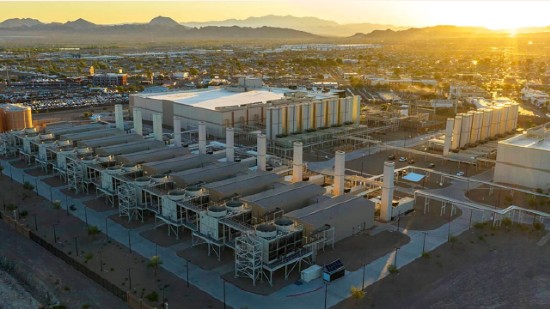
Once the project is fully completed, the photovoltaic installed capacity will increase to 2.5 gigawatts, and the energy storage capacity will expand to 2.9 gigawatt-hours. This transaction falls under a virtual power purchase agreement: Google will buy the project's electricity output at a fixed price but will not actually receive or use that portion of electricity. The specific financial terms of this agreement have not been disclosed by either party.
Data centers require a continuous and stable power supply, and relying solely on renewable energy sources like solar and wind, which are weather-dependent, often cannot maintain operations directly.
Therefore, the vast majority of data centers connect to the public power grid for continuous electricity, which is a mix of natural gas, renewable energy, coal, and nuclear power, along with self-generated power equipment such as gas turbines and internal combustion engines. Google’s daily operations rely on traditional grid power, while the clean electricity quota it procures from photovoltaics is matched to other electricity users with more significant fluctuations in demand.
Long-term commitments to purchase electricity can provide stable income guarantees for renewable energy project developers, helping companies secure financing and successfully establish new power stations.
Will Conklin, Google's energy lead for data centers, stated, "This investment will deliver clean energy to the entire grid, and all electricity users in Arkansas will share in the emission reduction benefits brought by this local power station."
The practice of companies purchasing green electricity to offset fossil fuel carbon emissions has been controversial. Critics point out that companies are still consuming electricity generated from fossil fuels on the grid, while the clean energy they pay for may come from other regions or be generated at different times.
According to data from the American Council for an Energy-Efficient Economy, approximately 56% of the electricity used by data centers in the United States comes from fossil fuel generation.
The continuous rise in electricity demand is accelerating the implementation of large projects like the Steel River photovoltaic facility. Google disclosed that its electricity consumption reached a historic increase of 37% in 2025, while Microsoft's electricity consumption grew by 24% year-on-year. The U.S. Energy Information Administration predicts that total electricity demand in the United States will increase by 25% to 50% by 2050.
Kevin Smith, CEO of Cypress Creek Energy, stated that tech giants like Google are continuously seeking large-scale renewable energy projects like the Steel River station to match their expanding electricity needs "Large technology companies are the core support of the industry," Smith said. "Our logic is somewhat similar to that of hotel developers; we first find market areas with development value. The difference is that before our projects start, the power generation capacity for the next 20 years has already been fully contracted and sold out."
Industry forecasts predict that between 2026 and 2030, photovoltaics and energy storage will account for 58% of the total new power generation capacity installed in the United States. Industry supporters believe that the short construction cycle and relatively low cost of photovoltaic energy storage projects are the core reasons for their rapid expansion
