Strong Earnings Lead to Slight Drops, Weak Earnings Trigger Plunges! US Tech Stocks Mired in a "Vicious Cycle"
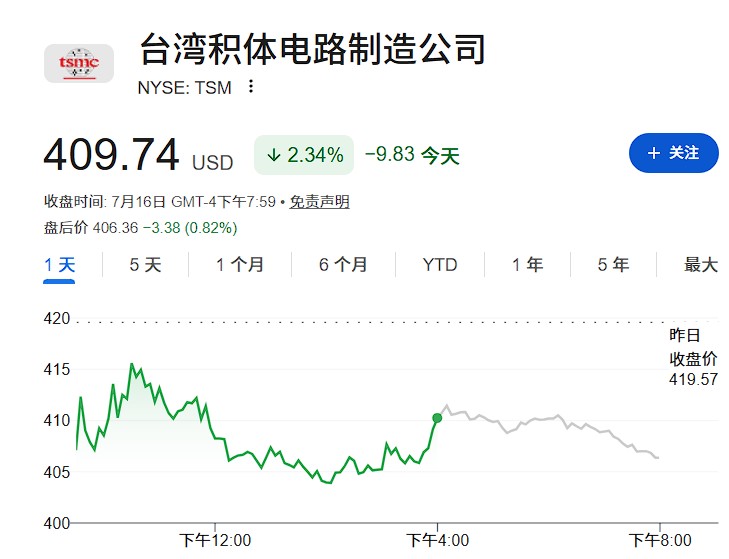
Taiwan Semiconductor's Q2 net profit surged 77%, yet its US-listed shares still closed down 2.3% on Thursday. IBM issued a profit warning, triggering a single-day plunge of over 20% on Tuesday. Analysts believe the core reasons are twofold: first, investors are concerned about AI high valuations and the returns on massive expenditures, with extremely high earnings expectation thresholds leading to a severe divergence between basic factors and stock prices; second, the market is undergoing systemic deleveraging and the unwinding of momentum trading, meaning position structures, rather than basic factors, are now driving trends
US tech stocks are trapped in a dilemma that leaves investors in a bind: stellar earnings reports fail to boost stock prices, while poor performance triggers plunges. This asymmetric market reaction is shaking Wall Street's confidence in the AI investment narrative and accelerating capital outflows from high-valuation tech stocks.
On Thursday, Taiwan Semiconductor announced that its quarterly net profit surged 77% year-over-year, hitting a record high, and raised its 2026 revenue growth forecast to over 40%. However, its US-listed shares still closed down 2.3%. Meanwhile, IBM plummeted more than 20% in a single day on Tuesday after issuing a profit warning, a drop even exceeding that of Black Monday in 1987. An analyst from Vital Knowledge succinctly captured the current predicament:
"Tech stocks seem unable to win either way—beating expectations fails to spark rallies, while earnings misses result in severe hits."
Market analysts believe that investors are worried about AI high valuations and the returns on massive expenditures. The extremely high threshold for earnings expectations has led to a severe divergence between basic factors and stock prices. Coupled with the market undergoing systemic deleveraging and the unwinding of momentum trading, position structures, rather than basic factors, are now dominating trends.
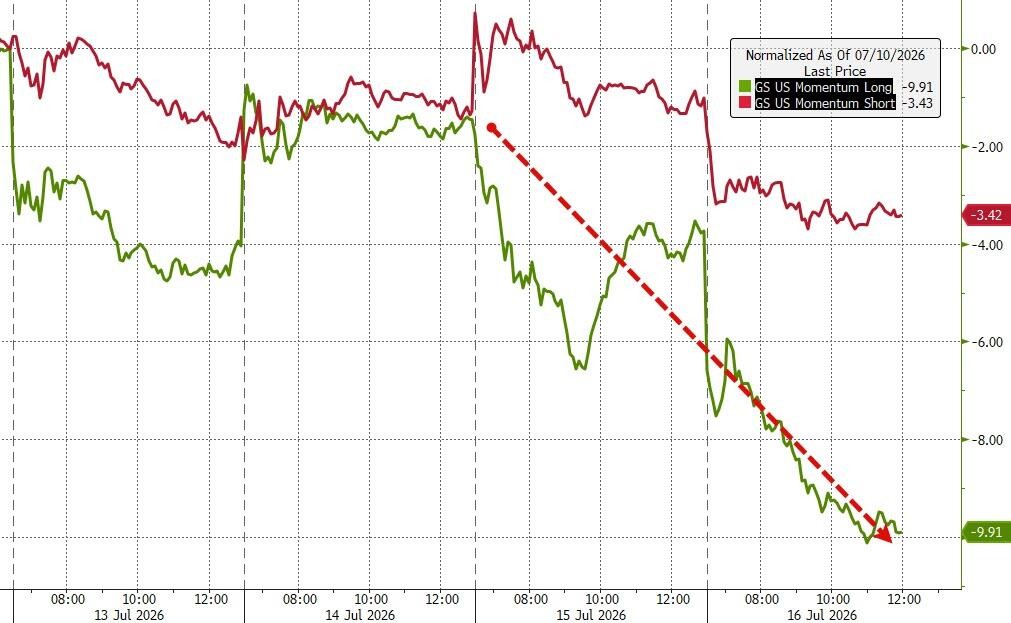
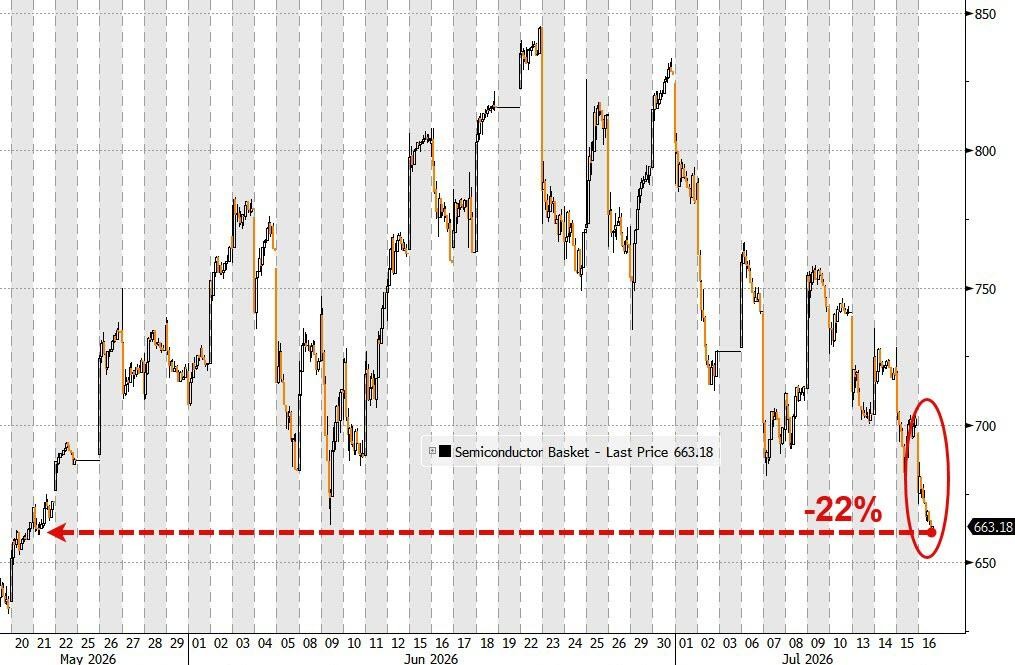
The Nasdaq Composite Index fell 1.5% on Thursday, with memory and chip stocks leading the decline. SanDisk, Western Digital, and Seagate all dropped more than 9%, while Intel and Micron each fell about 6%. The US semiconductor sector has cumulatively fallen about 22% from its mid-June highs, officially entering a technical bear market. Goldman Sachs' "Momentum Stocks" index dropped 6% in a single day on Thursday, having already erased one-fifth of its market value so far this month.
Strong Performance Met with "Cold Shoulder," Market Logic Has Shifted
The most alarming aspect of this round of tech stock adjustment is the severe divergence between strong fundamentals and stock price trends.
As noted in an article by Wallstreetcn, Taiwan Semiconductor not only saw its Q2 net profit surge 77% year-over-year to a record NT$706.6 billion (approximately $22 billion), with a gross margin as high as 67.7%, but also raised its 2026 capital expenditure guidance to $60–64 billion. ASML previously also released a quarterly report that "beat expectations and raised guidance." Micron's latest quarterly results also significantly exceeded expectations, yet its stock price has corrected about 25% from its highs.
Market analysts believe that the performance of these three companies further reinforced the narrative of accelerating expansion in AI-driven demand, providing new positive data support for the logic of AI capital expenditure and computing power investment. However, the continued decline in semiconductor and memory stocks despite such positive catalysts indicates that current price movements may no longer be driven by fundamentals, but by position structures and factor dynamics—also implying that the earnings expectation threshold for the hardware sector has been raised extremely high.
Notably, SpaceX, once seen as a symbol of the AI boom, was not spared.
SpaceX completed its IPO last month at a record valuation of $86 billion, with an issue price of $135. It once soared to a high of $225.64, attracting a flood of retail capital. However, its stock price fell another 3.1% on Thursday to $131.11, breaking below its issue price.
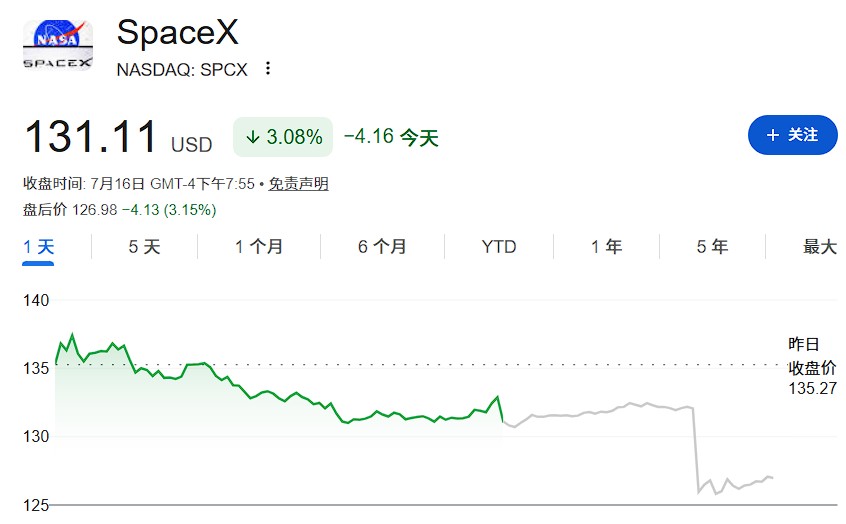
This trend reflects a widespread reevaluation by investors of the high valuations of AI-related companies. According to the Financial Times, some investors are increasingly concerned about when the massive expenditures by US tech giants on data centers will yield substantial returns.
Google's stock fell 4.4% on Thursday, and Amazon dropped 1.2%. Bonds issued by "hyperscale cloud providers" have also come under pressure recently due to questions surrounding their massive borrowing and spending plans.
Chip Stock Trends Become the Market Bellwether
Amidst multiple overlapping pressures, the direction of the semiconductor sector has become a core indicator for the entire stock market.
Analysts believe, "The future trajectory of chip stocks remains the most important question for the stock market. They are showing some obvious cracks, so we must see a strong and sustainable rebound soon, otherwise it will send a true warning signal."
Currently, the semiconductor sector as a whole has fallen about 22% from its mid-June highs, officially stepping into a technical bear market. Against the backdrop of stocks being sold off after beating expectations at companies like ASML, Micron, and Samsung, high-beta momentum strategies have suffered significant setbacks again.
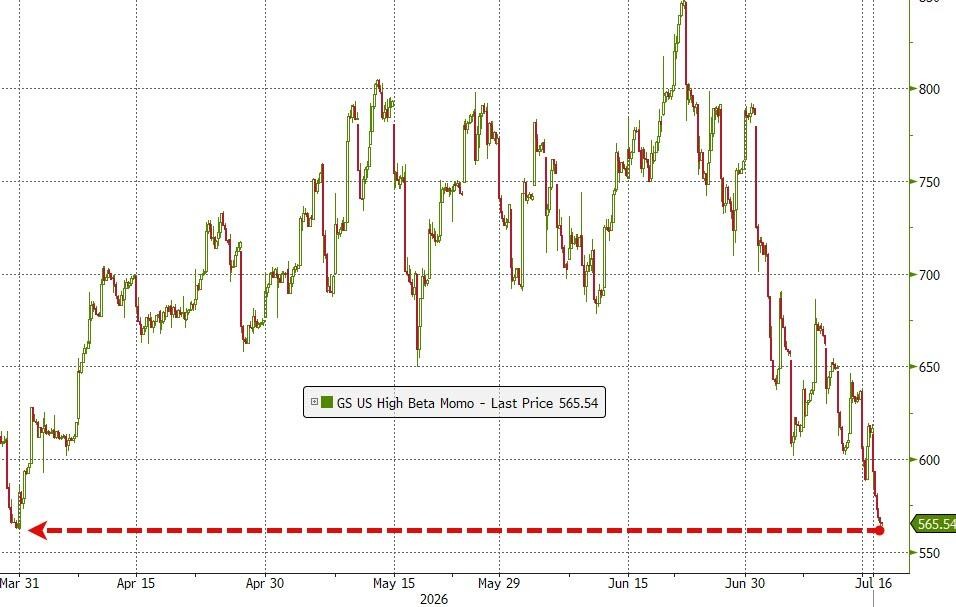
The market's implied correlation remains near historic lows, clearly decoupled from the VIX index, indicating that current volatility stems more from the repricing of structural factors rather than systemic panic—though this does not mean risks have been cleared.
Deleveraging Wave Continues, Momentum Trading Unwinds Accelerates
Behind this sell-off is a systemic deleveraging process that began in June.
Nikolaos Panigirtzoglou, a strategist at JPMorgan, stated, "The investor deleveraging phase that began in June appears to be continuing. We believe there is still more room for deleveraging in leveraged stock ETFs, options, and margin accounts, which will remain a persistent headwind for the stock market."
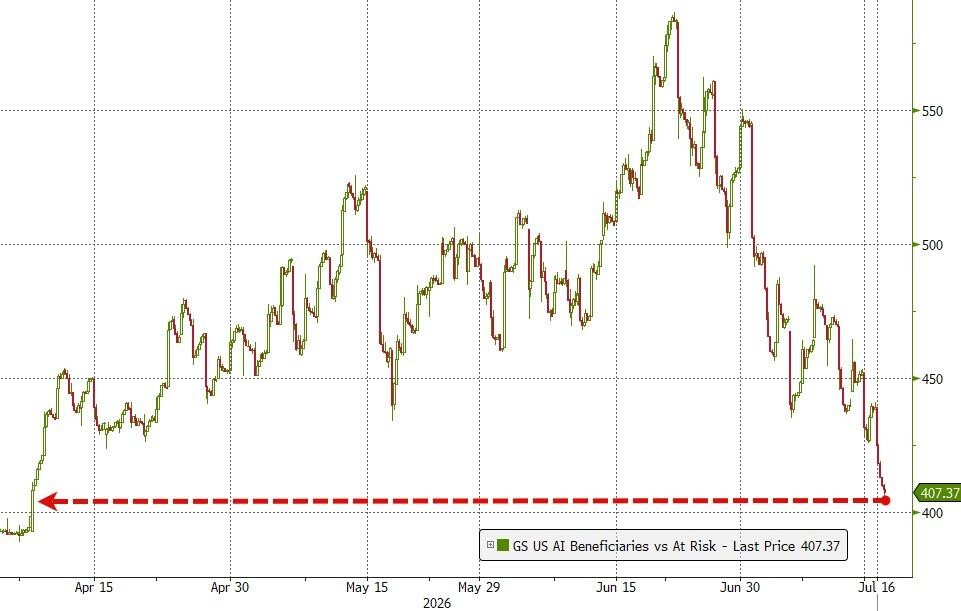
Goldman Sachs data shows that the entire artificial intelligence sector is under pressure, with optical interconnects, AI semiconductors, and data center segments all falling between 5% and 12% over the past two days.
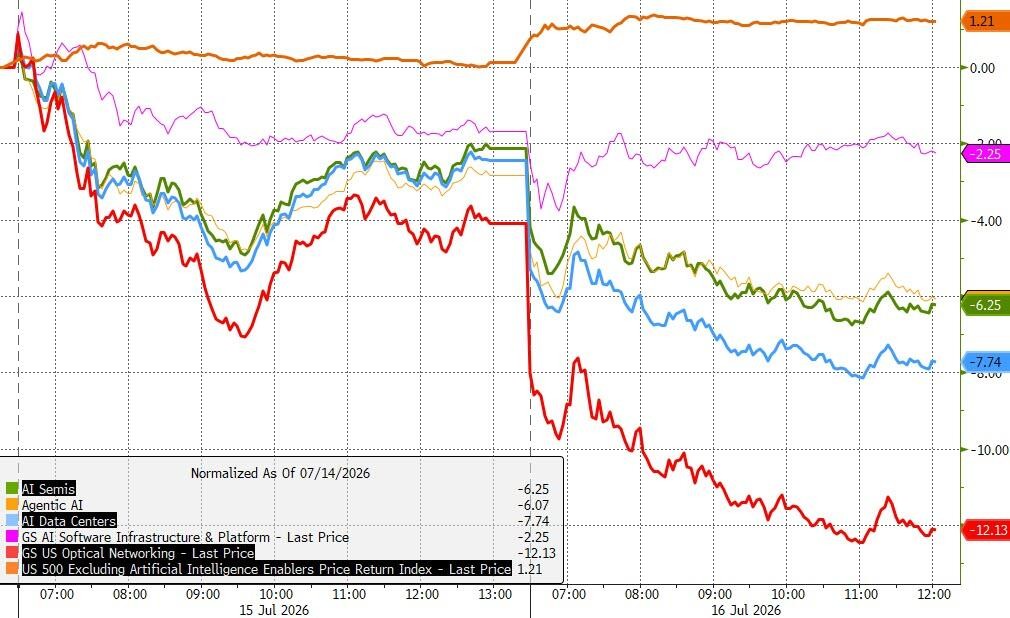
Goldman Sachs' momentum stock index has cumulatively fallen about 20% this month. According to Goldman Sachs analysis, the volatility of this factor, adjusted for volatility, has risen to a five-year high, approaching ten times the three-week realized volatility of the S&P 500.
Some analyses point out that "directionally wrong" price movements have appeared between AI-related stocks and "AI risk" stocks, between hedge fund heavy holdings and short positions, and between high-beta 12-month winners and losers, indicating significant disarray in the market's internal structure.