


10% of Shares Lent Out in 10 Days! Shorts Pounce on SpaceX
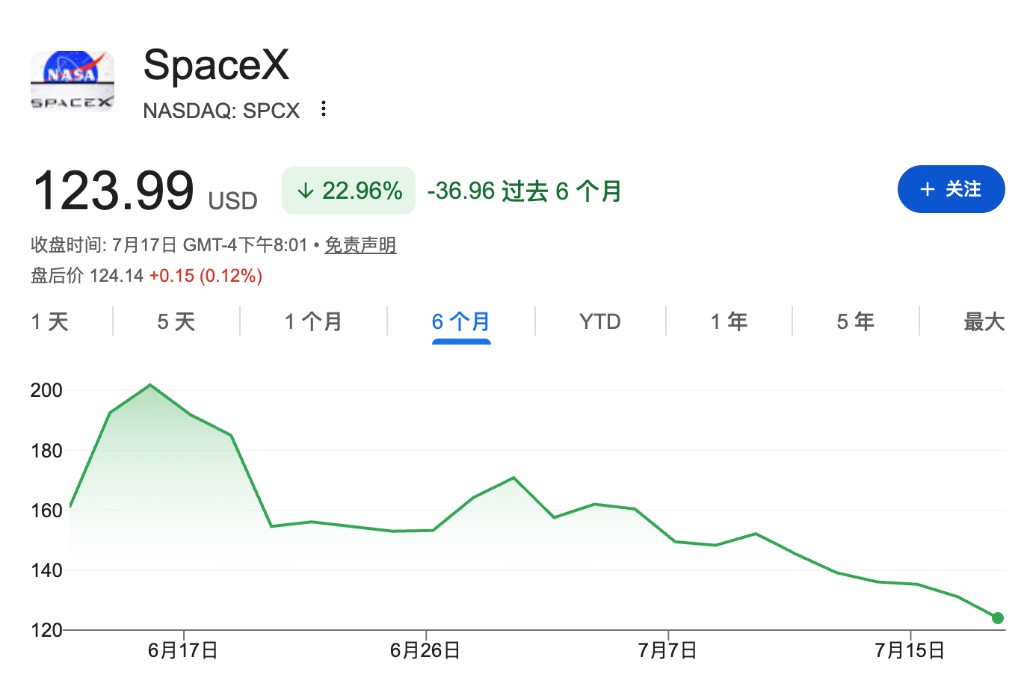
SpaceX's stock price has fallen below its IPO price, dropping about 40% from its intraday high. Short-selling pressure has surged sharply, with the short interest ratio jumping 10 percentage points in just 10 days, as shorts have cumulatively gained approximately $4 billion. Additionally, the impending unlocking of around 900 million shares is exacerbating selling pressure, while bond yields are approaching junk status, leading the market to reprice risks on both its equity and debt fronts
Just one month after completing the largest IPO in history, SpaceX has faced a sharp reversal in market confidence. The stock price has fallen below its issue price, with short sellers gaining approximately $4 billion. Bond yields are approaching junk status, and investor enthusiasm for this rocket and AI company under Elon Musk is rapidly waning.
This week, SpaceX's stock price fell below its $135 IPO price for the first time, marking a cumulative drop of about 40% from its mid-June intraday high of $225. On Friday, the stock fell another more than 5%, closing at a historic low of $123.99. Meanwhile, corporate bond yields have also risen significantly, and the scale of the credit default swap (CDS) market continues to expand, indicating that the market's repricing of risk has spread to both equities and bonds.
Short-selling pressure is accelerating. According to data from S3 Partners, shorts betting on a decline in SpaceX's stock price have recorded approximately $4 billion in paper profits over the past month. Of the roughly 640 million SpaceX shares currently outstanding, about 30% have been lent out for short selling, a proportion that has increased by 10 percentage points in the last 10 days.
Dec Mullarkey, Managing Director at SLC Management, stated that "investor enthusiasm for SpaceX seems to have cooled," with the company's stock and bonds "pricing in more risk."
Lock-up Expiration Pressure Weighs on Market
One of the core drivers of this sell-off is the impending large-scale unlocking of shares. Citing market sources, reports indicate that approximately 900 million SpaceX shares could enter circulation as early as next month as lock-up periods for some pre-IPO investors expire, at which point the market will face a massive influx of new supply.
The Chief Investment Officer of a small North American hedge fund remarked, "As more shares hit the market in August, even if SpaceX announced it had conquered the moon and found gold inside, there wouldn't be enough capital in the market to absorb these shares." The fund reportedly made $20 million in profits by shorting SpaceX in early July.
This expectation has prompted some investors to exit early rather than wait for the liquidity shock following the unlock.
Bond Market Weakens in Tandem, CDS Market Heats Up Rapidly
SpaceX's bond market is also under pressure. In late June, shortly after receiving investment-grade credit ratings from major rating agencies, the company completed a massive $25 billion bond issuance. However, its bond yields have now approached levels typical of junk-rated borrowers.
Among them, the yield on a 30-year SpaceX bond has risen from 6.7% at issuance to 7.4%, with the bond price falling to approximately 91% of par value. Meanwhile, the SpaceX credit default swap market emerged in late June, with current CDS spreads quoted at 158 basis points. This implies an annual cost of approximately $158,000 to purchase five-year default insurance for $10 million in bonds, a significant increase from $110,000 at the end of June.
SpaceX's decline is not an isolated event but occurs against a backdrop of broad pressure on high-valuation tech stocks. U.S. semiconductor stocks ended the week with their worst weekly performance since the market turmoil on "Liberation Day" last year. The collective correction in the core AI sector has further intensified the market pressure on SpaceX's sell-off.
