Asia-Pacific stocks surge collectively, South Korean stocks extend gains to 6%, SK Hynix rises 7%, Japanese stocks up over 1%
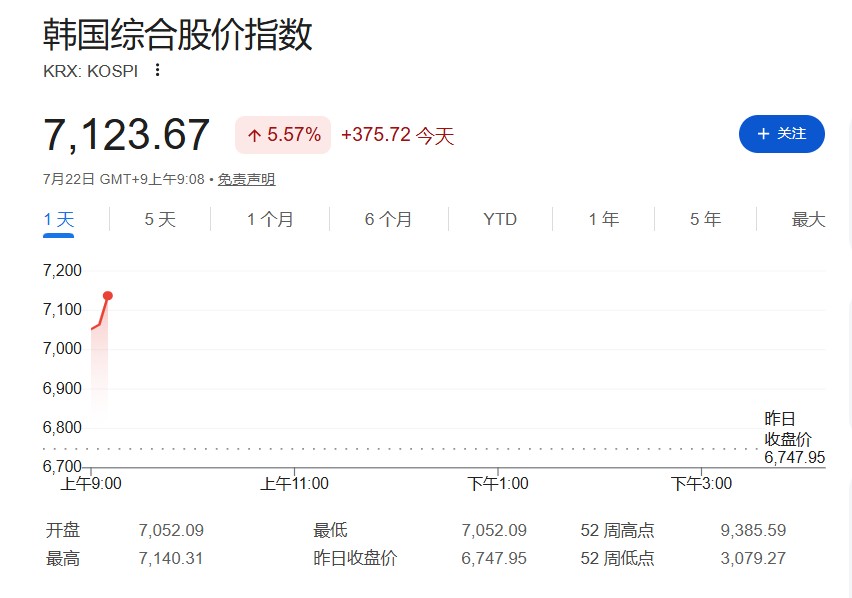
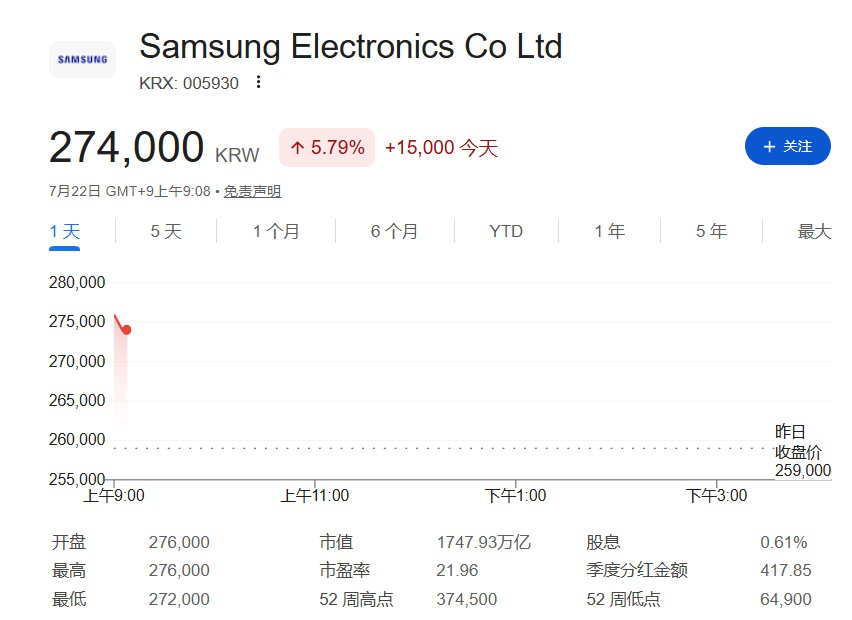
A strong rebound in chip stocks drove Asia-Pacific markets higher for a second consecutive day, with South Korea's KOSPI leading the region with a 6% gain. Samsung and SK Hynix both rose more than 5%, triggering the Sidecar mechanism. News such as NVIDIA chip deliveries and TSMC's planned price hikes boosted market confidence, but rising oil prices fueled inflation expectations, pushing U.S. Treasury yields to two-month highs. Market risk sentiment still faces testing during earnings season
On Tuesday, July 22, Asia-Pacific markets continued their strong rebound, buoyed by the overnight surge in U.S. chip stocks. The MSCI Asia Pacific Index rose 1% to 269.25 points. Seoul's composite index opened higher and climbed further, with gains rapidly expanding to 6%. Samsung Electronics rose more than 5%, and SK Hynix gained 7%. The Korea Exchange activated the Sidecar mechanism, suspending program buying on the KOSPI. The Nikkei 225 Index extended its intraday gains to 1.1%.
Overnight, technology stocks supported the rebound in U.S. indices, with the Nasdaq 100 closing up 1.9%. The U.S. memory chip index surged 11.12%, bringing Micron's market capitalization back above the trillion-dollar mark. The semiconductor index jumped 5.2%, marking its best daily performance in six weeks.
Julian Emanuel, Chief Equity and Quantitative Strategist at Evercore ISI, stated that he expects tech earnings to drive the next leg of the market rally and sees upside potential in tech stocks currently "neglected" by the market.
Behind the Rebound: Rebuilding the AI Narrative
Multiple positive factors converged to drive this rebound in chip stocks:
-
NVIDIA announced that its latest chip designs have begun delivery to customers
-
Intel saw its stock rise after announcing further layoff plans, which the market interpreted as a signal for cost reduction and efficiency improvement
-
Super Micro Computer surged in after-hours trading, with company updates showing continued growth in order backlog
-
According to the Nikkei, Taiwan Semiconductor plans to raise chip foundry prices by up to 10% in 2027, causing its American Depositary Receipts (ADRs) to rise
In recent weeks, AI-related stocks experienced significant volatility, with the market beginning to question whether massive AI capital expenditures could translate into corresponding returns.
Bret Kenwell from eToro pointed out, "The burden of proof has changed. Investors are no longer just asking if companies can weather uncertainty; they want sufficiently strong growth and earnings guidance to support current high valuations."
Adam Turnquist from LPL Financial believes that the recent pullback is not a sign of deteriorating fundamentals: "The long-term logic for AI still appears intact. The recent adjustment looks more like a healthy reset rather than a fundamental collapse of the AI investment theme."
Strategists at Goldman Sachs also noted in a report that U.S. earnings growth should continue to support stock prices in the second half of the year, although high long positions and macro headwinds still pose pressure in the short term.
Earnings Season: Limited Room for Error Amid High Expectations
Market attention is quickly shifting to earnings season. This week, companies representing about 20% of the S&P 500 by market capitalization will report results, including Alphabet (Wednesday), Tesla (Wednesday), and Intel (Thursday).
Alphabet and Intel's earnings reports will provide key clues on how AI spending is reshaping the tech industry.
High valuations mean the market has very little tolerance for earnings misses—once results or guidance fall short of expectations, the risk of downward pressure on stock prices cannot be ignored.
Risks Remain: Oil Prices, Inflation, and the Yen
The rebound is not without concerns.
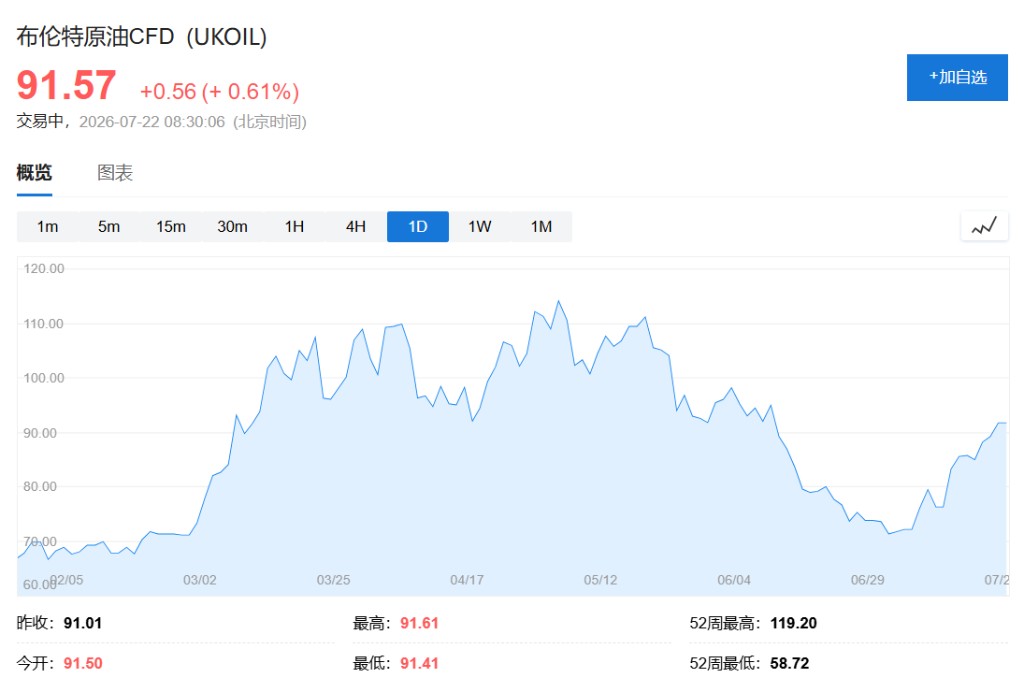
Oil Prices: Brent crude rose 0.6% to $91.52 per barrel. Trump downplayed the possibility of immediate negotiations with Iran, and rising tensions between the U.S. and Iran pushed oil prices higher. Rising oil prices directly exacerbate inflation concerns.
U.S. Treasury Yields: Stimulated by rising oil prices, U.S. Treasuries were sold off, with yields on the 10-Year and 30-Year Treasuries rising to near two-month highs. The 10-Year Treasury Yield stood at 4.63%. Rising yields indicate market concern that the Federal Reserve may be forced to raise interest rates.
Japanese Yen: The yen fell below the 163 level for the first time since 1986, increasing market focus on whether Japanese authorities will intervene.
Tariffs: Trump posted on social media that the U.S. plans to impose a 100% tariff on imported generic drugs starting in August 2028.
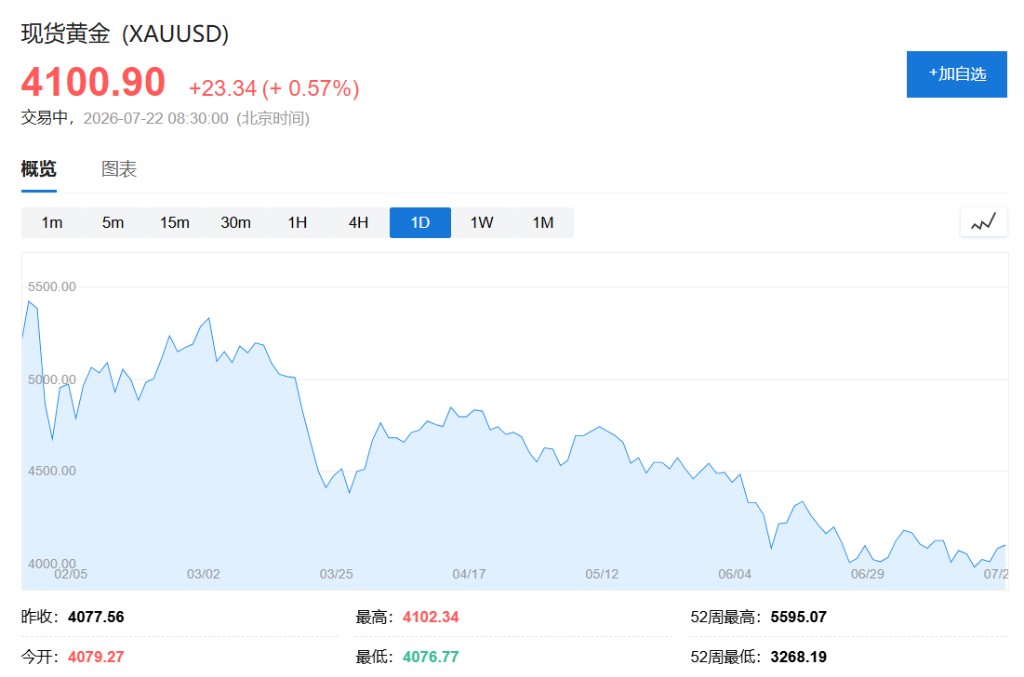
Additionally, gold once rose by 2%, trading above $4,080 per ounce; silver's single-day gain reached as high as 5%, with both safe-haven and bargain-hunting buying active.