Tech Magnificent Seven Wipe Out Nearly $900 Billion in a Single Day! Wall Street Veteran Says: Market Overreaction, Geopolitical Crisis Is a Buying Opportunity
Yardeni Research and Fundstrat believe the market reaction may be excessive. Historical data shows that during the first military confrontation between the U.S. and Iran earlier this year, the S&P 500 fell about 10% before quickly rebounding. Similar geopolitical risks often turn into buying opportunities
Escalating U.S.-Iran tensions have heightened market risk aversion, leading to selling pressure on U.S. stocks on Thursday. However, several senior market strategists argue that geopolitical risks typically cause only short-term volatility and are unlikely to alter long-term market trends. This pullback may instead provide investors with an opportunity to buy the dip.
On July 24, Ed Yardeni, President and Economist at Yardeni Research, and Tom Lee, Head of Research at Fundstrat, stated in their latest reports that the market's reaction to the Middle East situation may be overdone. The two strategists pointed out that historical experience shows similar geopolitical conflicts often lead to short-term market corrections, which may subsequently transform into buying opportunities.
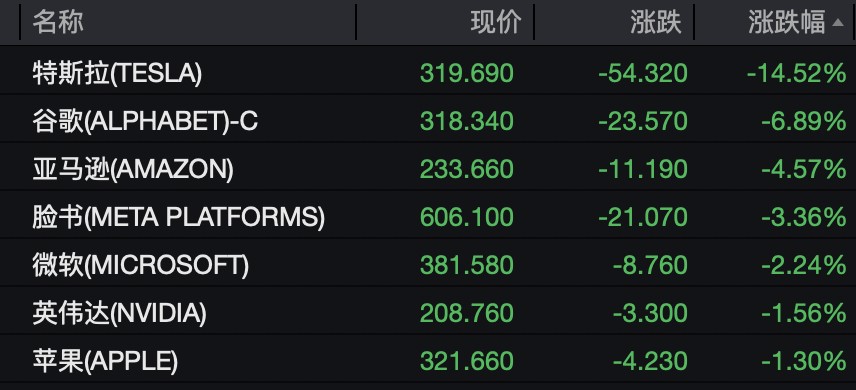
Tech stocks were the main sector under pressure during this sell-off. The "Magnificent Seven" collectively lost $889.3 billion in market capitalization on Thursday, marking the largest single-day market cap loss since the tariff shock in April 2025, further exacerbating market volatility.
Market concerns primarily stem from the potential for further escalation of the U.S.-Iran conflict. According to Xinhua News Agency, citing U.S. media reports on Thursday, the 23rd, U.S. President Trump stated that day that he was "seriously considering" restarting large-scale combat operations against Iran. Trump told U.S. media that he was "close" to deciding whether to launch a "massive attack" on Iran, and that the scale of the operation could exceed the "Epic Fury" military action against Iran in late February. Trump emphasized that no final decision has been made yet, but the U.S. military is ready.
Affected by risk-off sentiment and rising oil prices, the S&P 500 fell 1.2% on Thursday, dropping below its 50-day moving average. However, as international oil prices retreated on Friday, market pressure eased somewhat, and S&P 500 Index Futures saw a slight rebound. Strategists believe that if the conflict does not expand further, the geopolitical risk premium may gradually dissipate, and market focus will return to corporate earnings and economic fundamentals.

Short-Term Conflict Disruption Does Not Change Market Trend
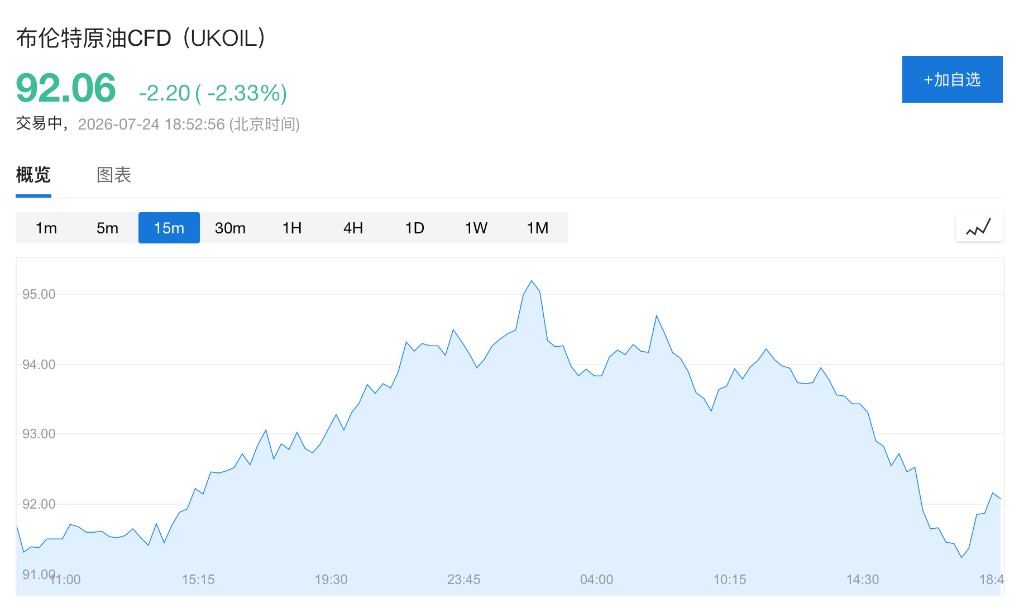
As U.S.-Iran tensions continue to escalate, market concerns about global energy supply have intensified, pushing international oil prices higher.
As a major oil producer, changes in Iran's situation could impact the global energy market. Tom Lee believes that compared to other countries, the potential impact of this conflict on the U.S. economy is relatively limited and may even bring certain benefits, as the U.S. itself is one of the world's major oil producers.
Yardeni stated that the S&P 500 has remained relatively resilient amid rising geopolitical risks, indicating that investors are gradually recognizing that historical geopolitical crises usually provide buying opportunities. "This time may be no exception," Yardeni said, noting that the market is effectively betting that the U.S. and Iran will ultimately seek to end the conflict.
Tom Lee also believes that the rapid decline in stocks in response to the conflict reflects uncertainty more than a deterioration in fundamentals. He pointed out that past similar risk-aversion phases often became buying windows, and he expects this to be the case again. Fundstrat data shows that during the first military confrontation between the U.S. and Iran earlier this year, the S&P 500 fell about 10% before quickly rebounding.