


July 28th Foreign Market Headlines: Trump claims he will hit Iran hard if negotiations break down; Apple regains the title of the world's most valuable company; Concerns arise again over NVIDIA's revolving financing
Trump claims to be actively negotiating with Iran, warning that military strikes will resume if negotiations fail; satellite images show thick smoke rising from Saudi oil facilities, raising traders' concerns about energy supply; LVMH's fashion and leather goods business growth is suppressed by the Middle East conflict

Global financial media's headlines of common concern last night and this morning include:

Trump claims "active negotiations" with Iran, warns of military strikes if unsuccessful
U.S. President Donald Trump stated on Monday that the United States is engaged in "active negotiations" with Iran, and there is a possibility of reaching an agreement regarding the conflict. However, he warned that if the negotiations do not yield results, the U.S. will resume military strikes.
"We are having very good dialogue," he said. "I think things could progress, and if it works out, that would be great; if not, we will go back to where we were two days ago."
Later on Monday, during a campaign rally in Michigan, Trump spoke about Iran, saying, "You can't bribe them. You have to defeat them, and we will hit them hard. But let's see how it turns out. Right now, very friendly negotiations are ongoing."
Iranian Foreign Ministry spokesman Ismail Baghaei stated on Monday that both sides are still communicating through intermediaries, and Iran has not abandoned diplomatic channels, but reports about Iran requesting negotiations are "fabricated."
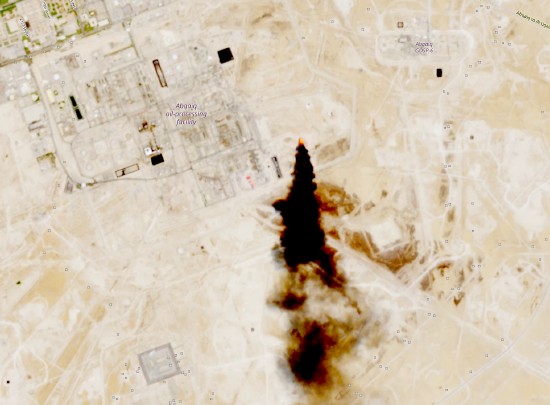
Satellite images show thick smoke over Saudi oil facilities, traders on edge
Oil traders are closely analyzing satellite images. The images show that thick smoke has appeared over several Saudi oil facilities in the past 48 hours, but it is nearly impossible to determine from this data whether recent attacks by Iran-backed armed groups have impacted Saudi energy production.
Images captured by the EU's "Sentinel-2" Earth observation satellite show flaring at the Abqaiq oil processing facility (translator's note: flaring refers to the burning of excess or urgently released combustible gases at a flare stack). This facility is a key hub in Saudi Arabia's oil production and export system, with a daily crude processing capacity of about 7 million barrels. In 2019, Houthi forces attacked the Abqaiq facility, causing Saudi oil production to be halved at one point.
 LVMH's Fashion and Leather Goods Business Barely Recovers Growth as Middle East Conflict Suppresses Demand
LVMH's Fashion and Leather Goods division, which owns the Louis Vuitton and Dior brands, saw only a slight increase in sales last quarter, as the Middle East conflict suppressed the shopping willingness of affluent consumers.
The French luxury goods group stated on Monday that the Fashion and Leather Goods division, the largest and most profitable business segment of the group, achieved an organic sales growth of 1%, below the 1.52% predicted by Bloomberg survey analysts. This marks the first revenue growth for the division in two years.
The luxury goods industry has been in a prolonged slump. Initially, it was the long-standing reduction in spending by Asian consumers that drove industry growth, and recently, the war has led to a decline in demand at shopping centers in the Middle East, such as Dubai. LVMH indicated that without this conflict, the group's quarterly sales would have grown by 4%, rather than the actual recorded 3%.
LVMH's recurring business profit for the first half of the year was €8.69 billion ($9.9 billion), exceeding analyst expectations. The operating profit margin was 22.5%, roughly unchanged from the same period last year.
Apple Surpasses NVIDIA, Reclaims Title of World's Most Valuable Company After Over a Year
On Monday, Apple surpassed NVIDIA at market close to become the world's most valuable company. This is the first time the iPhone manufacturer has led in market value over the AI chip giant since April 2025.
NVIDIA's stock price fell 5% on Monday, bringing its market value down to $4.77 trillion. AI chip stocks overall declined as investors expressed concerns over the high costs associated with AI infrastructure. Since taking the market value crown from Microsoft in June 2025, NVIDIA has maintained its position as the world's most valuable company, briefly reaching the $5 trillion mark last October.
Meanwhile, Apple's stock price rose 1%, reaching a market value of $4.95 trillion. So far in 2026, Apple has accumulated a 24% increase. Apple's performance has outpaced the market due to investor confidence in its restrained approach to AI capital expenditures—preferring to lease computing power rather than build its own data centers.
NVIDIA's New Round of Over $750 Billion AI Deals Revives Concerns Over Circular Financing
NVIDIA is advancing a new round of AI-related deals, potentially exceeding $750 billion. This further accelerates its investment pace, but skeptics warn that such deals may artificially inflate demand and valuations across the industry NVIDIA stated that the cooperation announced last Friday evening with the South Korean conglomerate SK Group means that the scale of business transactions between the two parties will exceed $500 billion. As the world's most valuable company, NVIDIA is also discussing providing guarantees of up to $250 billion to help OpenAI lease computing power for a data center project in the United States. This will become one of the largest financing deals between the chip manufacturer and its clients.
From major Wall Street firms like Goldman Sachs to investors like Michael Burry, known for "The Big Short," there have been warnings for months that such agreements have a "circular" nature: NVIDIA provides financing or equity stakes to companies and projects using its chips. However, the pace of these deals is still accelerating. The risk of such transactions is that they may distort demand and lead to poor decision-making; if artificial intelligence fails to deliver profits to investors who have poured in billions of dollars, it could amplify losses.
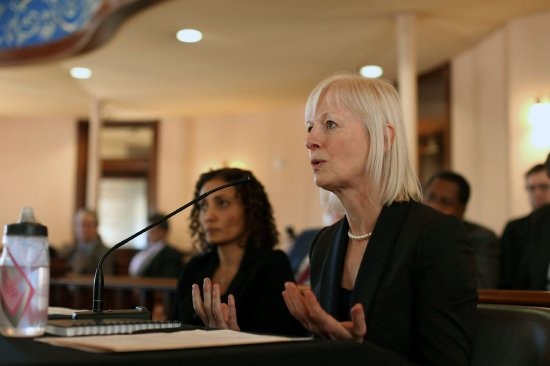
Where is the yield on the 10-year U.S. Treasury heading? State Street Global Advisors debates the financial indicators that Scott Bessenet is focused on.
The investment division of State Street Bank, which manages $6 trillion in assets, is having the most intense discussions about the outlook for the yield on the 10-year U.S. Treasury, which is also a financial indicator valued by Treasury Secretary Scott Bessenet.
“To be honest with you, sometimes I can't make heads or tails of it,” said Lori Heinel, Chief Investment Officer of State Street, in an interview last week. “This is the issue we argue about the most internally.”
As we enter 2026, State Street had previously expected yields to drop to 3.5% or even lower within the year, but instead, they have risen sharply. Yields surpassed 4.7% last week, marking the first time since the month of Trump's second term began. The upward trend highlights how the war in Iran has completely disrupted economic expectations by driving up oil prices and igniting inflation concerns
