


-30.2%, -26.73%! "Korea-Linked" Leveraged ETFs Plunge
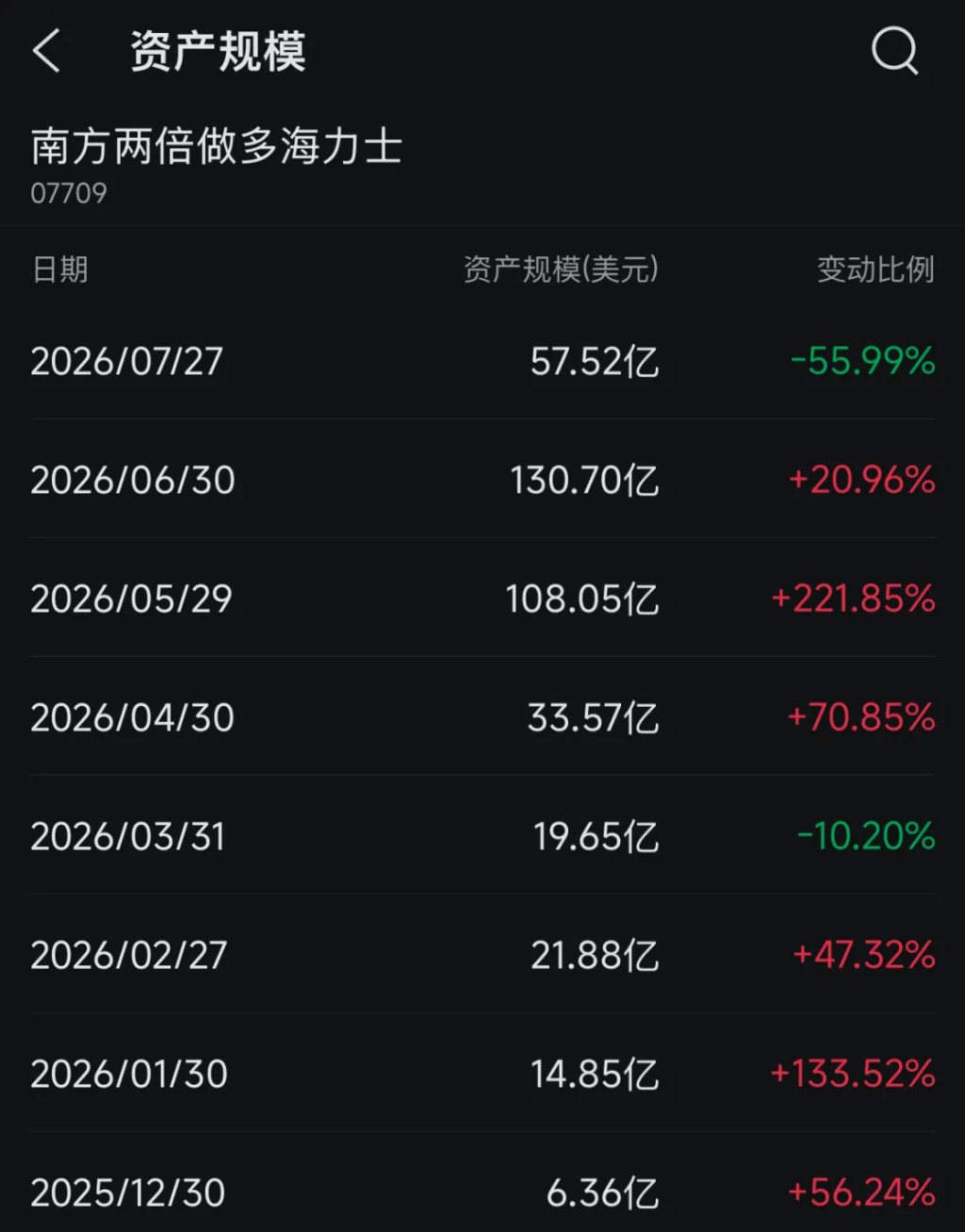
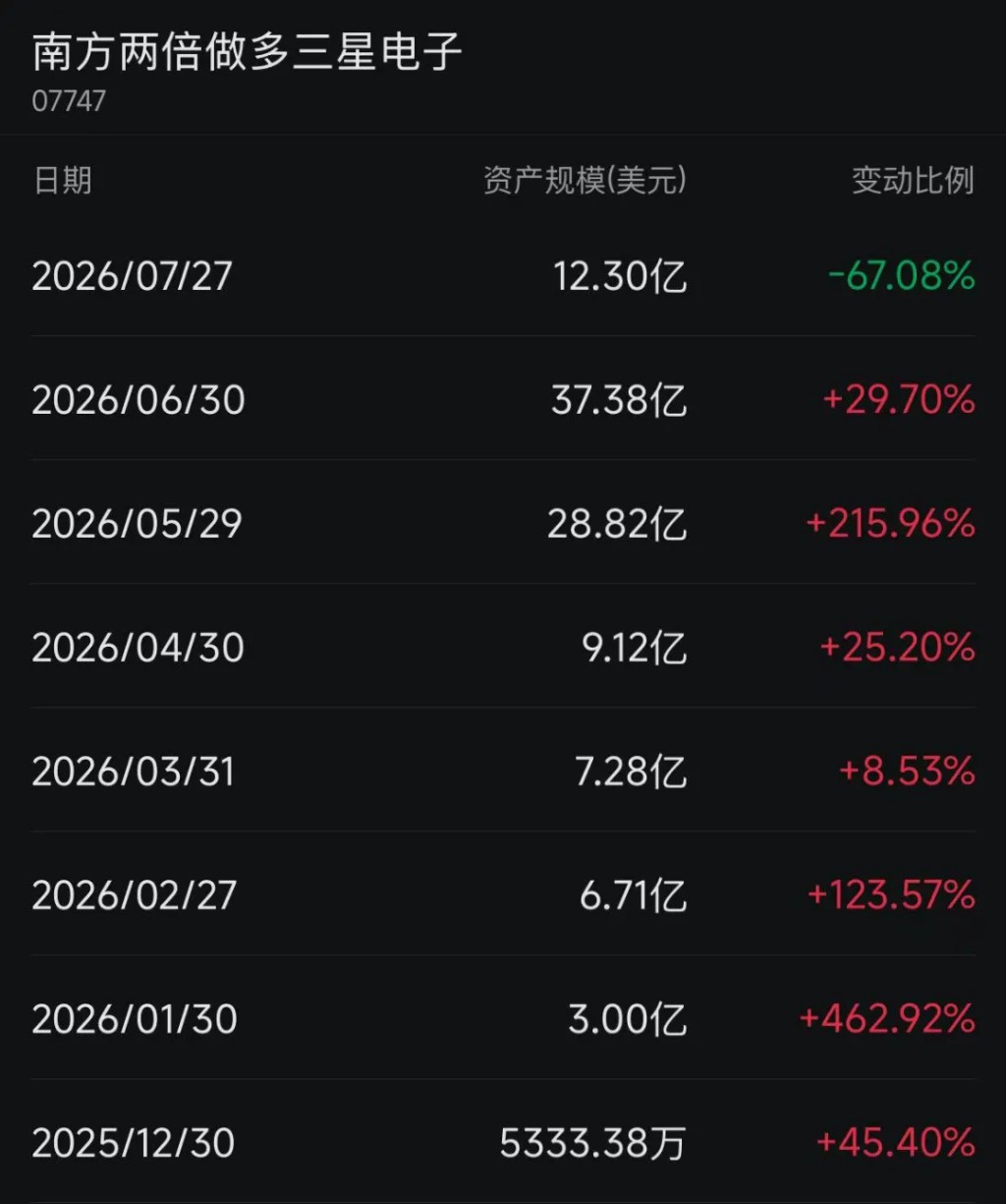
On July 28, driven by the sharp decline in the share prices of Samsung Electronics and SK Hynix, multiple related leveraged ETFs listed in Hong Kong and South Korea suffered significant losses, with drops exceeding 26%. Since July, due to the severe volatility in the semiconductor sector, the assets under management (AUM) of XL2CSOPHYNIX and the Samsung Electronics ETF have shrunk by 56% and nearly 70%, respectively, while the AUM of related U.S. ETFs has also declined significantly
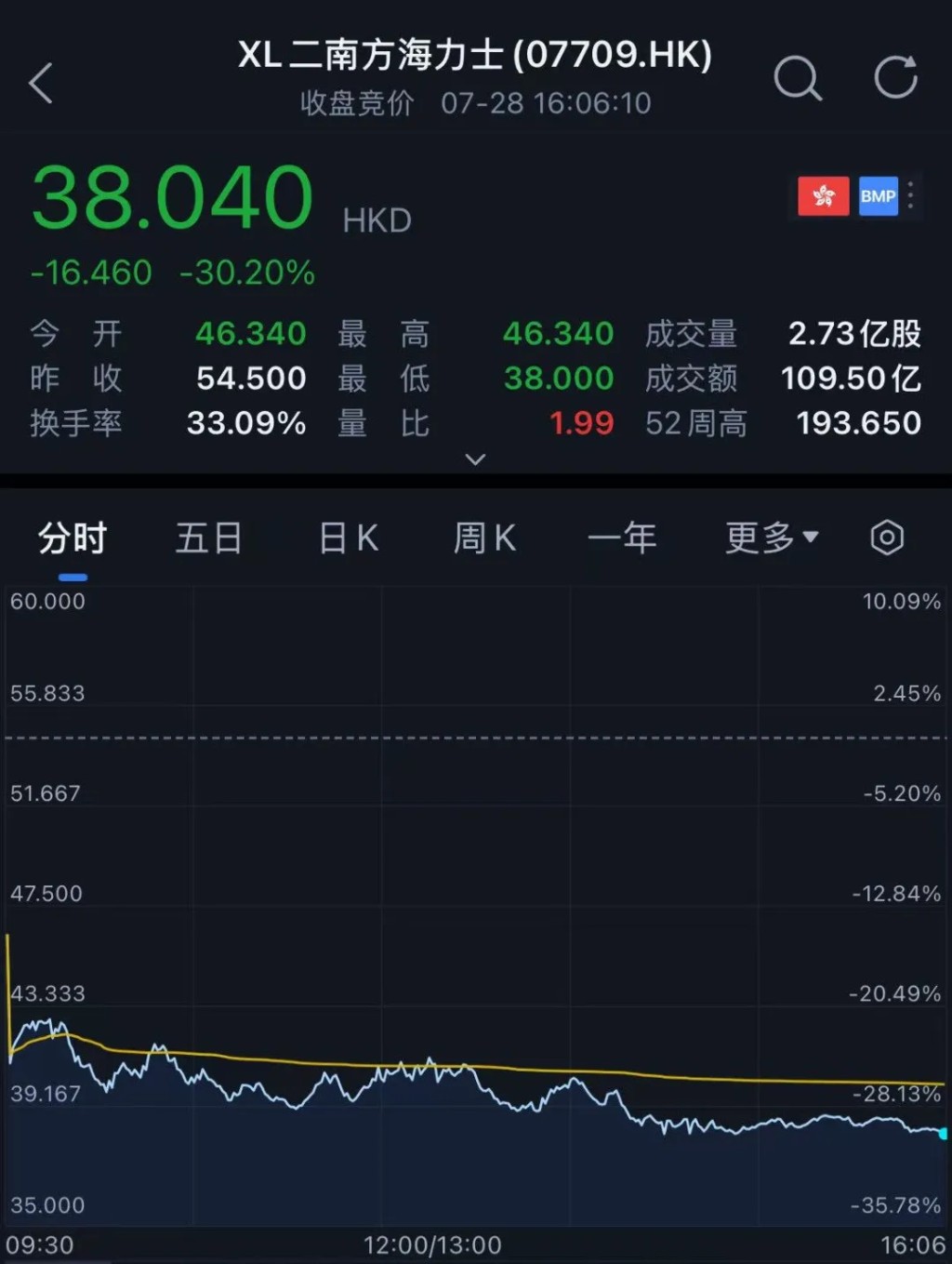
On July 28, the share prices of South Korean memory giants Samsung Electronics and SK Hynix both plummeted, triggering a collective slump in related leveraged ETFs. Among them, XL2CSOPHYNIX and the CSOP 2x Long Samsung Electronics ETF, both listed in Hong Kong, fell sharply by 30.2% and 26.73%, respectively. In addition, several leveraged ETFs listed in South Korea also saw declines approaching 30%. Statistics show that during this intense adjustment since July, the AUM of some leveraged ETFs has been "halved," with some shrinking by nearly 70%.
Semiconductor Leveraged ETFs Plunge Collectively
On July 28, XL2CSOPHYNIX and the CSOP 2x Long Samsung Electronics ETF fell by 30.2% and 26.73%, respectively. According to statistics, since July, the two ETFs have dropped by 74.48% and 63.51%, respectively.
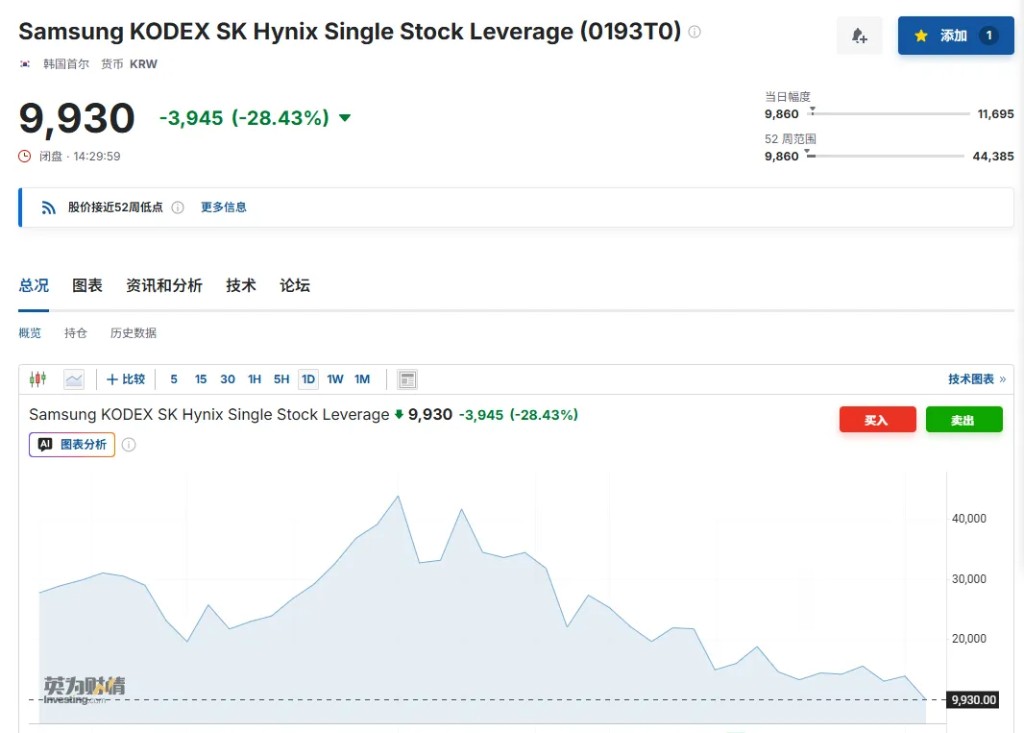
Several related leveraged ETFs listed in South Korea also experienced sharp declines today. Among them, the Samsung KODEX SK Hynix Single Stock Leveraged ETF fell by 28.43%; the Samsung KODEX Samsung Electronics Single Stock Leveraged ETF dropped by 26.63%; and the KIM ACE SK Hynix Single Stock Leveraged ETF declined by 28.44%.
Since July, as the semiconductor sector has undergone severe volatility, the AUM of related leveraged ETFs has also shrunk significantly. Data shows that as of July 27, the AUM of XL2CSOPHYNIX was $5.752 billion, representing a 56% decrease from the $13.07 billion recorded at the end of June.
As of July 27, the AUM of the CSOP 2x Long Samsung Electronics ETF was $1.23 billion, a nearly 70% decrease from the $3.738 billion at the end of June.
In the U.S. market, the AUM of semiconductor leveraged ETFs has also decreased significantly. As of July 24, the AUM of the 3x Long Semiconductor ETF was $19.835 billion, a 37.22% decrease from the $31.596 billion at the end of June.
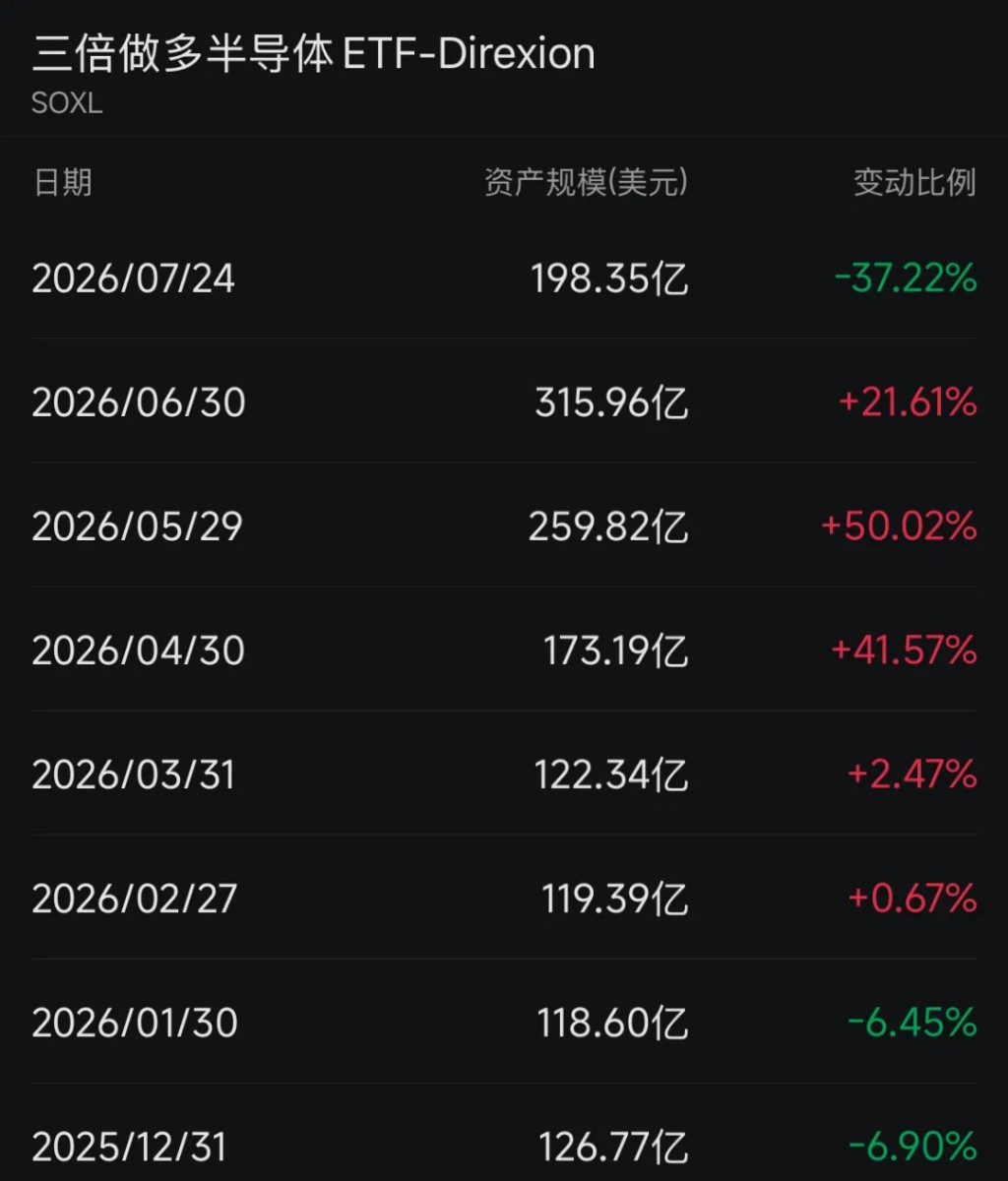
In addition, as of July 24, the AUM of the 2x Long Micron Technology ETF was $4.829 billion, a 43.55% decrease from the $8.554 billion at the end of June.
"The Big Short" Investor Increases Short Position on Micron Technology
Michael Burry, the well-known hedge fund manager and prototype for the movie "The Big Short," who has frequently warned against excessive speculation in the artificial intelligence sector, has recently further increased his short positions on certain targets. In early July, Burry announced on the social platform Substack that he had established a short position in Micron Technology at a price of $1,051.87 per share.
On July 25, Burry posted again, stating that he had further expanded his short positions in Micron Technology, Nvidia, and the Philadelphia Semiconductor Index ETF (SOXX). Specifically, Burry added to his short position in Micron Technology at $933.86 per share, increased his short position in Nvidia at $210.28, and added to his short position in SOXX at $535.83. He emphasized that his short position in SOXX, along with held put options, now constitutes a significant portion of his portfolio.
Many active fund managers have also reduced their exposure to the semiconductor sector during this market correction. Alexis Bossard, Global Equity Portfolio Manager at Edmond de Rothschild Asset Management, stated that he has reduced holdings in semiconductor stocks because their valuations have become too expensive relative to expectations.
DWS, a major European asset management company, took profits on some positions after the surge in semiconductor stocks and downgraded the industry rating to "Neutral," expressing caution about the short-term outlook. Alberto Conca, Chief Investment Officer at LFG+ZEST, an independent asset management firm based in Lugano, Switzerland, also significantly reduced positions in memory chip and equipment manufacturers, while buying put options on certain semiconductor individual stocks.
However, BlackRock, the world's largest asset manager, recently stated that the recent decline in tech stocks has been an "overreaction." As more companies integrate AI into their products and workflows, demand for data centers, network equipment, memory chips, and power infrastructure will continue to rise.
Not just BlackRock; following the recent heavy selling of AI and chip stocks, institutions such as Morgan Stanley, Bank of America, and UBS have expressed that the current correction is more about digesting valuations after crowded trading, rather than a reversal of industrial trends.
Julian Emanuel, Chief Equity and Quantitative Strategist at the renowned U.S. investment bank Evercore ISI, emphasized that the correction in semiconductor stocks, which previously "led the charge," should be viewed as a healthy adjustment after unprecedented gains of 100%, 200%, or even 300% over several months.
"However, opportunities are emerging in the overlooked corners of the technology sector. There is likely an opportunity among undervalued, underappreciated semiconductor technology companies with low share prices. These companies are not exclusively engaged in the chip business but have the potential to report strong performance," Evercore ISI stated.
Source: Shanghai Securities News
Risk Warning and Disclaimer
The market involves risks, and investment requires caution. This article does not constitute personal investment advice, nor does it take into account the specific investment objectives, financial status, or needs of individual users. Users should consider whether any opinions, views, or conclusions in this article align with their specific circumstances. Investors bear full responsibility for their own decisions.
