


July FOMC Meeting: A Communication "Accident"
The Federal Reserve kept interest rates unchanged at its July FOMC meeting, but three members voted against the decision. Chair Powell's vague communication during the press conference was labeled an "accident," triggering "easing trades" in the market. This led to a "bear steepening" of US Treasuries, a decline in the US Dollar Index, and a rise in gold prices
Summary
On July 30 (Beijing time), the Federal Reserve released the statement from its July FOMC meeting. Key points include: 1) Interest rates were held unchanged, but three members voted in favor of a 25 basis point rate hike; 2) The Q&A session at the press conference was akin to a communication "accident," with an unclear reaction function; 3) Amid the unexpected policy easing signal, major asset classes exhibited "easing trades," while US Treasuries experienced "bear steepening."
I. Statement: FOMC Meeting Holds Rates Steady, But Three Members Vote Against
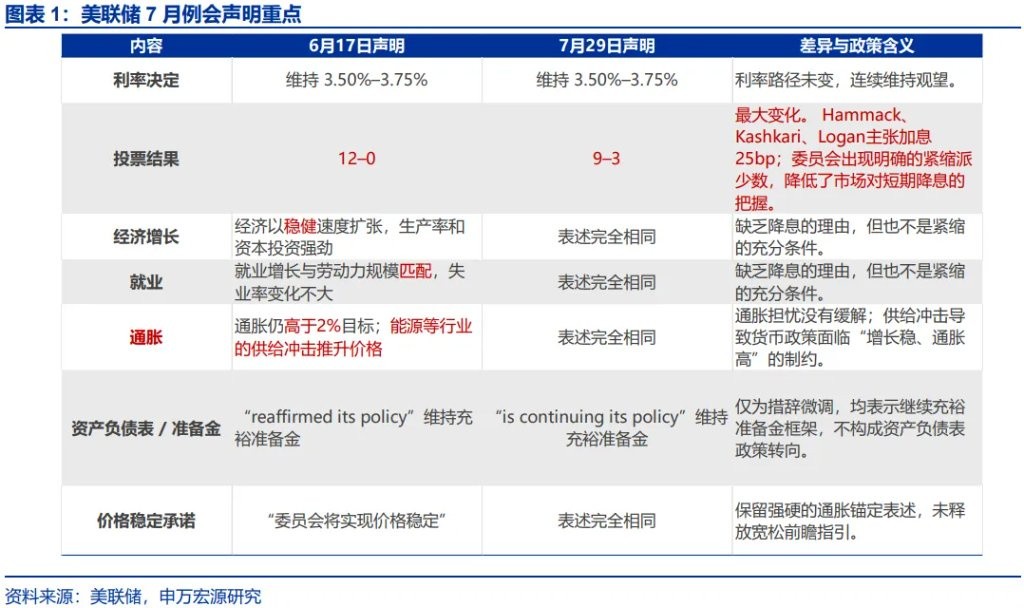
Statement: Three dissenting votes may indicate a lack of "leadership" by Powell. The July FOMC meeting maintained interest rates unchanged, but Hammack, Kashkari, and Logan cast dissenting votes. The statement text remained largely consistent with June's, noting robust economic expansion and little change in the unemployment rate; inflation remains above the 2% target, partly reflecting supply shocks. The number of dissenting votes is at a historical high, all coming from regional bank presidents. While the committee seeks common ground while reserving differences, this also suggests that Powell needs to consolidate his leadership over the regional banks. Attention should subsequently focus on Waller's remarks.
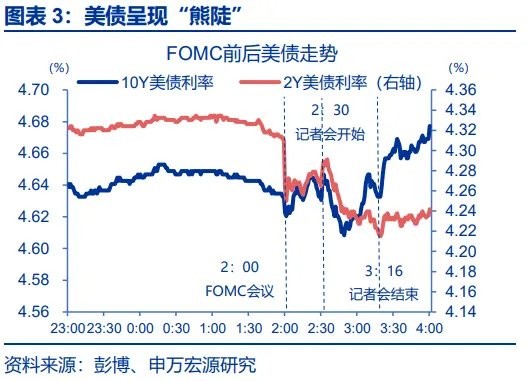
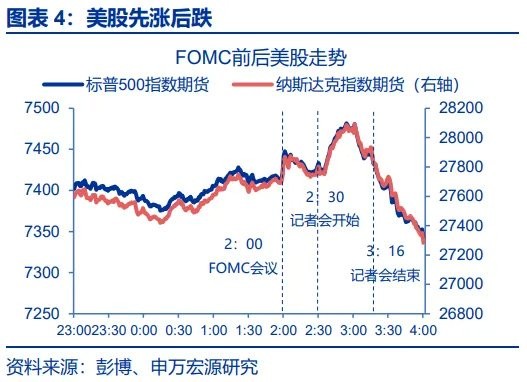
US Treasuries "bear steepen," US Dollar Index falls, gold prices rise, and major asset classes show "easing trades." By the end of the press conference, the 2-year US Treasury yield fell to 4.23%, while the 10-year US Treasury yield rebounded to 4.64%. The surprise of this policy easing led to "bear steepening" in US Treasuries (excessive looseness leading to rising long-term inflation expectations). Gold and the US dollar followed short-end interest rate pricing. US stocks rose initially then fell; while rising long-end US Treasury yields exerted pressure, earnings reports and certain fundamental factors related to AI were the primary contradictions.
II. Press Conference: Powell's Remarks More About "Showing Resolve," With Vague Description of "Reaction Function"
In his opening remarks, Powell reiterated the inflation target and reported on four key discussion points. Powell reiterated the inflation target, showing the 2% goal as a "hard constraint"; he emphasized no forward guidance, corresponding to a shift in the Fed's communication framework. This meeting revolved around four key points: the lingering effects of high inflation, the heterogeneity of multiple shocks, the nature of price increases, and the mix of policy tools. Powell's focus was not on reacting to single data points, but on establishing an identification framework to judge inflation and shock characteristics, and thereby deciding how interest rates and the balance sheet should coordinate.
The press conference Q&A was comparable to a communication "accident" scene, with Powell's remarks having a larger component of "showing resolve" and a vague description of the "reaction function." Regarding communication, Powell pointed out that less forward guidance has already affected the market, but the Fed will not be constrained by market prices. On inflation, Powell emphasized that a single CPI data print has little impact on decisions, focusing instead on underlying inflation. On the economy, Powell expressed concern over the surge in capital expenditure by high-tech companies, stating that "the timing of the impact of capital expenditure on the supply side is difficult to predict." Powell emphasized that there is no conflict between the dual mandate.
III. Outlook: Maintaining the Base Case Assumption of Fed "Standing Pat" This Year, Though the Time Window May Be Narrowing
The market implication of Powell's communication framework reform lies not in changing the Fed's policy stance, but in changing the drivers of asset pricing. Powell's communication framework reform will push the market from "trading on rhetoric" to "trading on data, scenarios, and reaction functions." If the Fed no longer provides forward guidance, short-end interest rates may become more sensitive to data; long-end interest rates will more fully reflect term premiums, inflation credibility, and fiscal risks. Macro trading will shift from "guessing what the Fed says" to "judging under what conditions the Fed will act."
We maintain our base case assumption that the Fed will "stand pat" this year, primarily based on the trend of cooling core inflation remaining intact for now (fading lagged effects of tariffs; weak real estate/low rent inflation; continuing wage declines, etc.). There are two scenarios for a rate hike within the year: 1) AI and wage inflation prove stronger than expected; 2) The bond market continues to punish the Fed's easing stance, such as a continuous rise in the 10-year US Treasury yield or the 5-year, 5-year forward inflation expectation. If Powell truly decides to raise rates, he may release certain signals in advance to bridge the policy expectation gap, preventing violent market fluctuations caused by unexpected rate hikes.
Report Body
On July 30 (Beijing time), the Federal Reserve released the statement from its July FOMC meeting. Key points include: 1) Interest rates were held unchanged, but three members voted in favor of a 25 basis point rate hike; 2) The Q&A session at the press conference was akin to a communication "accident," with an unclear reaction function; 3) Amid the unexpected policy easing signal, major asset classes exhibited "easing trades," while US Treasuries experienced "bear steepening."
I. Statement: FOMC Meeting Holds Rates Steady, But Three Members Vote Against
Statement: Three dissenting votes may indicate a lack of "leadership" by Powell. The July FOMC meeting maintained interest rates unchanged, but Hammack, Kashkari, and Logan cast dissenting votes, leaning towards a 25 basis point rate hike. The statement text remained largely consistent with June's, noting robust economic expansion and little change in the unemployment rate; inflation remains above the 2% target, partly reflecting supply shocks. The number of dissenting votes is at a historical high, all coming from regional bank presidents. While the committee seeks common ground while reserving differences, this also suggests that Powell needs to consolidate his leadership over the regional banks. Attention should subsequently focus on Waller's remarks.
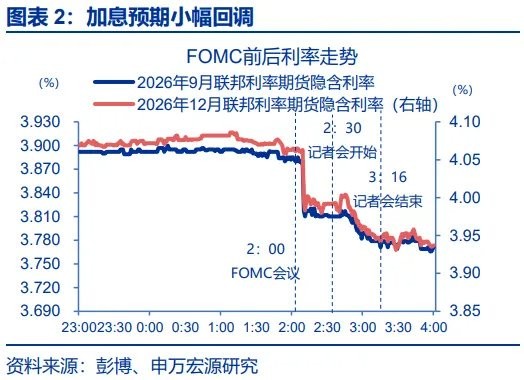
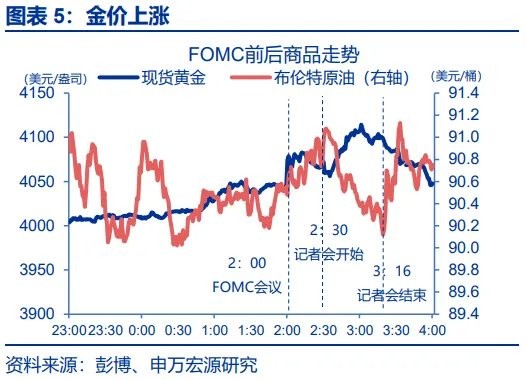
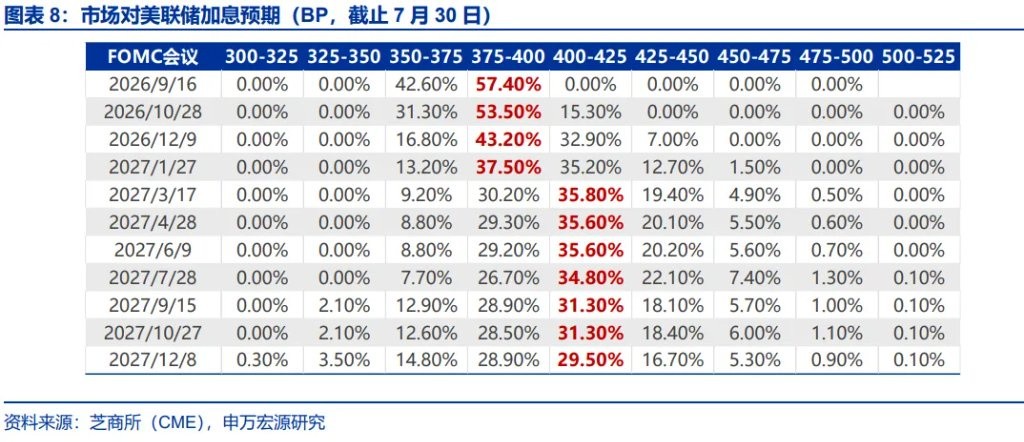
US Treasuries "bear steepen," US Dollar Index falls, gold prices rise, and major asset classes show "easing trades." 1) After the statement was released, the 10-year US Treasury yield turned stronger after a brief dip. After the press conference, the 2-year US Treasury yield fell to 4.23%, while the 10-year US Treasury yield rebounded to 4.64%. The surprise of this policy easing led to "bear steepening" in US Treasuries (excessive looseness leading to rising long-term inflation expectations); 2) Market expectations for future Fed rate hikes decreased slightly. Currently, the market prices in a cumulative 1.4 rate hikes by the end of 2026; 3) After the statement was released, the US Dollar Index fell slightly to around 100.8, and gold prices briefly broke through $4,100/ounce, mainly following short-end interest rate pricing; 4) US stocks rose initially then fell. While rising long-end US Treasury yields exerted pressure, earnings reports and certain fundamental factors related to AI were the primary contradictions.
II. Press Conference: Larger Component of "Showing Resolve," With Vague Description of "Reaction Function"
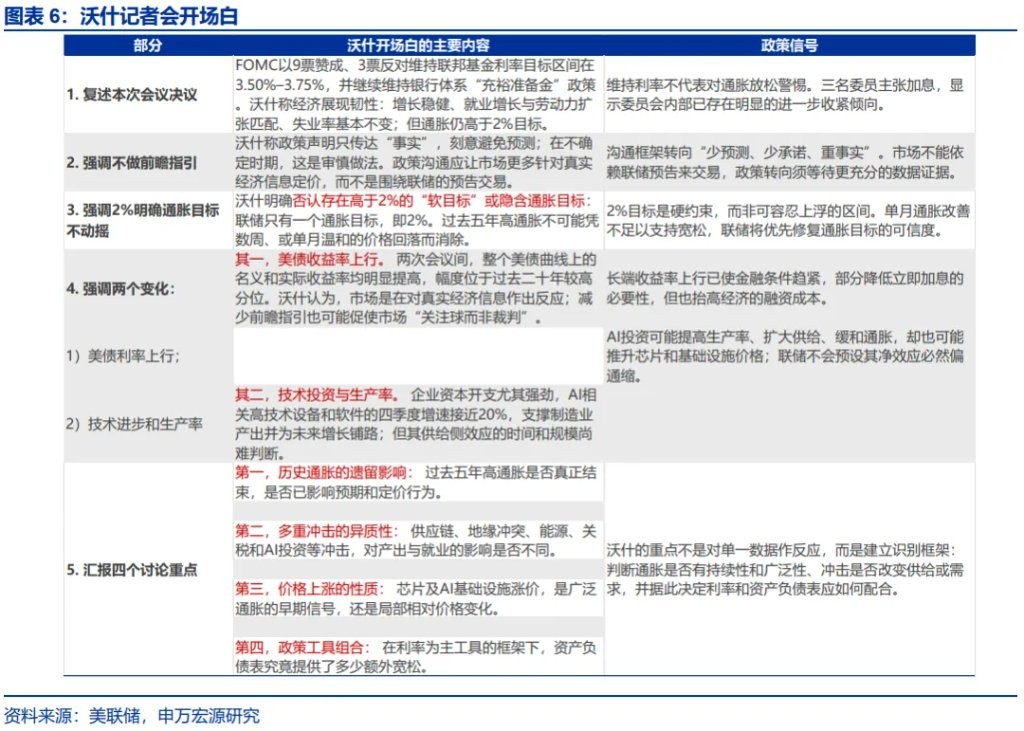
In his opening remarks at the press conference, Powell reiterated the inflation target and reported on four key discussion points. Powell reiterated the inflation target, showing the 2% goal as a "hard constraint"; he emphasized no forward guidance, corresponding to a shift in the Fed's communication framework. This meeting revolved around four key points: the lingering effects of high inflation, the heterogeneity of multiple shocks, the nature of price increases, and the mix of policy tools. Powell's focus was not on reacting to single data points, but on establishing an identification framework to judge inflation and shock characteristics, and thereby deciding how interest rates and the balance sheet should coordinate.
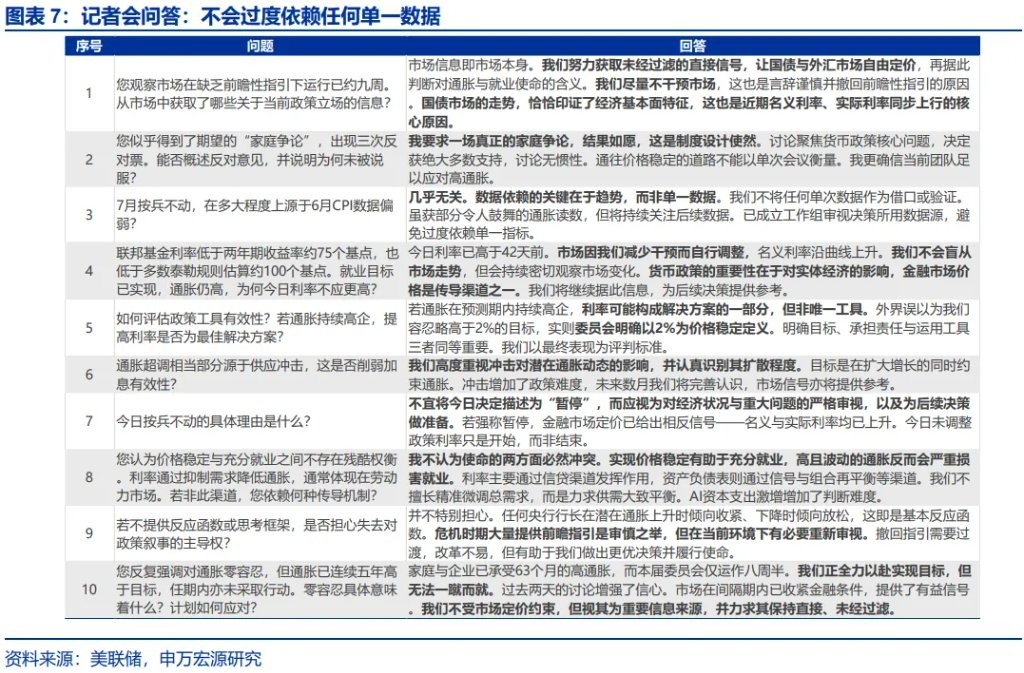
The press conference Q&A was comparable to a communication "accident" scene, with Powell's remarks having a larger component of "showing resolve" and a vague description of the "reaction function." Regarding "communication," Powell pointed out that less forward guidance has already affected market trends, but the Fed will not be constrained by market prices. On inflation, Powell emphasized that the single weak June CPI data print had little impact on decisions, implying that the inflation indicators he focuses on are not limited to PCE. On the economy, Powell expressed high concern over the phenomenon of surging capital expenditure by high-tech companies, stating that "the timing of the impact of capital expenditure on the supply side is difficult to predict." Finally, Powell emphasized that there is no conflict between the dual mandate.
III. Outlook: Maintaining the Base Case Assumption of Fed "Standing Pat" This Year, Though the Time Window May Be Narrowing
The market implication of Powell's communication framework reform lies not in changing the Fed's policy stance, but in changing the drivers of asset pricing. Powell's communication framework reform will push the market from "trading on rhetoric" to "trading on data, scenarios, and reaction functions." If the Fed no longer provides forward guidance, short-end interest rates may become more sensitive to data; long-end interest rates will more fully reflect term premiums, inflation credibility, and fiscal risks. Macro trading will shift from "guessing what the Fed says" to "judging under what conditions the Fed will act."
We maintain our base case assumption that the Fed will "stand pat" this year, primarily based on the trend of cooling core inflation remaining intact for now (fading lagged effects of tariffs; weak real estate/low rent inflation; continuing wage declines, etc.). Oil prices affect sentiment and inflation expectations, but it is difficult for the Fed to change its policy stance solely based on oil price fluctuations. There are two scenarios for a rate hike within the year: 1) AI and wage inflation prove stronger than expected; 2) The bond market continues to punish the Fed's easing stance, such as a continuous rise in the 10-year US Treasury yield or the 5-year, 5-year forward inflation expectation. If Powell truly decides to raise rates, he may release certain signals in advance to bridge the policy expectation gap, preventing violent market fluctuations caused by unexpected rate hikes.
Risk Warning and Disclaimer
The market involves risks, and investment requires caution. This article does not constitute personal investment advice, nor does it take into account the specific investment objectives, financial status, or needs of individual users. Users should consider whether any opinions, views, or conclusions in this article align with their specific circumstances. Investment based on this content is at the user's own risk.
