


BTIG Strategist Warns: US Tech Stock Rebound May Be a Trap, Momentum Deleveraging Not Yet Over
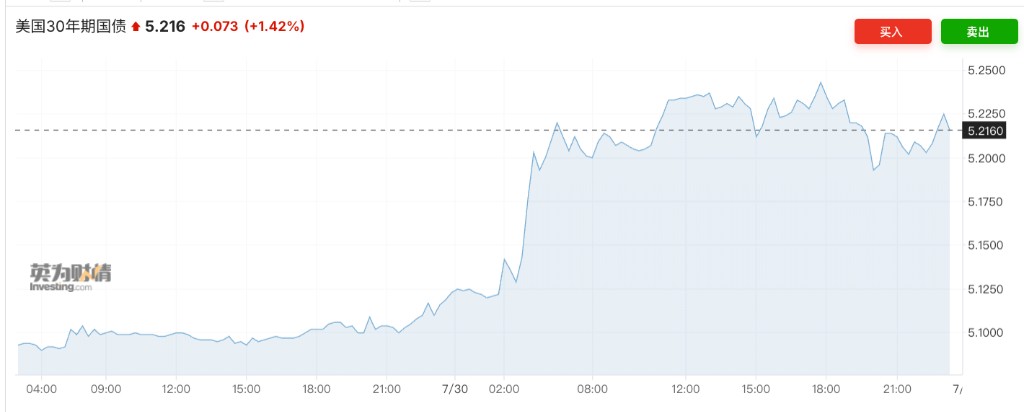
Wall Street momentum stocks have suffered their most severe washout in history, with the Goldman Sachs High Beta Momentum Index plunging 23% below its 200-day moving average. Although tech stocks are oversold in the short term, BTIG analysts warn that the rebound may not be sustainable, raising the possibility of a repeat of the "false breakout" seen after the Dotcom Bubble in 2000. Meanwhile, the surge in the 30-year US Treasury yield above 5.2% has intensified valuation pressure on growth stocks. With market sentiment indicators hitting extreme levels and risk appetite reversing, analysts advise caution and recommend against rushing to buy the dip
Wall Street has just experienced one of the most severe momentum stock crashes in history. Although tech stocks have shown brief stabilization after consecutive sharp declines, there is still significant divergence in the market regarding whether the rebound can sustain. Some technical analysts warn that the market may not have fully released risk yet.
Jonathan Krinsky, Chief Market Technician at BTIG, stated that although US tech stocks have entered oversold territory and there is room for a technical rebound in the short term, investors should not rush to buy the dip. He pointed out that the Morgan Stanley Industry Neutral Momentum Index plummeted by a cumulative 17.4% over the past four trading days, marking the largest drop on record, exceeding the adjustments seen after the burst of the Dotcom Bubble, the 2022 bear market, and the post-pandemic shock.
At the same time, the continued rise in long-end US Treasury yields has exacerbated pressure on growth stocks. The 30-year US Treasury yield rose to 5.246% on Wednesday, hitting a new high since 2007, putting further downward pressure on high-valuation tech stocks.
The rapid reversal in market sentiment caught investors off guard. The Philadelphia Semiconductor Index fell 5.3% in a single day on Wednesday, marking its largest drop since early July this year; the Nasdaq Composite Index closed lower for the sixth consecutive trading day, setting the longest streak of declines since April 2024, and briefly approached the 10% technical correction range from its June 2 high.
Unprecedented Washout in Momentum Trading
The intensity of this round of tech stock sell-offs is extremely rare in historical context.
Krinsky noted that the Goldman Sachs High Beta Momentum Pair Index—a strategy indicator that involves buying strong stocks and shorting weak ones—has currently fallen 23% below its 200-day moving average, whereas in mid-June, the index was once 40% above the 200-day moving average.
High beta stocks typically exhibit higher volatility, implying both higher risk and potential return. In this adjustment, such stocks have become the primary target for capital outflows, centrally reflecting the market's repricing of the artificial intelligence infrastructure investment boom.
Despite this, the semiconductor sector has maintained a significant lead year-to-date. As of now, the Philadelphia Semiconductor Index has risen by approximately 45%, significantly higher than the roughly 5% gain of the Nasdaq Composite Index. However, with the recent violent adjustment, the gap in gains between the two is narrowing rapidly.
Tech Stock Rebound May Just Be a "False Breakout"
Krinsky believes that in the short term, tech stocks meet the conditions for a rebound, but historical experience shows that an oversold bounce does not necessarily mean a trend reversal.
Citing market performance after the burst of the Dotcom Bubble in 2000, he noted that the Philadelphia Semiconductor Index once rebounded quickly by 37% after plunging 35% within a month, but subsequently fell back into a downward trend.
"We cannot determine if a rebound of similar magnitude will occur this time, but even if the semiconductor index rises by 20%, it would only mean returning to the vicinity of the 50-day moving average, where we believe it may encounter resistance again, ultimately possibly testing the 200-day moving average," Krinsky said.
He further warned that if the market's judgment on the momentum stock rebound proves biased, the risk could evolve into a "broad correlation sell-off" similar to August 2024, where multiple asset classes such as stocks and bonds come under pressure simultaneously. In such a scenario, even equal-weight strategies would struggle to completely avoid the impact.
High Interest Rates Remain the Biggest Pressure Source for Tech Stocks
The continuous rise in long-end interest rates is an important factor currently weighing on tech stock valuations.
Krinsky stated that the upward movement of the 30-year US Treasury yield "continues to threaten the breakout trend formed by the market over many years," and any further rise could become resistance to the rebound of recently strong stocks.
High interest rates exert dual pressure on tech stocks: on one hand, tech company valuations heavily rely on the discounting of future cash flows, so rising rates directly lower their valuation levels; on the other hand, increased financing costs exacerbate market concerns about whether investment returns can be realized after large tech companies continue to expand AI capital expenditures.
Meanwhile, market sentiment indicators also show that risk appetite is changing. Callum Thomas, Research Director at Topdowncharts, pointed out that the trading ratio of leveraged long and short US equity ETFs has risen to its highest level since the fiscal stimulus period of 2021, and historically, when this indicator hits extreme levels, it often corresponds to short-term market tops.
"Now, the bulls need to bear more burden of proof, and caution may be the most reasonable choice in the current market," Thomas said.
