


Apple's Quarterly iPhone Sales Were Even Better Than They Seem
Apple's fiscal Q3 iPhone revenue reached $54.25 billion, beating expectations and rising nearly 22%. IDC data reveals Apple's iPhone shipments grew 15.3% year-over-year, defying a broader market decline. This growth, driven by higher average selling prices and strong demand for the iPhone 17, suggests Apple is outperforming analyst estimates. The company's stock rose 1.96%, reflecting confidence in its flagship product's resilience ahead of the upcoming iPhone 18 launch.
Apple's (AAPL +1.96%) flagship iPhone business was nothing less than stellar in its recently reported fiscal third quarter. Revenue of $54.25 billion was not only up nearly 22% but also topped analysts' expectations of $53.86 billion. The iPhone also led a companywide beat of Q3 earnings and sales outlooks, offsetting its services arm's revenue shortfall.
Apple's iPhone franchise, however, may be even more of a workhorse than Apple's limited data disclosure about the popular smartphone suggests.
Image source: Getty Images.
Leading the unit growth race
Apple stopped reporting the total number of iPhones it sold in any given quarter back in 2019, reducing transparency into the health of about half of the company's revenue. But the technology industry's researchers and data intermediaries didn't stop keeping score.
Using information gathered in other ways, IDC continued to tally the total number of smartphones that the business's biggest players shipped. To this day, it continues to provide quarterly unit shipments for major smartphone manufacturers.
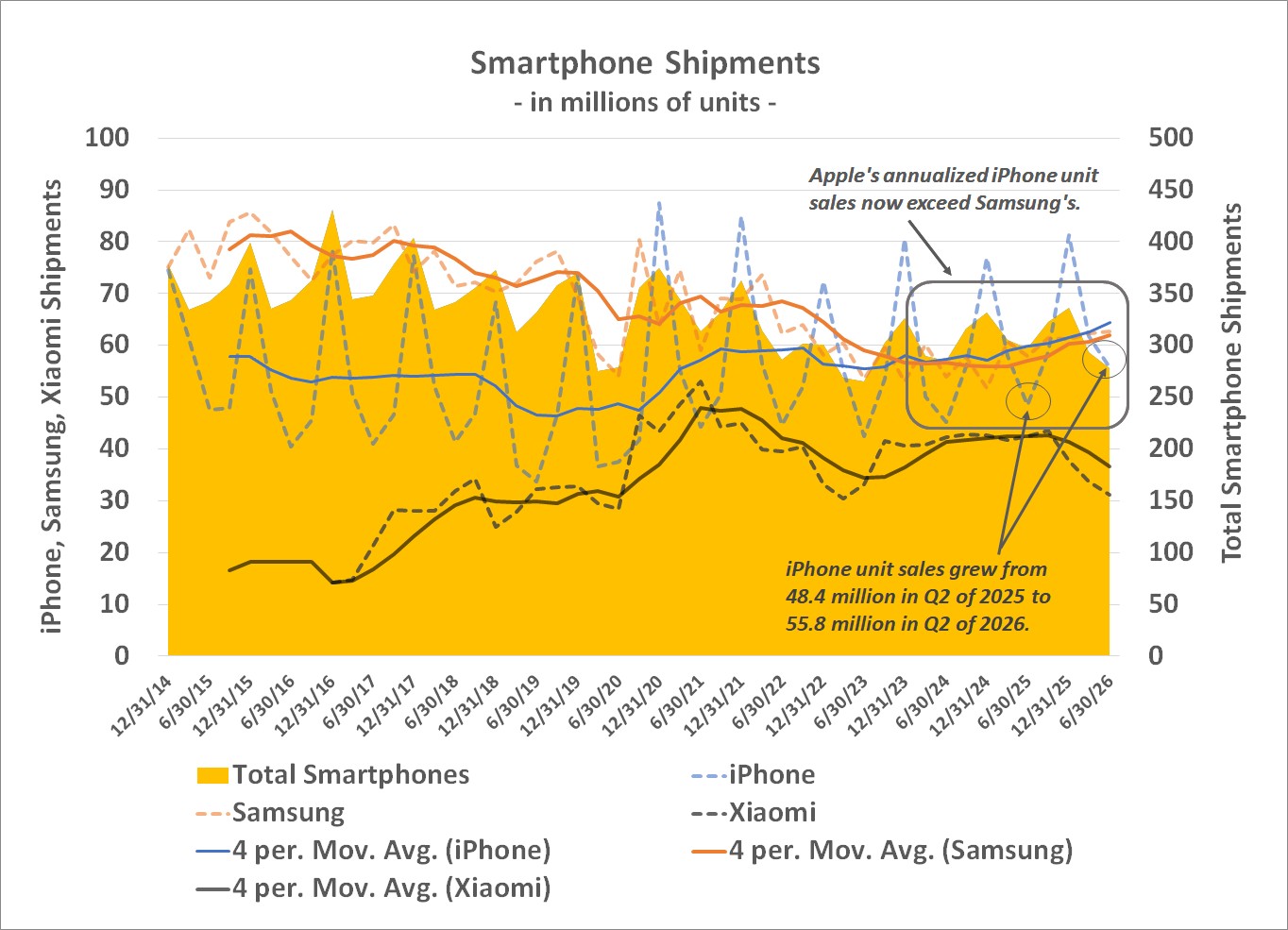
That's where things get interesting and encouraging. According to IDC, Apple was only one of two major names in the smartphone business to defy the overall 6.7% year-over-year decline in total smartphone shipments during the second calendar quarter of this year. The other one was Samsung, which experienced an 8.1% year-over-year increase in total unit shipments. Apple handily outpaced that growth rate, though, with its 15.3% year-over-year improvement in iPhone shipments, again as reported by IDC.
Data source: IDC. Chart by author.
Two key takeaways
There are a couple of important takeaways for investors quietly buried in this data. The first is that, while the company itself didn't report it, the relative changes in reported revenue and unit shipments indicate that Apple is asking -- and getting -- a higher average selling price (ASP) for its current slate of iPhones. And not for the first time.
This is the second quarter in a row that IDC reported Apple had defied a broad drop in demand for smartphones by achieving the industry's highest year-over-year increase in unit shipments, which again was also outpaced by Apple's reported iPhone revenue growth (of nearly 22% in the previously reported quarter).
Connect the dots. After a slow start, the demand for newer iPhones that the launch of Apple Intelligence was supposed to generate back in 2025 is finally taking hold. Now-outgoing CEO Tim Cook even made a point of highlighting how upgrades largely drove the company's "incredible blowout" fiscal Q3 earnings to the iPhone 17 launched late last year.
The other nuance to recognize is that this swell of fresh demand materialized right before Apple is set to unveil and launch the next generation of its iPhone. The media event scheduled for early next month will feature a new iPhone 18 that powers a new-and-improved AI-powered digital assistant, Siri, that is at least somewhat better than the iPhone 17's. Consumers are buying the 17 anyway.

NASDAQ: AAPL
Key Data Points
Apple has been underestimated
Regardless of how or why, there's no denying Apple's all-important iPhone business appears to be fully back to its former fighting form. The company's subpar guidance for the quarter currently underway likely understates what's actually in store.
