


"Small Non-Farm" Misses Expectations! US July ADP Employment Adds Only 44,000 Jobs, Hitting Year-to-Date Low; Friday's Non-Farm Data Becomes Key
US private sector employment added only 44,000 jobs in July, marking a year-to-date low and falling short of expectations. Pressure on the goods-producing sector indicates a cooling labor market. However, job switchers saw a strong 7% year-over-year wage increase, suggesting structural tightness persists. The market is focusing on Friday's Non-Farm Employment data; if the trend aligns, it will confirm labor market resilience and support the Federal Reserve's continued focus on combating inflation
US private employment growth in July fell significantly short of expectations, indicating a cooling in labor market momentum, although wage growth remains resilient and the overall employment situation remains stable.
Data released by the ADP Research Institute on Wednesday showed that private sector employment increased by 44,000 in July, below the 65,000 expected by economists surveyed by Bloomberg, and marking the lowest level since the beginning of the year. The revised figure for June was 95,000.
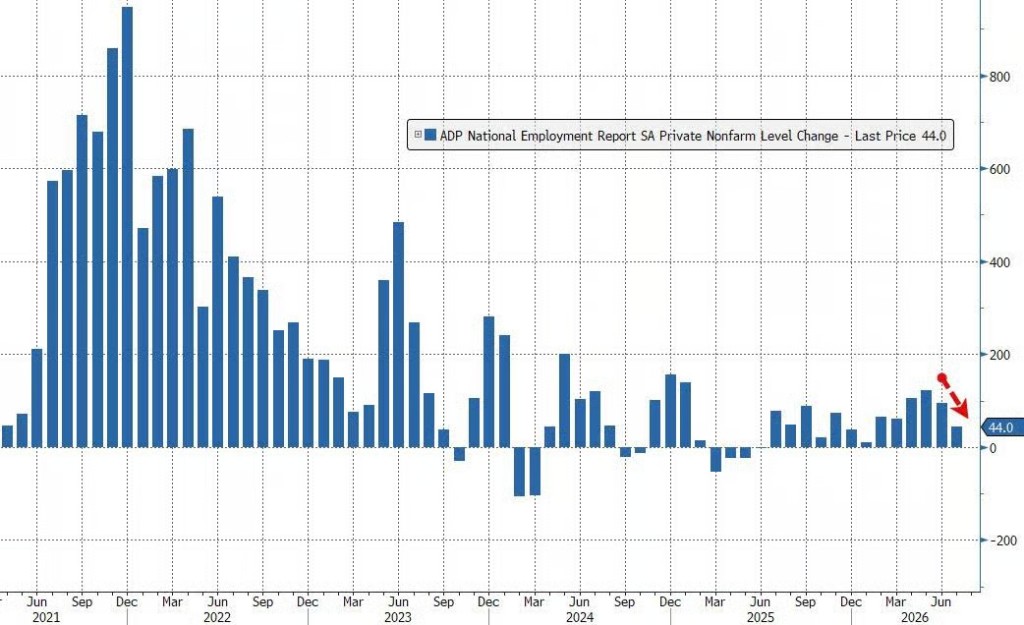
Despite the slowdown in hiring pace, the report also showed that wage growth for job switchers accelerated to its strongest level in nearly a year. Nela Richardson, Chief Economist at ADP, pointed out, "Typical hiring patterns are changing as employers react to shifts in the macroeconomic environment."
The US government's Non-Farm Employment Report, to be released on Friday, is drawing significant market attention. If the data confirms current trends, it will support the Federal Reserve's continued focus on still-elevated inflation.
Employment Growth Hits Year-to-Date Low; Goods-Producing Sector Under Pressure
ADP data shows that private sector employment increased by 44,000 in July, which was not only lower than the forecasts of all economists participating in the Bloomberg survey but also the lowest value since January this year, representing a significant decline from the revised 95,000 in June. From an industry distribution perspective, the goods-producing sector saw a net loss of 3,000 jobs, indicating pressure on labor demand in certain areas of the real economy.
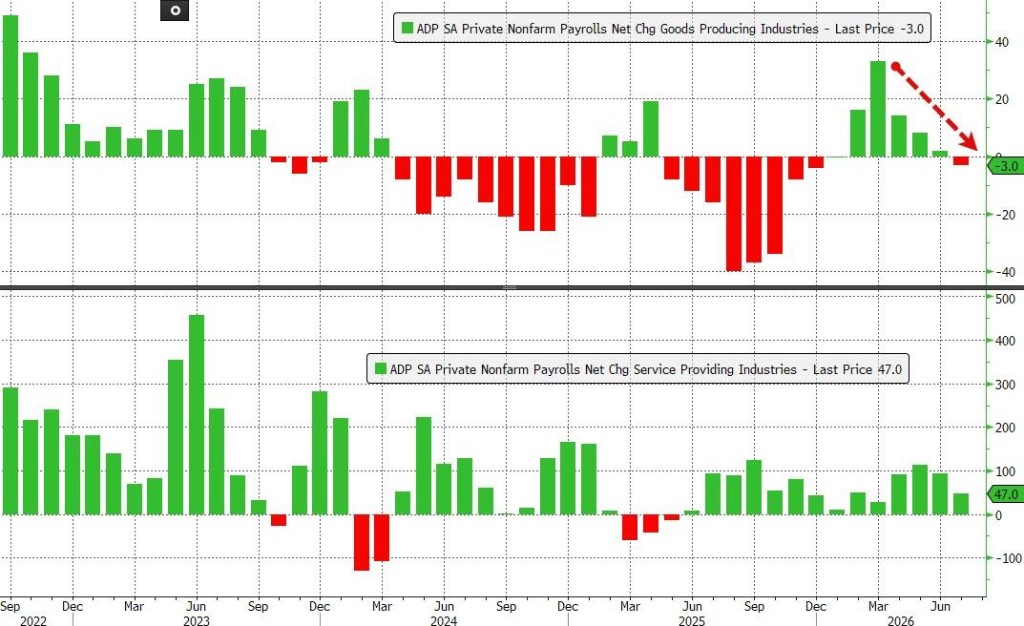
The ADP report is based on payroll data covering more than 26 million US private sector employees and is jointly released by the ADP Research Institute and the Stanford Digital Economy Lab.
While the increase in employment slowed, wage data presented another side of the picture. The report showed that wages for job switchers rose 7% year-over-year, the fastest growth rate in nearly a year; wage growth for staying employees remained at 4.4%.
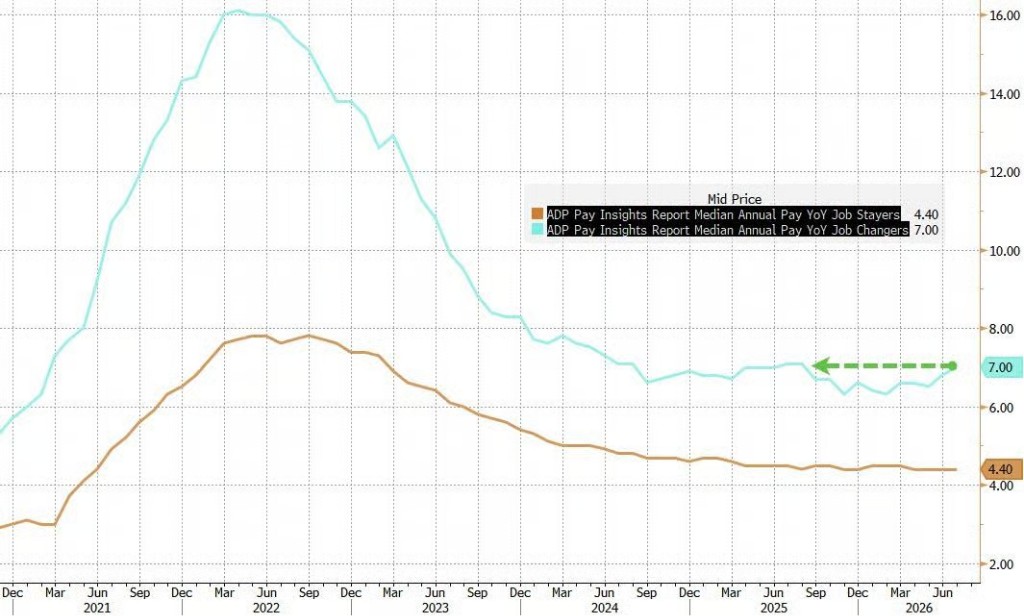
Nela Richardson stated in a release, "Job switchers are highly sensitive to real-time economic conditions, and their rapid wage growth implies supply constraints in certain segments of the labor market." This signal indicates that despite the slowing overall employment growth, structural tightness in the labor market has not been eliminated.
Fed Stance and Friday's Non-Farm Data in Focus
Prior to the release of the ADP report, Federal Reserve Chair Powell described the labor market as "robust" and "balanced" at a press conference last week. The Federal Open Market Committee (FOMC) kept interest rates unchanged, but three officials voted in favor of a rate hike, showing that internal divergence still exists.
The market is currently awaiting confirmation from the official government Non-Farm Employment Report on Friday. A Bloomberg survey shows that economists expect non-farm payrolls (including the public sector) to increase by 80,000 in July, an improvement from June. If the data aligns with the trend in the ADP report, it will further reinforce the market judgment that "the labor market is robust enough to support the Fed's focus on fighting inflation," which will have a direct impact on expectations for the Fed's policy path.
