


U.S. ISM Services PMI Remains in Expansion in July: Demand Resilience Persists but Stagflation Risks Rise
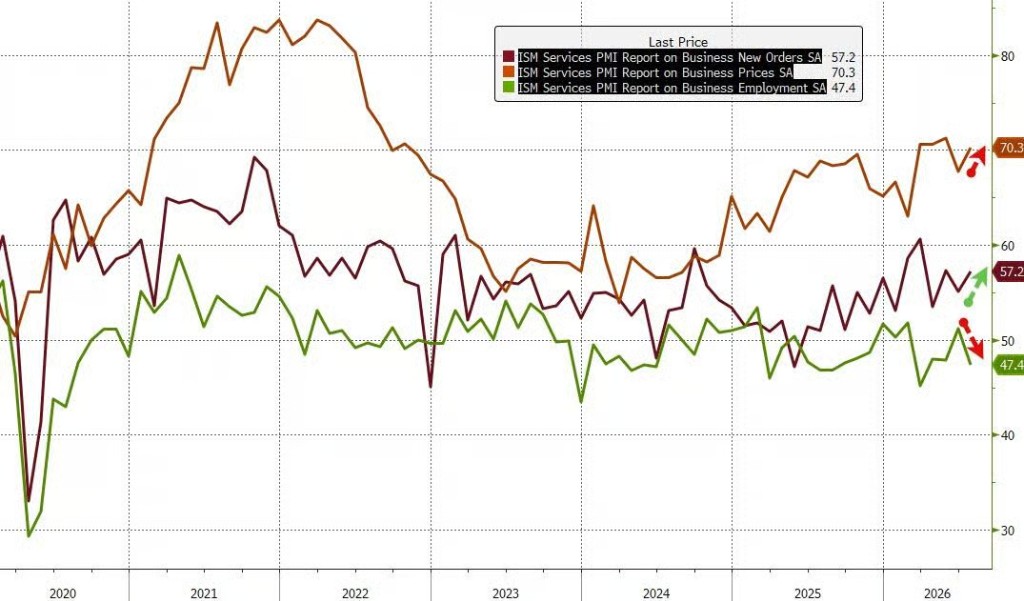
The U.S. ISM Services Index rose to 54.1 in July, a slight increase of 0.1 points from June, missing the expected 54.5. The New Orders Index beat expectations, rising to 57.2, while the Prices Paid Index also exceeded forecasts, climbing to 70.3. The Employment Index missed expectations, falling to 47.4 and entering contraction territory. Rising costs coupled with shrinking employment present certain "stagflation" characteristics
The U.S. services sector continued its expansion in July, with accelerated growth in new orders and business activity reaching multi-month highs, indicating that consumer demand remains resilient. However, resurfacing cost pressures and weakening corporate hiring intentions have raised new concerns about the outlook for U.S. economic growth.
Data released by the Institute for Supply Management (ISM) on Wednesday showed that the ISM Services Index rose to 54.1 in July, a slight increase of 0.1 points from June, missing the expected 54.5. A reading above 50 indicates that the services sector is in expansion territory.
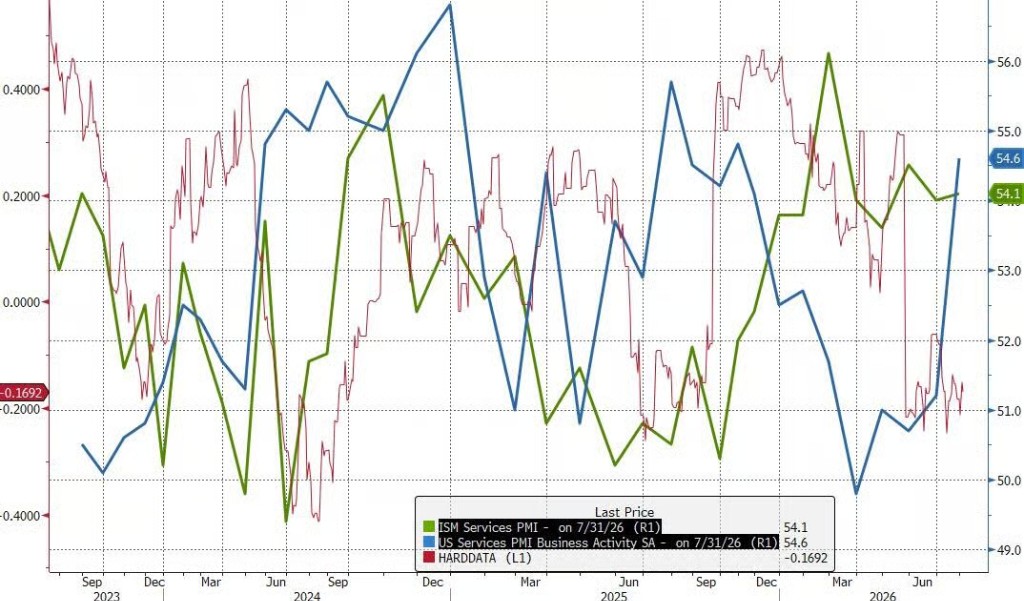
Breakdown data showed that the Services New Orders Index rose to 57.2 in July, higher than the market expectation of 55.9, while the Business Activity Index also climbed to a five-month high, suggesting an improvement in corporate orders and demand conditions.
However, price pressures intensified significantly. The ISM Services Prices Paid Index surged to 70.3 in July, far exceeding the expected 65.0, reflecting higher input costs faced by service providers. Analysts believe that the collapse of the temporary agreement between the U.S. and Iran, which led to rising oil and gasoline prices, has exacerbated corporate cost burdens.
Meanwhile, corporate hiring activity slowed markedly. The ISM Employment Index fell to 47.4 in July, below the expected 51.2, returning to contraction territory and recording the most severe employment contraction since March of this year.
Steve Miller, Chair of the ISM Services Business Survey Committee, stated that tariff impacts and Middle East conflicts remain significant factors in corporate feedback, although their frequency of mention has decreased compared to previous reports. Additionally, the World Cup continues to be regarded by businesses as an important driver of business activity and new order growth.
"Overall, the U.S. services economy remains resilient," Miller said.
By industry, 13 service sectors reported growth in July, including retail trade, transportation and warehousing, and construction; four sectors reported contraction.
S&P Global Services PMI Hits Near One-Year High
Another survey also showed a significant rebound in U.S. services activity in July.
According to data from S&P Global, the final U.S. Services PMI for July rose to 54.6, higher than the final reading of 51.2 in June and the preliminary reading of 53.6, marking the highest level since October 2024.
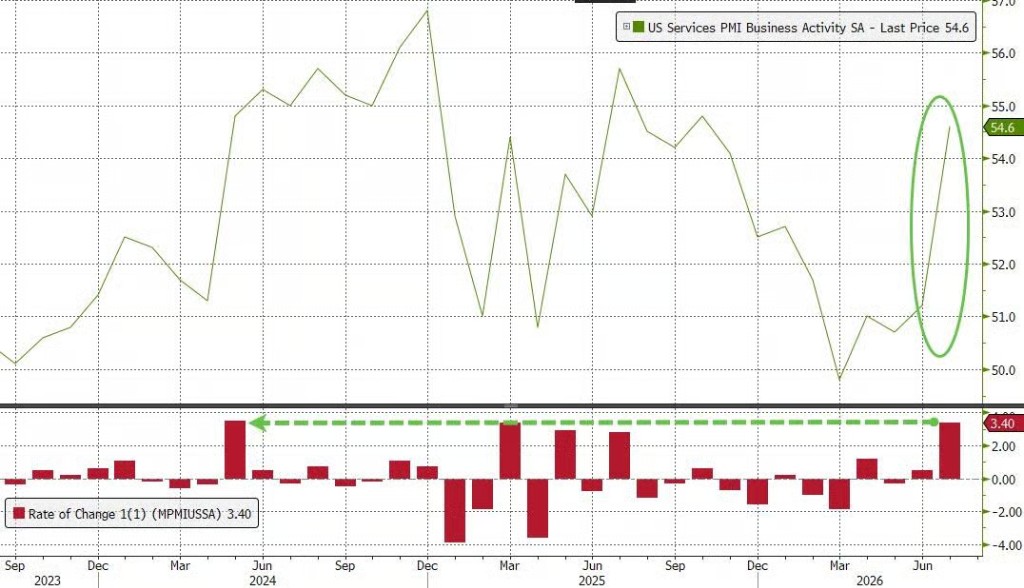
Among the components, new business growth reached its fastest pace in 19 months, and business confidence in commercial activity over the next 12 months rose to its highest level since last November. At the same time, private sector employment resumed growth for the first time since April.
Chris Williamson, Chief Business Economist at S&P Global, stated that the final July PMI figures show encouraging signs of accelerating growth in the U.S. economy at the beginning of the third quarter.
Composite PMI data suggests that the current growth rate of the U.S. economy may correspond to an annualized growth rate of approximately 2.3%, higher than the second-quarter growth expectation of about 1.5%.
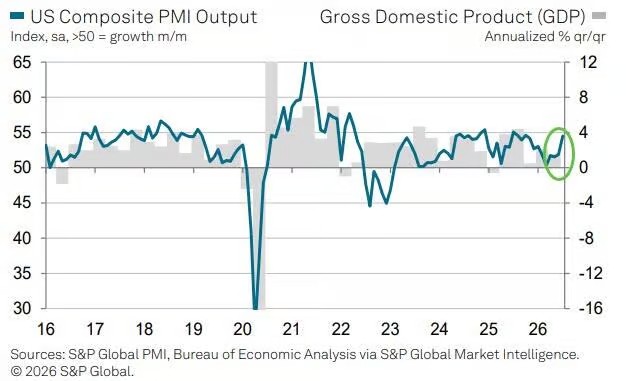
However, Williamson cautioned that the improvement in July data was partly driven by temporary factors.
He pointed out that demand in the consumer services sector saw its fastest growth in over four years, mainly related to the World Cup and U.S. Independence Day activities. In addition, the decline in geopolitical risks and the drop in oil prices in early July also provided short-term support for business activity.
But as tensions in the Gulf region escalated in the latter half of July, geopolitical factors may once again become a drag on economic growth and further push up already elevated price pressures.
Economic Resilience Coexists with Inflationary Pressures, Leaving the Fed with a Policy Dilemma
Combining data from ISM and S&P Global, the U.S. services sector remains in expansion, but the two surveys offer different descriptions regarding employment and price trends.
ISM data shows that employment deteriorated significantly, prices rose rapidly, and new orders remained strong, presenting certain "stagflation" characteristics; whereas the S&P Global survey shows improvements in business activity, employment, and confidence, although input costs are also accelerating.
Market participants believe this divergence reflects that the U.S. economy is still in an adjustment phase under a high-interest-rate environment. On one hand, consumer demand has not cooled significantly, and the services sector continues to support economic growth; on the other hand, corporate cost pressures may limit profit margins and affect future hiring plans.
The U.S. Department of Labor will release the July nonfarm payrolls report on Friday. Economists expect nonfarm payrolls to increase by approximately 80,000 in July, covering both the manufacturing and services sectors.
If the labor market cools further while inflationary pressures reignite due to rising energy prices, the Federal Reserve's future policy path will face a more complex balancing challenge. The market will closely watch whether employment data supports expectations for rate cuts within the year and whether cost pressures will hinder the continued decline in inflation.
