


Just Announced: SpaceX and Nvidia Teaming Up on New Orbital AI Data Center
SpaceX and Nvidia announced a partnership to design the compute payload for Starmind, an orbital AI data center network. The first satellite will exclusively use Nvidia's Vera CPUs and Rubin GPUs. While Musk claims launches could start next year, analysts caution that the ambitious timeline is likely aspirational and significant financial impact is years away.
Although it got buried in yesterday’s earnings news from Space Exploration Technologies (SPCX +2.94%), or SpaceX, CEO Elon Musk just made a huge announcement about his “Starmind” plan to launch a new network of orbital AI data centers. And he’s teaming up with Nvidia (NVDA -0.41%) to make it happen.
According to an announcement on SpaceX’s social media site X, SpaceX and Nvidia are working together to design the “compute payload” for Starmind AI1, the first in an orbiting network of satellites that will run AI workloads in outer space.
Here’s what we know about the partnership and what it means for investors.

Image source: The Motley Fool
Different by design
One of the biggest expenses for a data center is electricity. SpaceX’s goal for its orbiting Starmind AI data centers is to maximize power efficiency, thereby lowering compute costs.
Because solar energy is more abundant in space than on the Earth’s surface, solar panels on satellites that can be adjusted to face the sun are theoretically more efficient than terrestrial solar panels.
Meanwhile, 30% to 40% of a terrestrial data center’s power is devoted to running massive cooling systems that prevent the servers from overheating as they process the tremendous amount of data that AI requires. Because outer space is usually incredibly cold, keeping an orbital computer from overheating would theoretically require no electricity at all.
This is all theoretical, though: although the vacuum of space is cold, you can’t just put your entire computer into that vacuum or it will freeze. And while sunlight is stronger in space, even a large orbital solar panel can only produce a fraction of the electricity of a solar farm. Plus, in space there’s no gravity, no air supply, and no technician who can replace a burnt-out fuse. Starmind will need to take all these factors into account.
Who better to help than Nvidia?

NASDAQ: SPCX
Key Data Points
Exclusively Nvidia
According to SpaceX’s announcement, the first Starmind satellite will feature Nvidia’s top-of-the-line Vera CPUs and Rubin GPUs, as well as its Vera Rubin NVL72 rackscale system.
On the Q2 earnings call, Musk explained why Nvidia was the logical choice:
“Going forward, we've decided to build exclusively on Nvidia, because we think the Vera Rubin architecture is the best architecture. We think it's the best AI computer, and we greatly value our close cooperation and partnership on many levels with Nvidia. We're exclusive to Nvidia.”
“We think the design of the NVL72 VR computer is a much better design than, say, having a standard rack-style design. We expect to actually deploy this on the ground as well as in orbit, because we think it's going to be a radical simplification of the normal NVL72 rack. It will cost less. It'll be more effective. If we're going to put it in space, why not put it on the ground? I think that's going to be pretty cool.”

NASDAQ: NVDA
Key Data Points
At press time, SpaceX’s Starmind website still said, “We are AI chip vendor agnostic. Our system architecture supports compute modules from any provider,” suggesting that Musk’s decision to go “exclusively” with Nvidia architecture is a recent one.
Nvidia, for its part, hasn’t made any official comment regarding the scope of its participation.
A grain of salt
So, how long will it be before SpaceX’s Starmind satellite fleet is operational?
According to Musk, not long at all. “With respect to the Starmind AI satellite, which will be essentially an optimized Vera Rubin NVL72 computer, this is not some sort of far future distant thing,” he said on SpaceX’s earnings call. “We expect to start launching this next year.”
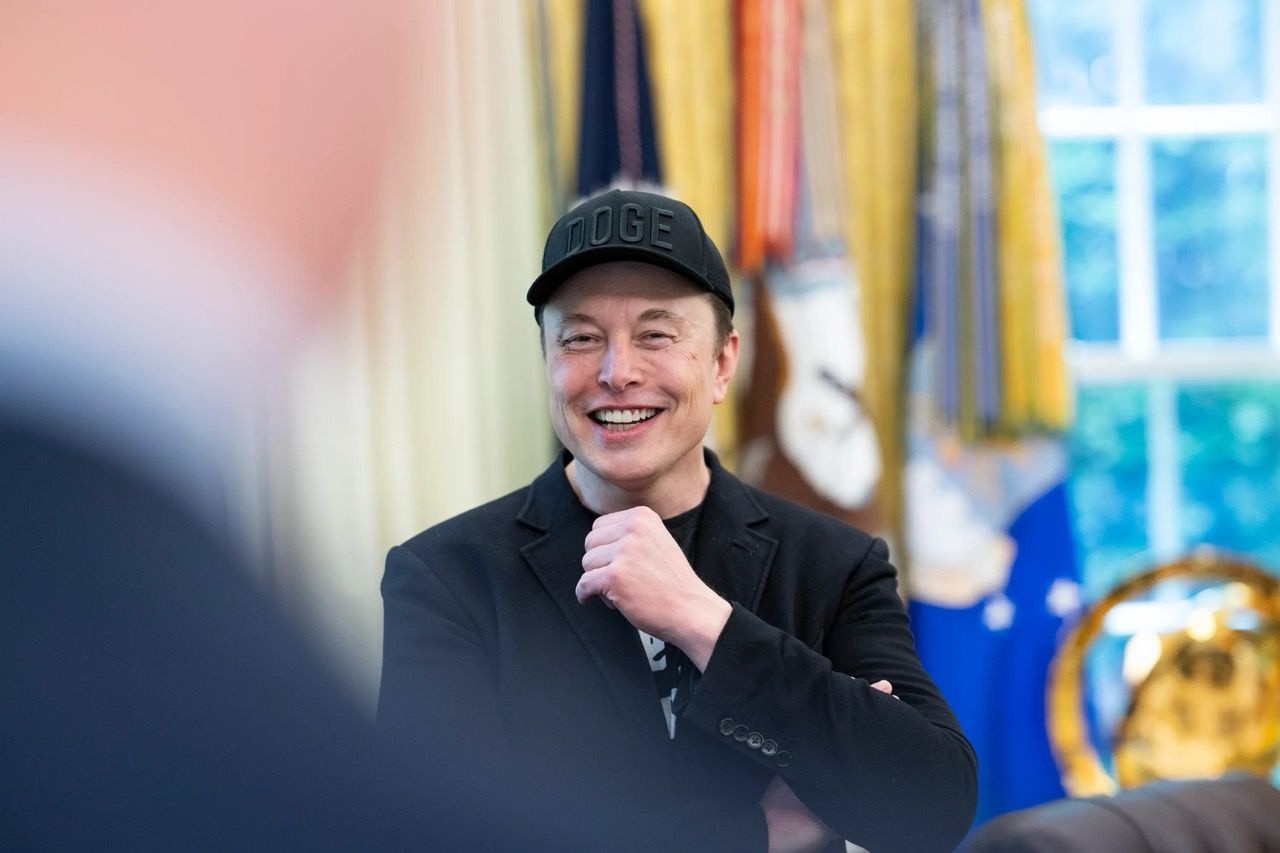
SpaceX CEO Elon Musk. Image source: The White House.
Of course, Musk is notorious for repeatedly setting ambitious deadlines and missing them, so this timeline should be considered aspirational. SpaceX has applied to the Federal Communications Commission with a proposal to build a “megaconstellation” of up to 1 million Starmind satellites. That would be about 100 times larger than SpaceX’s current Starlink satellite fleet, which has taken the company 7 years to deploy.
In other words, while it’s good that Nvidia appears to be involved in the design process, it will probably be years before the project comes online, and even longer before it can give a significant boost to SpaceX’s bottom line.
Investors probably shouldn’t factor this into their near-term thesis for SpaceX’s stock.
