


FOMO Sentiment Reignites as Investors Rush to Bet on S&P 500 Rally, Call Option Volume Hits Record High
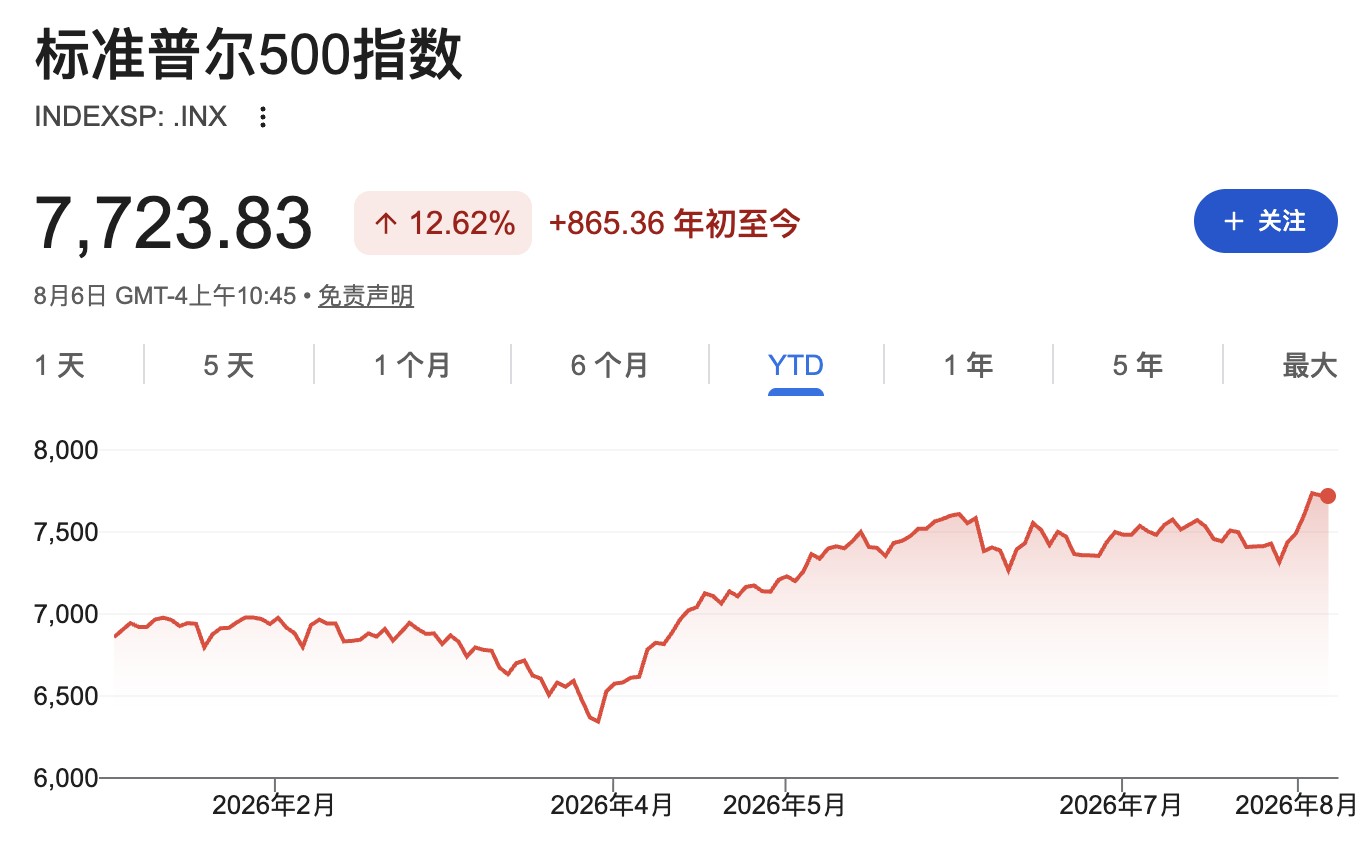
S&P 500 call option volume surpassed 4 million contracts on Tuesday, setting a new historical record, while the put/call ratio touched its third-highest level in nearly 15 years. FOMO sentiment dominated the market, with an aggressive $40 million bet generating over $23 million in unrealized profits the following day. Earnings reports continue to exceed expectations, and the equal-weight index hitting repeated highs indicates that the bull market has expanded beyond AI. UBS has set a year-end target of 8,100 points, stating that "earnings growth is not yet fully priced in."
The S&P 500 index options market is experiencing a surge in one-sided bullish bets. Buoyed by a strong earnings season and robust economic data, investors' fear of missing out (FOMO) on the rally has outweighed their caution regarding potential pullbacks, pushing call option volume to fresh historical records.
On Tuesday, S&P 500 call option volume exceeded 4 million contracts, setting a new all-time high, while put option volume remained at average levels.
Jason Coogan of Simplex Trading described the market conditions over the past two trading sessions as "one-way buying." Meanwhile, the S&P 500 recorded its first historical high since June this year on Tuesday, further igniting market sentiment.
As of press time on Thursday, the S&P 500 was up 0.1%, after dipping slightly the previous day.
Max Grinacoff, a strategist at UBS Group, stated that overall pricing for S&P 500 index options remains relatively cheap, and the upside potential from better-than-expected quarterly earnings has not been fully incorporated.
Tanvir Sandhu, Chief Global Derivatives Strategist at Bloomberg Intelligence, pointed out that "the options market is pricing in FOMO (Fear Of Missing Out), with investors far more concerned about missing the next wave of gains than protecting against a pullback."
Record Call Option Volume, Buying Presents "One-Way Flow"
The S&P 500 put/call ratio recorded its third-highest reading in nearly 15 years on Tuesday, epitomizing this shift in sentiment.
This stands in sharp contrast to the market landscape of the past two months, where traders generally avoided directional bets on the index due to low correlation among S&P 500 components and weak overall index volatility, with capital instead focusing on the more volatile Nasdaq 100 Index.
Some investors opted for more aggressive strategies amid Tuesday's heated trading.
According to analysis by Susquehanna International Group, a notable trade on the day involved an investor buying 120,000 SPDR S&P 500 ETF (SPY) call options with a strike price of $775 expiring on August 14, at approximately $3.35 per contract, paying about $40 million in premiums.
By midday Wednesday, the value of this position had risen to approximately $63 million, with the option price reaching $5.27.
Although the S&P 500 retreated slightly from its historical highs on Wednesday, cooling the fervor for upside contracts somewhat, the heating up of call option trading has clearly altered the market's put/call skew structure.
The relative demand for call options betting on a 10% rise in the S&P 500 within the next month jumped to its highest level since March compared to equivalent put bets.
Earnings Season Drives Bull Market Base Expansion Beyond Tech
Scott Rubner, Head of Equity and Equity Derivatives Strategy at Citadel Securities, wrote in a report on August 3: "Corporate results continue to significantly exceed already high expectations. The market is transitioning from a liquidity-driven environment to one increasingly dominated by earnings."
UBS Group's Grinacoff noted that the strength of the S&P 500 is no longer confined to the biggest beneficiaries of the AI wave.
He pointed out that the equal-weight version of the S&P 500 Index hit historical highs 12 times during the same period, indicating that market participation in the rally is broadening—"You are starting to see a rising tide lifting all boats, including tech stocks."
He added that earnings growth rates, previously seen only during recovery phases after major market troughs, combined with economic data pointing to record-high business activity and optimism surrounding the Iran agreement, have provided additional confidence to bulls.
"Potential earnings growth, particularly from the 'Tech Plus' sector, has not yet been fully priced into valuations," Grinacoff said. "The market is still digesting the impact of a series of strong earnings reports. We are quite bullish from a fundamental perspective."
Implied Volatility Remains Elevated, Upside Risk Still Needs Pricing
Despite the index's rise, implied volatility for the S&P 500 is expected to remain at elevated levels. Grinacoff stated, "Single-day gains of 2% for the S&P 500 naturally push volatility higher."
Tanvir Sandhu also noted that strong demand for upside call options is a key factor keeping implied volatility firm even as the stock market rises.
Regarding strategy allocation, a trade recommended by UBS strategists on July 20—selling downside hedges on the iShares Semiconductor ETF (SOXX) and using the resulting premiums to buy six times the amount of S&P 500 upside call options—faced pressure during the decline in semiconductor stocks from late July to early August, but in hindsight, it proved quite forward-looking.
UBS currently expects the S&P 500 year-end target price to be 8,100 points, nearly 5% higher than Wednesday's closing price, with the core of its bullish logic being the expansion of market participation from tech giants to broader economic sectors.
