


Iran and Oman Agreement Proposes Banning US and Israeli Vessels from Hormuz; Iranian Media Reports Strikes on Enemy Targets Near Strait
Iran and Oman Agreement Proposes Banning US and Israeli Vessels from Hormuz; Iranian Media Reports Strikes on Enemy Targets Near Strait
New details have emerged regarding the proposed new navigation agreement for the Strait of Hormuz between Iran and Oman, indicating that Iran seeks to seize control of the strait. Moreover, Iran has already taken action to strike "enemy targets" near the strait.
According to a report by the Iranian media outlet FARS News Agency on Thursday, the 6th, the Iranian parliament is currently reviewing the agreement. Under the terms of the agreement, vessels from the United States and Israel will be prohibited from passing through the Strait of Hormuz. Countries that have "caused damage to Iran" will also be denied navigation permits for the Strait of Hormuz.
Following the release of this news, market concerns about global energy transportation risks rapidly intensified. In the late morning session of US stocks on Thursday, the gains in international crude oil futures expanded significantly. US WTI crude briefly rose above $78 per barrel, up nearly 4% for the day; Brent crude approached $83 per barrel, rising more than 4% for the day.
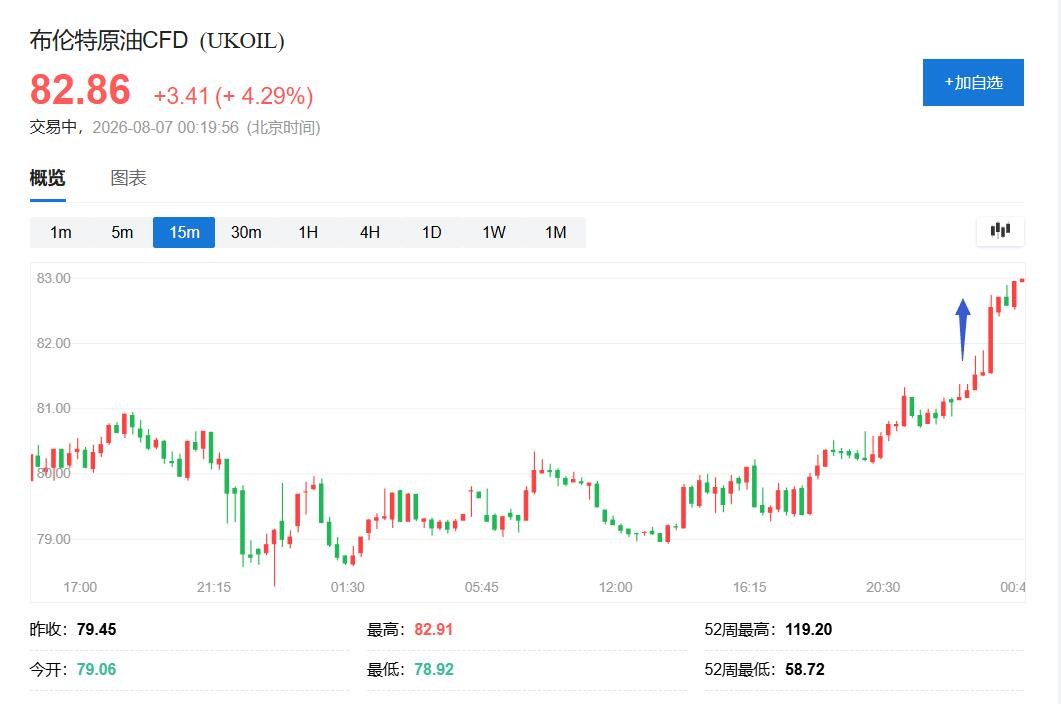
Subsequently, CCTV reported that Iran is advancing legislation related to navigation rules in the Strait of Hormuz, confirming the content of the Iran-Oman agreement mentioned by Iranian media.
According to CCTV News, on the 6th local time, Salimi, a member of the Presiding Board of the Iranian Parliament, stated that the National Security Council of Iran is currently reviewing the initial draft of a bill titled "Strategic Actions to Ensure the Security and Sustainable Development of the Strait of Hormuz and the Persian Gulf." The draft bill will:
- Prohibit vessels from the United States, Israel, and other hostile countries from passing through the Strait of Hormuz.
- Prohibit cargo related to Israel, whether military or civilian, from passing through the region.
- Prohibit the passage of vessels or cargo involved in operations against the Resistance Front.
- Countries and individuals that have caused damage to Iran will not be permitted to pass through the Strait of Hormuz and the Persian Gulf until they compensate for the losses.
- Violators of this law will face severe penalties, with fines reaching up to 20% of the cargo's value.
- The government, in cooperation with the armed forces, will assume responsibilities such as navigation guidance, vessel traffic monitoring, and protecting the security and environment of the Persian Gulf.
According to CCTV, the aforementioned draft bill is currently still in the expert review stage, and the Iranian Parliament has requested experts to submit suggestions for improvement.
During the mid-day trading session of US stocks on Thursday, FARS News Agency reported that Iran had struck "hostile targets" in the Strait of Hormuz. Another Iranian media outlet, Tasnim News Agency, citing sources, stated that two explosions heard on Qeshm Island were related to military actions taken against hostile targets near the entrance to the Strait of Hormuz.
Subsequently, according to CCTV News, at approximately 9:40 PM local time on the 6th, two explosions were heard on Qeshm Island, Iran. Iranian authorities stated that the explosions resulted from strikes on enemy targets near the entrance to the Strait of Hormuz, and the outcomes of this operation would be announced to the public within the next few hours.
Following the news of Iran's strikes on enemy targets, international crude oil prices rose further, refreshing daily highs. Brent crude approached $83.50, up nearly 5.1% from Wednesday's close, while US crude broke above $78.30, up more than 4.1% from Wednesday's close.
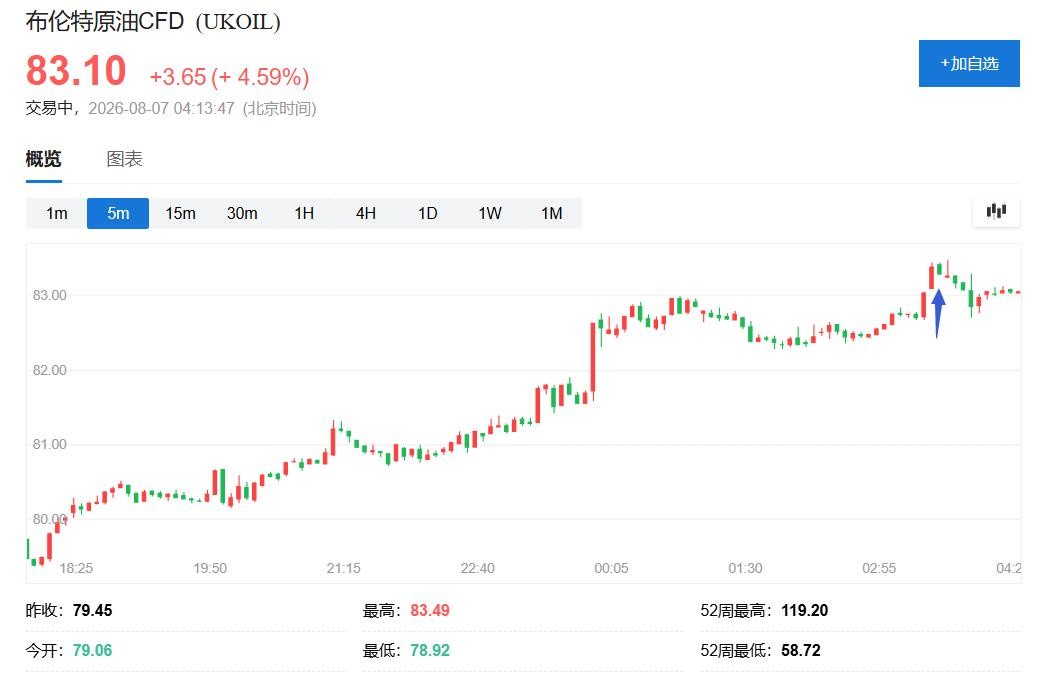
Earlier on Thursday, Reuters cited several shipping industry insiders reporting that the proposed new navigation scheme between Iran and Oman is impractical in operational terms. It faces numerous realistic obstacles regarding channel capacity, international shipping rules, as well as insurance and legal liabilities.
Iranian Media: Two-Way Channels Proposed for Elimination, Central Channel to Be Managed Primarily by Iran
Details of the agreement disclosed by FARS News Agency show that the new agreement not only involves vessel access rules but will also completely reconstruct the existing navigation system in the Strait of Hormuz.
Insiders revealed that the northern and southern channels, currently located on the Iranian and Omani sides respectively, will be entirely eliminated. All vessels will uniformly use the central corridor in the future. Iran will be responsible for managing the entrance to the central channel, while the exit will be jointly managed by Iran and Oman.
Furthermore, the agreement stipulates that vessels from the United States and Israel will be prohibited from passing through the Strait of Hormuz. Countries that have "caused damage to Iran" will also be unable to obtain navigation permits for the Strait of Hormuz.
If the above scheme is ultimately implemented, it means that the Traffic Separation Scheme (TSS), which has operated for decades, will be replaced by a new central navigation mode. Iran's actual control over vessels entering the Strait of Hormuz will also significantly increase.
Industry Insiders: Single Central Channel Struggles to Handle Existing Traffic; International Shipping Rules Pose Obstacles
However, the shipping industry is generally skeptical about the feasibility of this scheme.
Reuters cited several figures from the shipping, insurance, and maritime law sectors, reporting that the Strait of Hormuz currently handles about one-fifth of the world's seaborne oil transport. The current two-way separation channels, after years of operation, can meet the safety requirements for large tankers navigating in both directions.
Industry insiders believe that if the existing southern and northern channels are canceled and all vessels are redirected to the central channel, it will first face a capacity bottleneck. A single channel will struggle to handle the current massive two-way shipping traffic, likely causing severe congestion.
In addition, the channel system long adopted by international shipping organizations involves international shipping safety standards and cannot be adjusted unilaterally by Iran and Oman. If differentiated access is implemented based on the flag state of vessels, commercial operations, insurance underwriting, and international maritime legal liabilities will all face significant uncertainty.
Citing industry insiders, Reuters stated that from a shipping operational perspective, this scheme is not feasible.
However, analysts pointed out that even if it cannot be fully implemented in the end, the policy signals released by the agreement alone are sufficient to raise market concerns about transportation risks in the Strait of Hormuz, thereby providing a risk premium for international oil prices.
Iran States Negotiations Limited to Iran and Oman, Aiming to Establish New Navigation Mode Unseen in 60 Years
Before FARS News Agency disclosed the above details, CCTV News cited Iranian officials on Thursday, reporting that after more than a month of negotiations, Iran and Oman are about to finalize a new shipping arrangement agreement for the Strait of Hormuz.
According to CCTV, Goudarzi, spokesperson for the Presiding Committee of the Iranian Parliament, stated that the new agreement aims to adjust shipping routes in the Strait of Hormuz. The negotiations are being conducted solely between Iran and Oman, and the United States was not allowed to participate.
Iranian Deputy Foreign Minister Garibabadi had previously stated that the agreement between the two sides regarding the passage of commercial vessels through the Strait of Hormuz is close to finalization. According to Iran's vision, the northern channel located within Iranian territorial waters and the southern channel passing through Omani territorial waters will both be closed, establishing a new navigation mode in the Strait of Hormuz different from the past 60 years.
Garibabadi also denied that Iran is holding negotiations with the United States but stated that Iran has received messages from the US side indicating willingness to resume fulfilling commitments made in previously signed memoranda of understanding.
Pakistan Hopes Agreement Will Promote Resumption of Technical-Level Dialogue Between US and Iran
Meanwhile, regional diplomatic mediation continues.
According to CCTV News, on August 6 local time, Andarabi, spokesperson for the Pakistani Ministry of Foreign Affairs, expressed hope that the Strait of Hormuz agreement could create conditions for continued dialogue between the US and Iran and promote the resumption of technical-level negotiations between the two sides.
Andarabi stated that Pakistan will continue to maintain communication with relevant countries regarding the Strait of Hormuz issue and the situation in the Middle East, supporting the alleviation of regional tensions through diplomatic dialogue.
Currently, the new agreement for the Strait of Hormuz is still in the finalization stage. There remains significant uncertainty regarding specific implementation methods, international acceptance, and whether it can ultimately be implemented. However, as details of the agreement are gradually exposed, the Strait of Hormuz, the world's most important energy transportation channel, has once again become a significant risk variable affecting international oil prices and the global shipping market.
Market investments carry risks; please invest with caution. This article does not constitute personal investment advice, nor does it take into account the specific investment objectives, financial status, or needs of individual users. Users should consider whether any opinions, views, or conclusions in this article align with their specific circumstances. Responsibility for investments made based on this content lies solely with the investor.
